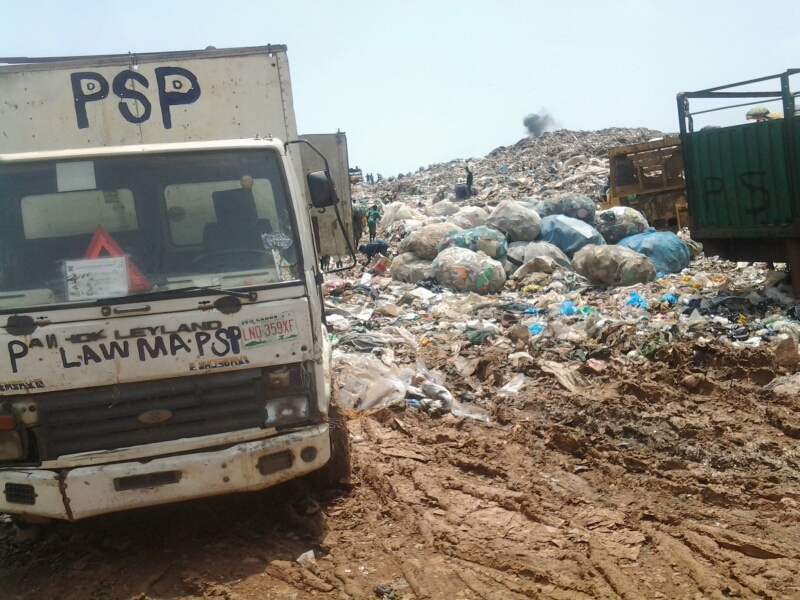
Lagos, Nigeria’s bustling economic powerhouse and one of the world’s fastest-growing cities, is confronting a severe environmental pollution crisis. The sources of contamination are diverse, ranging from vehicle emissions and industrial discharge to generator fumes and, most notably, waste dumpsites scattered across residential areas.
Along major thoroughfares like Oshodi-Apapa Road and Mile 2-Badagry Road, illegal refuse piles are a common sight, creating unpleasant eyesores. At Iyana-Oba Market, the stench is overpowering for pedestrians.
Among all pollution sources, waste dumpsites pose the greatest health risk to Lagosians. In Igando, a community in Alimosho Local Government Area, residents are raising alarm over two major dumpsites: Solus 3, located near Igando General Hospital, and Bola at Lanre bus stop. Despite the presence of refuse trucks indicating regular collection, the unbearable odor persists day and night.
Upon visiting the area, our correspondent observed that the pollution extends over three bus stops along Isheri-LASU Road. The stench from the dumpsites, situated over 200 meters away, permeates the surroundings. While passersby cover their noses, some locals—vulcanizers, transporters, food vendors—appear acclimated, conducting business as usual. However, first-time visitors often recoil, hurrying away while covering their faces.
For residents, life has become a daily struggle against the offensive odor. The area is also infested with houseflies, which invade restaurants and bars. Operators constantly spray kerosene or chemicals to repel the insects, but customers have resigned themselves to the situation. One patron commented that flies are considered normal, stating that locals have grown immune to any bacteria the insects might carry.
A school proprietor, Temitope Ogunsola, expressed frustration that despite numerous pleas to the state government and the Lagos Waste Management Agency (LAWMA), no meaningful action has been taken. He noted that during rains, the stench worsens as contaminated water from the dumpsites floods roads, making them impassable. The odor is so intense that residents can hardly stay outdoors for two minutes. Private fumigation offers temporary relief but is only affordable to some.
Ogunsola dismissed fears of a cholera outbreak from water contamination, citing government tests that certified borehole water safe. However, he warned that future contamination remains a possibility. He lamented that the dumpsite has driven away tenants, leaving only landlords who have nowhere else to go. Refuse from all over Lagos—including Agege, Mushin, and Ikoyi—is dumped at Solus 3, he added.
Opinions on the dumpsites vary. Some residents, like restaurant owner Iya Taiwo, oppose closure because workers at the site are her customers. She said she would rather risk her health than lose business. Conversely, Rose, another businesswoman, condemned the sites as mosquito breeding grounds and pleaded for government intervention. She noted that the odor intensifies during rains, leading to a surge in mosquitoes.
A resident who preferred anonymity revealed that many locals have lost their sense of smell due to prolonged exposure, now perceiving the stench only when reminded by newcomers. Another resident near the Bola dumpsite reported that the pollution has turned borehole water orange, staining utensils. Christian Ewuga described the situation as “death by installment,” urging the state government to act swiftly to avert an epidemic.
A patient at Igando General Hospital, Wale, called the proximity of the dumpsite to a medical facility “unacceptable and ironical.” He said residents have resigned themselves to fate, but implored the governor to prioritize their welfare.
Efforts to reach LAWMA’s General Manager for comment were unsuccessful, as phone calls went unanswered and a text message received no reply.