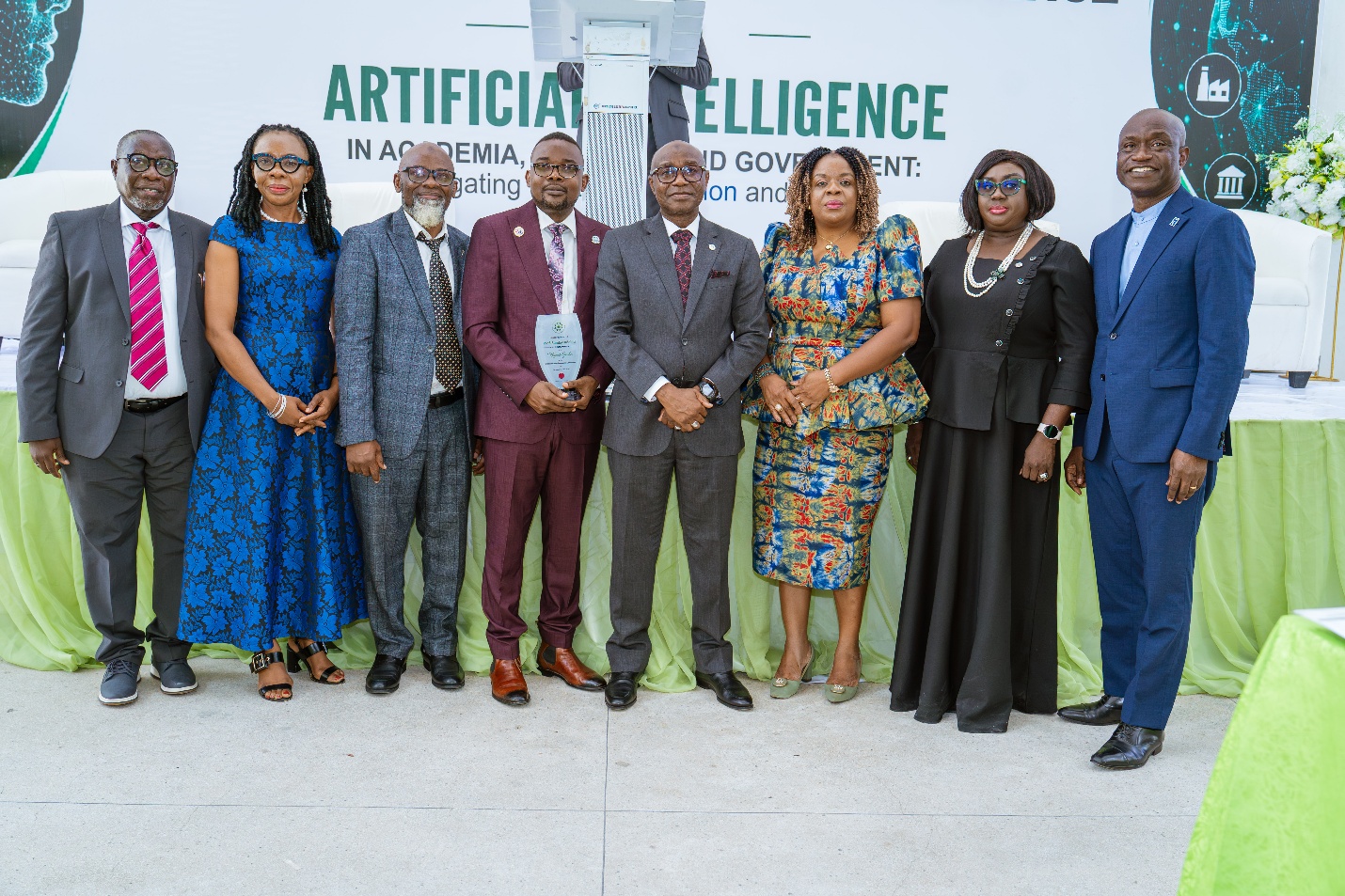
The Chartered Institute of Personnel Management of Nigeria (CIPM) has urged stakeholders to adopt artificial intelligence (AI) in a responsible manner, highlighting the importance of blending technological progress with ethical considerations, accountability, and human-centric principles as AI continues to reshape professional environments.
This message emerged during the CIPM 3rd International Academic Conference, held jointly with the Department of Employment Relations and Human Resource Management at the University of Lagos. The event was themed “Artificial Intelligence in Academia, Industry and Government: Navigating Ethics, Innovation and Impact.”
Ahmed Ladan Gobir, President and Chairman of the Governing Council of CIPM, stressed that discussions about AI should move beyond whether the technology will alter society, focusing instead on how to steer that change responsibly. He warned that innovation divorced from ethics could be harmful, making it essential for organizations to prioritize human dignity, fairness, transparency, inclusion, and accountability when integrating AI.
“Algorithms do not build trust; people do. Machines do not create culture; people do,” Gobir stated, underscoring that organizations succeed not because of cutting-edge technology but due to having the right individuals with appropriate skills and values.
Keynote speaker Prof. Sunday Adebisi described AI as the world’s new infrastructure, shaping learning, production, governance, and communication. He pointed out that while AI offers vast opportunities, Africa faces hurdles such as poor digital infrastructure, ICT skill shortages, regulatory issues, ethical dilemmas, and unequal access to technology. If left unaddressed, these challenges could exacerbate employment concerns on the continent.
Another keynote speaker, Mr. Henry Onukuba, FCIPM, called AI one of the most transformative forces of modern times, capable of revolutionizing service delivery, productivity, and knowledge access. He argued that the real question for institutions is not whether to adopt AI, but how to integrate it without compromising fairness, accountability, public trust, or human dignity. He noted AI’s potential to democratize education, allowing students in remote areas to access the same information as those in urban centers, and to address faculty shortages in Nigerian universities.
“AI will not take over your job. Your job will be taken over by someone who knows how to work smarter and more effectively with AI,” Onukuba remarked.
Prof. Oluseyi Shadare, Chairman of the Academic Conference and Head of the Department of Employment Relations and Human Resource Management at UNILAG, emphasized that the conference theme was highly relevant given the rapid changes of the Fourth Industrial Revolution. He observed that while AI creates opportunities for innovation and competitiveness, it also raises concerns about job displacement, privacy, inequality, and responsible technology use. He called for stronger collaboration among academia, industry, and government to develop AI systems that are innovative, transparent, fair, and human-centered.
Representing UNILAG’s Vice-Chancellor, Prof. Folasade Ogunsola, the Dean of the Faculty of Management Sciences, Prof. Abdul-Hameed Sulaimon, praised CIPM and the department for organizing the conference and encouraged participants to implement the insights gained.
The conference also celebrated research excellence. Out of 47 abstracts submitted, 38 progressed to full paper presentations after rigorous review. Dr. Aramide Kuforiji was named overall best researcher, followed by Prof. Sam Bodunrin (second) and Dr. Ifeanyi Enukorah (third). These awards highlighted the conference’s dedication to academic excellence, innovation, research integrity, and evidence-based contributions to human resource management and the future of work.
A key takeaway from the conference was that although AI may shape the future, people will determine its impact. The challenge for academia, industry, and government is not merely to adopt AI, but to guide its evolution and application in ways that uphold human dignity, foster innovation, and build a more inclusive and prosperous future for all.