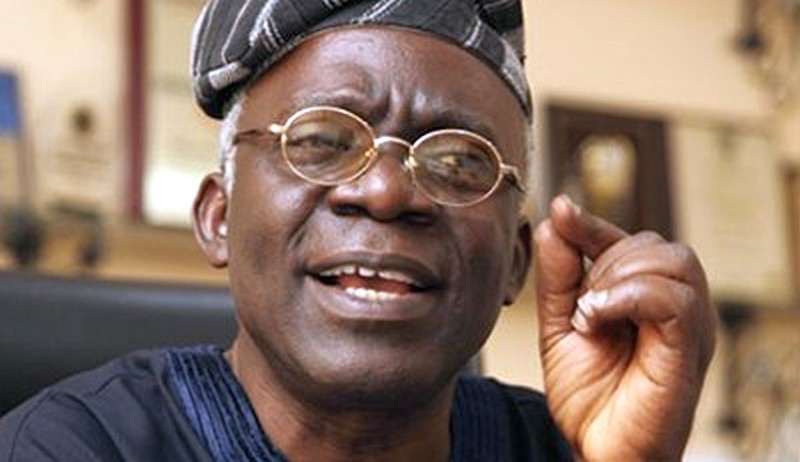
Prominent human rights attorney Femi Falana has leveled serious accusations against Nigerian state governors, asserting that they have neglected their constitutional obligations regarding the oversight of the nation’s police force. In a televised interview on Channels Television, Falana weighed in on the ongoing debate surrounding the creation of state police, arguing that the governors’ dereliction of duty is at the core of the issue.
Falana clarified a common misconception: Nigeria does not operate a purely federal police system. Instead, the Nigeria Police Force functions as a federation police, involving both federal and state governments in its management. He pointed out that the Nigerian Police Council, which includes the president, the Inspector General of Police, the Police Service Commission chair, and all 36 state governors, is constitutionally mandated to oversee police operations. However, since 1999, this 39-member council has largely been inactive, with governors ceding their authority to the president.
According to Falana, this abdication has resulted in the president unilaterally controlling the police, bypassing the council’s intended checks and balances. For instance, the appointment or removal of an Inspector General requires council approval, but since the council never meets, this provision is ignored. Falana stated that the Police Council is the only security body in Nigeria that fails to convene, and governors’ failure to demand its proper functioning has exacerbated security challenges and fueled calls for state police.
While many advocate for new state police structures, Falana pointed out that such entities already exist in various forms across the country. Examples include Amotekun in the South-West, Neighborhood Watch in Lagos, the Civilian Joint Task Force in Borno, and Hisbah in Kano. He argued that the real problem is not the lack of agencies but inadequate funding, poor coordination, and insufficient equipment. He questioned how security personnel armed with locally made guns can confront criminals wielding AK-47 rifles in forests. Falana urged a focus on strengthening existing structures rather than creating new ones, emphasizing that proper resourcing and coordination are key to improving security.