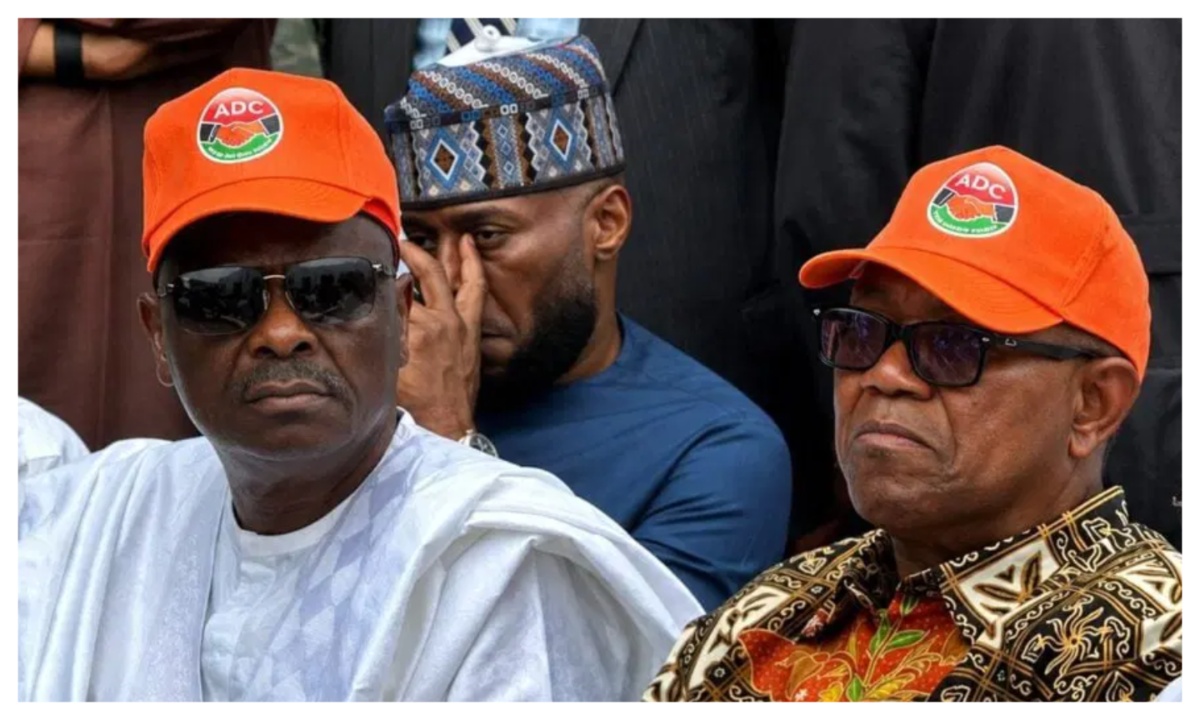
The recent political alignment between Peter Obi and Rabiu Musa Kwankwaso, which saw them join the Nigeria Democratic Congress (NDC), has sparked a wide range of reactions across Northern Nigeria. While some view it as a promising coalition that could challenge the ruling APC, others remain skeptical about its potential to secure broad support in the region.
On Sunday, both leaders officially received their membership cards from NDC national chairman Cleopas Moses Zuwoghe at the party’s secretariat in Abuja. Kwankwaso explained that their decision came after extensive consultations, revealing a strong ideological match with the NDC. Obi emphasized the party’s commitment to rebuilding Nigeria and restoring public trust in governance, urging members to avoid legal disputes that could derail their efforts.
The Kwankwasiyya movement, through its spokesperson Habeeb Saleh Mohammed, stated that the NDC represents a safer platform for the 2027 elections, free from the internal crises and legal battles plaguing their former party, the ADC. Mohammed noted that the ADC’s multiple court cases and threats of deregistration made it an unstable choice. He also highlighted the potential of an Obi-Kwankwaso ticket to promote national unity, as it would balance regional interests and focus on competence rather than ethnicity.
However, public affairs analyst Mahdi Shehu expressed caution, warning that the frequent party changes by Obi and Kwankwaso could be seen as overconfidence. He argued that the political landscape has shifted since 2023, and that without genuine unity among opposition leaders, their efforts might fail. Shehu suggested that one faction could even strike a deal with the APC, leaving Obi and Kwankwaso politically isolated.
Northern residents offered mixed views. Lukman Shuaibu from Kano declared unwavering support for Kwankwaso, citing his grassroots appeal. Naziru Dalhatu praised the joint ticket as a symbol of national unity and predicted it would defeat the current government given widespread dissatisfaction. Conversely, Muhammad Rabiu Musa from Jigawa questioned the alliance’s credibility, arguing it lacks a clear policy blueprint and is driven by personal ambition rather than public interest. He also noted that religious and ethnic factors in the core north could hinder an Igbo presidency.
As the 2027 elections approach, the success of the Obi-Kwankwaso coalition in the north remains uncertain. The Kwankwasiyya movement believes the APC will be too preoccupied with its own internal processes to disrupt the NDC, but critics remain unconvinced. The coming months will reveal whether this alliance can overcome regional divisions and present a viable alternative to the ruling party.