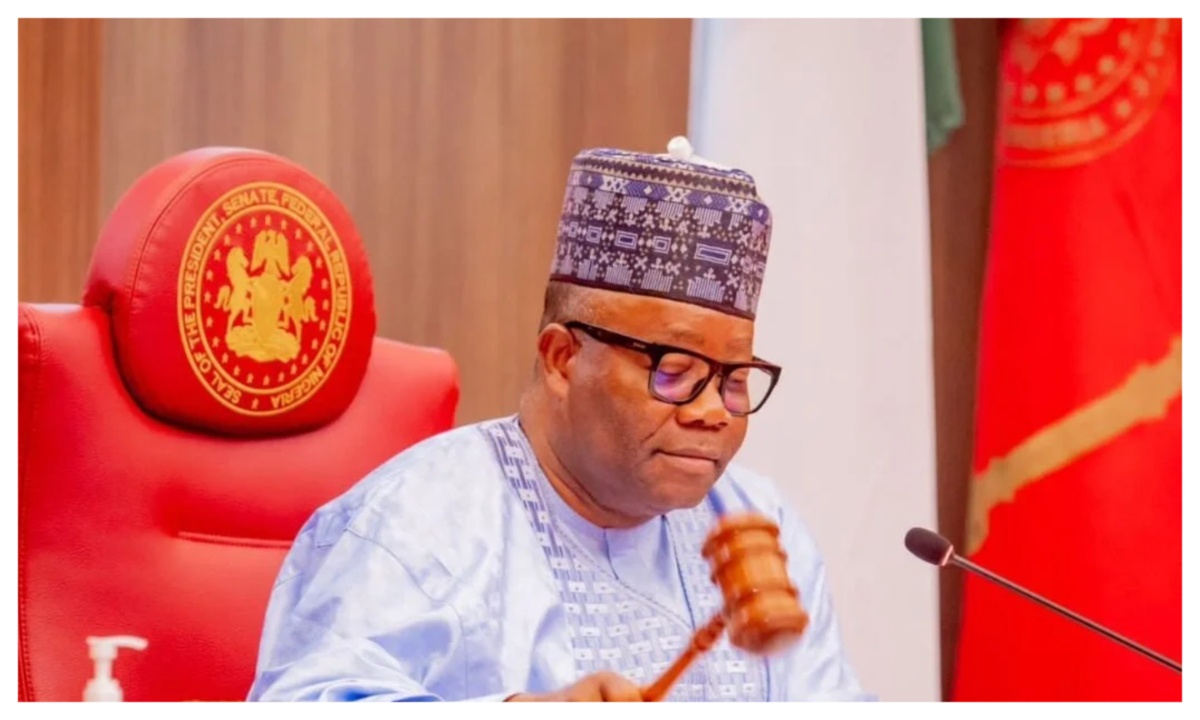
Senator Onyekachi Nwebonyi has offered a robust defense of the recent amendments to the Senate’s standing orders, clarifying that the primary objective is to safeguard institutional knowledge and foster stability within the upper legislative chamber.
Appearing on Channels Television’s Politics Today programme on Wednesday, the lawmaker dismissed allegations that the revised rules were meant to single out any individual. Instead, he emphasized that the changes mirror the evolving character of the legislature itself.
According to Nwebonyi, the Senate under Godswill Akpabio’s leadership bears little resemblance to its predecessors from 1964 or 1999. He argued that contemporary parliamentary realities demand legislators who possess up-to-date experience in national affairs.
“The amendments were not designed to target a particular person,” Nwebonyi stated. “Our goal is to preserve institutional memory and guarantee continuity. Experience is critical because the Senate of today is not the Senate of 1964 or 1999. We need someone familiar with recent political developments in the parliament to steer the Senate as its President or Deputy President. That is the sole rationale behind the change.”
As reported by DAILY POST, the Senate adopted the amendment on Tuesday through a voice vote presided over by Akpabio. The new rule restricts eligibility for presiding and principal offices to senators who have completed no fewer than two consecutive terms. Only current members of the 10th Senate who secure re-election to the 11th Senate in 2027 will qualify for top leadership contests.
This development unfolds against a backdrop of speculation that former governors and ex-senators—including Hope Uzodimma, Ifeanyi Okowa, and Ovie Omo-Agege—may be plotting a return to the Senate ahead of the 2027 elections, potentially with leadership ambitions.