Posted on Leave a comment

Michael Saylor’s Strategy Unloads Bitcoin: Impacts on BTC Market

Michael Saylor's Strategy Unloads Bitcoin: Impacts on BTC Market

On June 1, 2026, Strategy announced in an 8-K filing that it had disposed of 32 Bitcoin between May 26 and May 31, fetching an average price of $77,135 per coin and raising approximately $2.5 million. This marked the firm’s first Bitcoin sale since December 2022, and for an entity built on Michael Saylor’s unwavering pledge to hold, the symbolic impact outweighed the actual figures.

Bitcoin’s value dipped below $72,000 within hours, triggering over $93 million in futures liquidations in a single hour, with 95% being long positions. MSTR shares fell about 5%. However, the scale of the sale was minuscule: 32 coins out of 843,706, representing just 0.0038% of the total stash, sold to help meet a preferred-stock dividend obligation.

This article clarifies the reality behind the headlines, explains the dividend structure that necessitated the sale, and assesses its implications for Bitcoin investors.

The Mechanics Behind the Sale

The transaction involved 32 Bitcoin sold over six days in late May, averaging $77,135 each, for total proceeds of about $2.5 million. The 8-K filing, signed by general counsel Thomas Chow, clearly states that the funds are intended to support distributions on preferred stock. Against Strategy’s massive holdings, this sale is negligible—less than 0.004% of its portfolio.

During the same period, the company raised $128.3 million through its at-the-market common stock issuance, which is fifty times larger than the Bitcoin sale. Thus, this move was a minor adjustment to cover a cash requirement, not a wholesale liquidation.

Saylor hinted at this possibility during the Q1 earnings call in early May, and CEO Phong Le explained the mechanism: Bitcoin would be sold to finance dividends under certain conditions. The market knew it was coming but still reacted to the symbolic end of the ‘never sell’ doctrine.

Why a Small Sale Had Big Symbolic Weight

For five years, Saylor’s mantra was absolute: Strategy buys Bitcoin and never sells. This promise underpinned the entire investment thesis, making MSTR a leveraged Bitcoin proxy. Investors trusted the company to hold through downturns. The December 2022 sale was a tax-loss harvest—selling 704 BTC near the cycle bottom, then buying back 810 two days later, preserving the ‘never sell’ narrative.

This time, there is no such asterisk. The sale funds a dividend, and the company has indicated that future sales are part of its balance sheet management. Saylor now emphasizes a new metric called Bitcoin per share (BPS), arguing that selective selling can protect or enhance this metric. The ‘never sell’ policy is replaced by ‘sell when math dictates.’

The Dividend Machine Driving the Sale

Strategy has evolved from a Bitcoin-holding firm into a major issuer of preferred equity, with over $13.5 billion outstanding across five series. The largest, STRC (Stretch), has $8.5 billion in issuance and pays an 11.50% annual dividend. Combined with other series, Strategy carries about $1.5 billion in annual dividend obligations.

Normally, dividends are funded by issuing MSTR common shares through an at-the-market program, which works when the stock trades at a high premium to the underlying Bitcoin (measured as mNAV). At Q1 2026, the breakeven threshold was around 1.22x. However, by mid-2026, mNAV had compressed to around 1.2x, making share issuance marginally accretive or even dilutive. Consequently, the company turned to selling a small amount of Bitcoin directly to meet cash needs.

Strategy has about 18 months of dividend coverage at the current run rate, backed by nearly $60 billion in Bitcoin. The 32 coins were sold at a slight profit (1.9% above cost basis), indicating this was an optimization move, not a sign of distress.

Implications for Bitcoin Holders

In the immediate sense, the sale is negligible. Thirty-two coins do not affect supply or represent meaningful selling pressure. The price drop was driven by sentiment and leverage liquidations, not the sale itself. However, the precedent is significant: Strategy has established that it will sell Bitcoin to meet fixed dollar obligations when its preferred premium compresses.

As long as mNAV remains healthy, such sales will be tiny and occasional. But the model has a stress point: if Bitcoin stays depressed, mNAV remains compressed, and share issuance becomes expensive, the company may lean more heavily on Bitcoin sales to service its dividend obligations. This introduces a scenario where the largest corporate holder becomes a price-sensitive seller during weakness, a reversal of its previous role as a consistent buyer.

That said, the structure has buffers: 18 months of dividend coverage, a $60 billion Bitcoin backstop, and $26 billion in remaining share-issuance capacity. Forced large-scale selling would require a much deeper and longer drawdown than currently exists.

Comparing to the 2022 Sale

Some observers draw parallels to December 2022, when a Strategy sale preceded a market bottom. However, that sale was a deliberate tax maneuver with an immediate repurchase. This sale is a dividend-funding operation with no repurchase and an explicit statement that more sales may follow. The mechanisms and intents differ, so the ‘bottom signal’ comparison is unreliable.

Key Takeaways

Michael Saylor sold Bitcoin, but the accurate narrative is far less dramatic than the headlines. Strategy sold 32 coins (0.0038% of its holdings) at a small profit to cover a dividend, having preannounced the possibility. The market reacted to the symbolic end of the ‘never sell’ promise, not the sale size. What changed is the doctrine: Strategy is now a balance-sheet manager that sells when math demands. At current mNAV levels, sales remain trivial, but the incentive structure has shifted from unconditional buying to conditional selling.

For Bitcoin holders, this sale itself is noise. What matters is monitoring Strategy’s mNAV, preferred-stock issuance health, and Bitcoin’s price relative to its cost basis. As long as these are sound, the largest corporate holder remains a net accumulator. If they deteriorate, the market must factor in a Saylor who sells.


Posted on Leave a comment

Vitalik Buterin Proposes Options Instead of Liquidations for DeFi

Vitalik Buterin Proposes Options Instead of Liquidations for DeFi

Ethereum co-founder Vitalik Buterin has introduced a new concept for decentralized finance that could transform how crypto index products function. Instead of relying on forced liquidations, he suggests using options contracts as the foundation. This approach aims to eliminate the abrupt loss of positions when collateral values drop sharply.

Buterin’s proposal, shared on the Ethereum research forum, outlines a system where index-tracking assets are built on options rather than collateralized debt positions. Many current DeFi protocols require users to maintain a minimum collateral ratio; failing to do so triggers automatic liquidation. Buterin argues this mechanism creates stress during volatile markets and can lead to sudden user losses.

In the options-based model, a user’s exposure would not end abruptly. Instead, it would gradually shift as market prices change, reducing the risk of sudden exit. Buterin also connects this idea to the oracle problem in DeFi. Most liquidation systems rely on fast price feeds to determine when to close positions, which can be manipulated during rapid market movements. With options, slower oracles—similar to those used in prediction markets—could be employed, making protocols less vulnerable to price manipulation.

The proposal has implications for algorithmic stablecoins, which often depend on debt and liquidation systems. Buterin did not name a specific project, and the model remains theoretical. He acknowledged practical challenges, such as the need for regular rebalancing, which could incur costs and execution risks. Despite these hurdles, Buterin expressed confidence that an options-based design could be safer for stablecoins than those reliant on real-time oracles.

This latest idea comes as Buterin shifts his focus from long-form essays to writing science fiction about decentralized governance. His previous work has covered DAOs, Layer 2 solutions, and voting models. With this proposal, he continues to question whether DeFi can be made safer by reducing dependence on fragile debt structures.

Posted on Leave a comment

Grayscale Targets Hyperliquid ETF Debut with 0.29% Fee

Grayscale Targets Hyperliquid ETF Debut with 0.29% Fee

Grayscale Investments has advanced its plans to introduce a Hyperliquid exchange-traded fund, updating its SEC registration with a 0.29% sponsor fee and the ticker HYPG. The revised S-1 filing signals the asset manager is nearing the product’s launch, intensifying competition among firms vying for exposure to the HYPE market.

Bloomberg Intelligence analyst James Seyffart indicated on X that the Grayscale Hyperliquid Staking ETF could debut within the week, calling the move imminent after the latest amendment. The fund would be the third U.S.-listed ETF tied to Hyperliquid, following offerings from 21Shares and Bitwise.

Grayscale’s fee undercuts rivals: 21Shares charges 0.30% for its THYP fund, while Bitwise’s BHYP applies a 0% fee for the first month, then shifts to 0.34%. This pricing advantage may help Grayscale attract early assets as the fee race tightens.

21Shares launched its Hyperliquid ETF on Nasdaq on May 12 under THYP, along with a 2x leveraged version (TXXH). Within days, THYP drew over $5 million in inflows, according to 21Shares research head Eli Ndinga. He attributed the demand to investor appetite for 24/7 crypto market access, noting Hyperliquid priced geopolitical events during off-hours when traditional venues were closed.

HYPE-linked ETFs have accumulated more than $132 million in net inflows over the past month, reflecting strong institutional interest. Hyperliquid, a decentralized derivatives exchange, allows trading of on-chain perpetual futures. Its native token HYPE holds a market cap around $16.1 billion, ranking among the top ten crypto assets. Perpetual futures differ from standard contracts as they have no expiration, enabling traders to gain price exposure without holding the underlying asset.

Posted on Leave a comment

Coinbase Pushes CLARITY Act as Senate Vote Looms Amid Dimon Feud

Coinbase Pushes CLARITY Act as Senate Vote Looms Amid Dimon Feud

The battle over U.S. crypto regulation is heating up, with Coinbase doubling down on efforts to secure passage of the CLARITY Act ahead of a critical Senate vote scheduled for this month. The proposed legislation, formally known as the Digital Asset Market Clarity Act, could reshape the financial landscape by providing long-awaited rules for digital asset firms.

Faryar Shirzad, Coinbase’s chief policy officer, described the bill as potentially the most significant financial regulatory overhaul since the Dodd-Frank Act. He emphasized that the legislation would deliver clear guidelines to companies operating in the crypto space, ending years of uncertainty under fragmented state-level oversight.

The bill cleared the Senate Banking Committee on May 14 with a 15-9 vote, earning support from Democrats like Ruben Gallego and Angela Alsobrooks alongside Republicans. However, it now requires 60 votes to advance to the floor, a threshold that remains uncertain as lawmakers debate key provisions.

According to Shirzad, Republican support remains solid, and a number of Senate Democrats are eager to finalize the bill, especially after nearly 80 House Democrats backed an earlier version. He pointed to growing bipartisan momentum, though opposition from figures like JPMorgan Chase CEO Jamie Dimon has intensified the debate.

Dimon criticized the CLARITY Act in a recent interview, arguing that crypto platforms should follow existing banking rules if they want similar privileges. He raised concerns about anti-money laundering compliance and the Bank Secrecy Act, stating that banks would not accept the bill without significant changes. Coinbase CEO Brian Armstrong hit back with a sarcastic hockey-themed meme on social media, while Shirzad noted that JPMorgan remains Coinbase’s banking partner despite the policy disagreements.

Wyoming Senator Cynthia Lummis warned that if Congress fails to act on digital asset legislation during this session, the next opportunity may not come until 2030. She stressed that developers currently lack legal protections and that law enforcement lacks tools to combat bad actors, making the CLARITY Act essential for both innovation and consumer safety.

President Donald Trump has made crypto regulation a priority, backing the bill on Truth Social and targeting a July 4 signing date. The administration views the legislation as a way to create a future-proof framework for digital assets.

Another major aspect of the bill is its potential to allow banks to enter the crypto market under federal oversight. Shirzad explained that the legislation would grant banks new authority to participate in digital assets for the first time in decades, a move that could bring traditional players like JPMorgan into the sector. Coinbase has welcomed this prospect, seeing it as a sign of industry maturation.

Stablecoin rewards remain a contentious issue. A compromise brokered by Senators Thom Tillis and Angela Alsobrooks blocks rewards that mimic bank deposit interest while permitting activity-based incentives. Shirzad confirmed that this language is final and will be defended during floor debate.

In a separate win for Coinbase, the Commodity Futures Trading Commission issued guidance on May 29 allowing Coinbase Financial Markets to connect U.S. institutional clients to global crypto derivatives markets. Shirzad hailed this as a regulatory breakthrough that aligns with Trump’s goal of onshoring crypto activity.

Posted on Leave a comment

CME Group’s 24/7 Crypto Futures Debut with $50M Weekend Volume

CME Group's 24/7 Crypto Futures Debut with $50M Weekend Volume

The Chicago Mercantile Exchange (CME) Group kicked off its new round-the-clock cryptocurrency futures and options trading service with a notable start, generating roughly $50 million in notional volume over the inaugural weekend. This move marks a significant shift for regulated crypto derivatives, aligning them more closely with the always-on nature of digital asset spot markets.

Since trading went live on May 29, over 7,200 crypto futures and options contracts have been executed. The extended hours allow market participants to adjust their positions during weekends and holidays, a period when CME’s crypto products were previously unavailable. Tim McCourt, CME Group’s Global Head of Equities, FX and Alternative Products, noted that the decision was driven by demand for continuous liquidity in regulated instruments. He emphasized that the crypto derivatives landscape has evolved considerably since the launch of Bitcoin futures in 2017, and an always-on model is now essential for managing risk.

Several firms, including Robinhood Markets and Ripple Prime, have voiced support for the new schedule, highlighting that institutional clients expect uninterrupted access to hedging tools. Wedbush Securities also expanded its operational capabilities to facilitate weekend trading. CME clarified that trades executed outside regular hours will be processed on the next business day, with settlement and regulatory reporting following suit.

In addition to standard futures and options, CME’s Bitcoin Volatility futures have also adopted the 24/7 model. This product enables traders to speculate on expected 30-day implied volatility of Bitcoin, offering a distinct risk management avenue separate from price direction.

The launch coincides with a broader regulatory focus on continuous markets. The Commodity Futures Trading Commission’s staff recently issued guidance addressing risks related to market surveillance, liquidity, staffing, and customer protections in a 24/7 environment. CME’s next challenge will be to sustain trading volumes as participants adapt to the new operational rhythm.

Posted on Leave a comment

Pavel Durov Revives Gram as TON Faces Major Test

Pavel Durov Revives Gram as TON Faces Major Test

Telegram’s founder, Pavel Durov, has announced that the Toncoin token will be rebranded to its original name, Gram, sparking a sharp rally in the asset. The token surged 18.75% to $2.19 within 24 hours of the news, as traders welcomed the restoration of the name first used in TON’s foundational whitepaper. Durov emphasized that the blockchain network will retain the TON designation, creating a clear distinction between the protocol and its native currency.

The rebranding is purely cosmetic and will not require any token swap, according to Durov. User balances, staking positions, and network operations will remain unaffected during the three-week transition period. This move marks a return to the project’s roots, before regulatory challenges forced Telegram to step back from direct involvement. The Gram name was originally associated with Telegram’s ambitious blockchain venture, which faced a legal battle with the U.S. Securities and Exchange Commission in 2020.

Durov framed the change as part of a broader initiative called ‘Make TON Great Again,’ which includes reducing network fees and rolling out infrastructure upgrades. Telegram has been deepening its integration with TON, adding blockchain-based features to its messaging platform and leveraging its massive user base. The renaming aligns TON with other major networks that use separate names for their chain and currency, simplifying the branding.

The market’s enthusiastic response underscores the significance of Telegram’s renewed commitment to the ecosystem. However, Durov clarified that the rebrand is not a token relaunch and should not be interpreted as a new offering. By restoring the Gram identity, Telegram aims to reconnect with the project’s original vision while maintaining continuity for current holders.

Posted on Leave a comment

Radiant Capital Shuts Down After $50M Hack by North Korean Group

Radiant Capital Shuts Down After $50M Hack by North Korean Group

Radiant Capital, once a leading cross-chain lending protocol, has announced it will cease operations following a devastating $50 million exploit linked to North Korea. The decentralized autonomous organization confirmed that despite extensive efforts, the platform could not recover stolen funds, secure new investment, or maintain sustainable growth.

The protocol had been struggling since an October 2024 attack, which security researchers attributed to the AppleJeus hacking group associated with North Korea. The breach drained approximately $53 million from Arbitrum and BNB Chain deployments, causing total value locked to plummet from nearly $387 million in December 2023 to just $5 million within weeks.

Radiant will now enter a maintenance phase, keeping its frontend and smart contracts accessible so users can withdraw assets, repay loans, and manage positions. However, all development, upgrades, and expansion will halt as DAO contributors step away from active management. The platform encouraged users to carefully handle their exposure during this final stage.

Recovery attempts have yielded limited success. In October 2025, CertiK reported that attackers moved 2,834 ETH into Tornado Cash, laundering an estimated $10.8 million. The incident marked a turning point for Radiant, which launched in 2022 and quickly grew into one of the largest cross-chain lending platforms.

The DAO stated that its remediation portal will remain open, and any future recovered assets will be returned to affected users. Market reaction was negative, with Radiant’s RDNT token falling 4.2% after the closure announcement. The same threat actors were later linked to a separate exploit against Drift Protocol in April 2026.

Posted on Leave a comment

Babachir Lawal Resigns, Says Atiku Presidency Would Be Worse Than Tinubu

Babachir Lawal Resigns, Says Atiku Presidency Would Be Worse Than Tinubu

Former Secretary to the Government of the Federation, Babachir Lawal, has shed more light on his decision to quit the African Democratic Congress (ADC). He cited a manipulated primary process that he claims was rigged in favor of former Vice President Atiku Abubakar as the primary reason for his departure.

Speaking on Channels Television’s Politics Today on Monday, Lawal explained that long-standing suspicions within the ADC suggested the party was being positioned to serve Atiku’s presidential ambitions, despite assurances of a fair primary. He noted that efforts to reach a consensus candidate collapsed when major contenders insisted on being the sole beneficiary, forcing the party to hold primaries.

Lawal alleged that Atiku’s supporters compromised the exercise, doctoring results and altering outcomes to favor the former vice president. He expressed dismay that many party members were willing to accept the irregularities in the name of peace, calling such acceptance unacceptable. He argued that reconciliation is impossible when the process has been deliberately manipulated.

The former SGF further questioned Atiku’s suitability for the presidency, asserting that his knowledge of Atiku’s political record convinces him that an Atiku administration would be worse than President Bola Tinubu’s current government. He declared that he does not want to find himself regretting a decision to work against Tinubu’s re-election.

In his words: “Surprisingly, across the board, Atiku and his team compromised nearly everyone, and results were falsified. Where primaries occurred, they were tampered with. Where outcomes didn’t favor them, they fabricated results.”

He added: “Everyone in ADC knows that primary was manipulated, massively rigged, and the results were falsified. What worries me is that everyone acted as if it was normal. I was shocked.”

Lawal concluded: “I know Atiku. I know his history and capabilities. I realize his presidency would be worse than Bola Tinubu’s. I don’t want to end up in a situation where I regret not opposing Bola Tinubu.”

Posted on Leave a comment

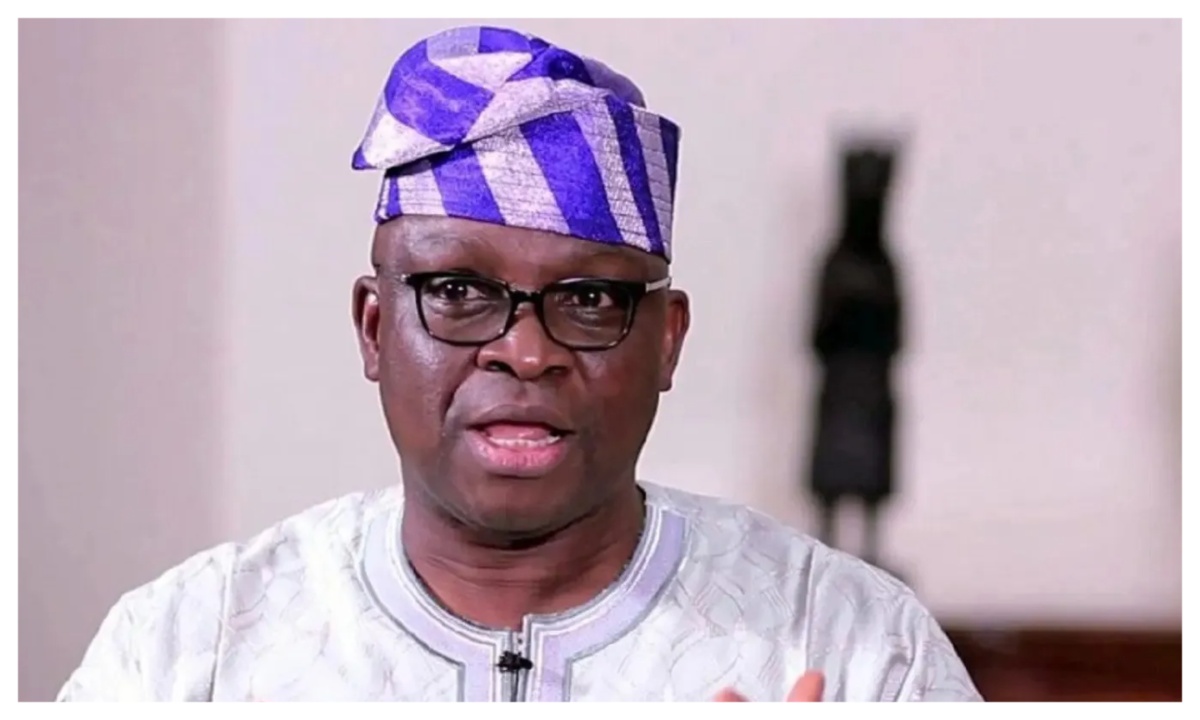
Fayose Accuses Makinde of Staging Oyo Kidnapping to Discredit Tinubu

Fayose Accuses Makinde of Staging Oyo Kidnapping to Discredit Tinubu

Former Ekiti State Governor Ayodele Fayose has leveled serious allegations against Oyo State Governor Seyi Makinde, claiming that the recent abduction of school children in Oyo State was a staged event designed to embarrass President Bola Tinubu.

According to Fayose, the kidnapping incident, which occurred on Friday in several local government areas, was orchestrated by the Makinde administration as a political maneuver. He pointed out that the governor failed to take any immediate action following the abductions, only visiting the affected families after his nomination and that of his candidates were finalized.

Appearing on Channels Television’s Politics Today program, Fayose stated, “In Oyo State, I strongly believe this might have been orchestrated. The governor had his nomination and that of his candidates in the face of this abduction. He did not take any action; no steps were taken until after those nominations.” He further asserted, “I sometimes believe that the abduction at the Oyo school was orchestrated by the Oyo State Government to blackmail President Tinubu.”

The kidnapping, which saw school children and teachers taken by unknown gunmen, prompted President Tinubu to dispatch a high-powered delegation to the affected areas, promising a safe return for all abducted individuals.

Fayose’s remarks have sparked controversy, with some questioning the basis for his allegations. The Oyo State government has yet to officially respond to the claims.

Posted on Leave a comment

Fayose: Tinubu Delivering His Best on Security Challenges

Fayose: Tinubu Delivering His Best on Security Challenges

Former Ekiti State Governor Ayodele Fayose has declared that President Bola Tinubu is making his utmost effort to tackle Nigeria’s escalating security situation. Speaking during a Channels Television interview, Fayose attributed the current crisis to the administration of former President Muhammadu Buhari.

Fayose argued that Tinubu inherited a broken system and is being unfairly targeted through insecurity as the 2027 elections approach. He stated, ‘Tinubu may not be flawless, but he is giving his all. At the close of Buhari’s term, things were far worse. Tinubu essentially rescued the government by stepping in after Buhari.’

The former governor added, ‘As a principled man unwilling to abandon the north, he took on the burden and worked to repair the damage left by the previous administration. Similarly, when Goodluck Jonathan was exiting office, insecurity was used to blackmail him.’