Posted on Leave a comment

Imo Police Dismantles Tiger Base, Replaces with VCRU to Boost Crime Response

Imo Police Dismantles Tiger Base, Replaces with VCRU to Boost Crime Response

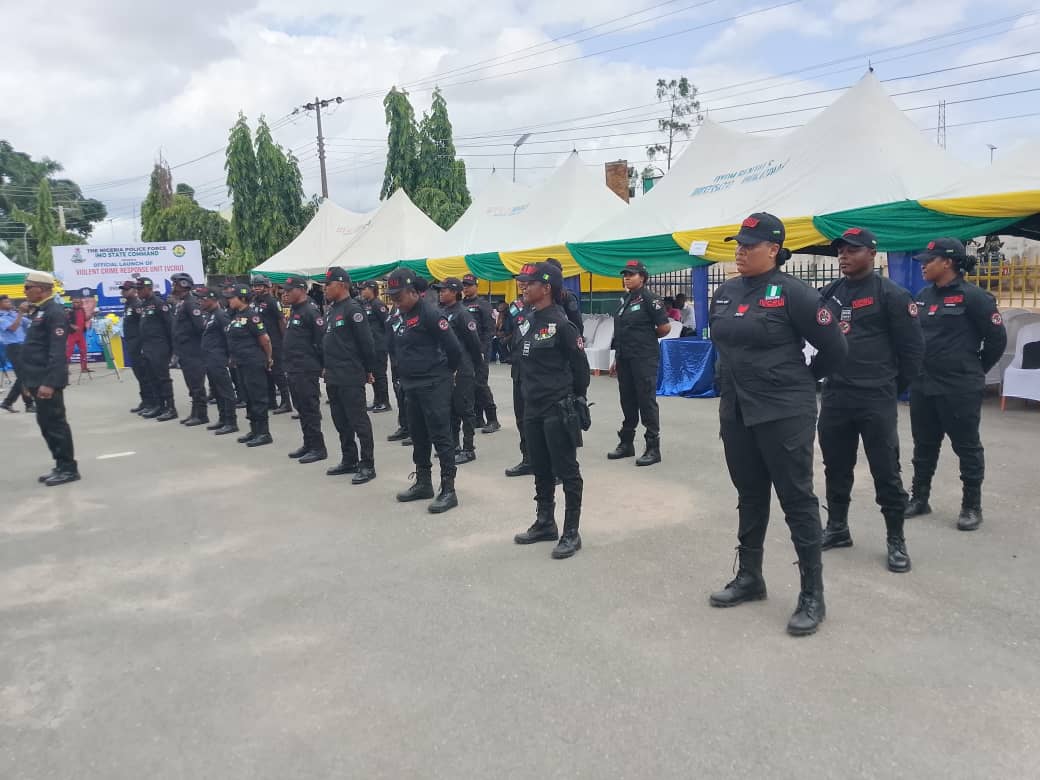
The Imo State Police Command has officially dissolved the Tiger Base Unit, a well-known tactical squad, along with other units such as the Scorpion Unit and Lion Squad. In their place, the Violent Crime Response Unit (VCRU) has been established to enhance the command’s ability to tackle violent crimes effectively.

State Police Commissioner Audu Garba Bosso unveiled the VCRU at the Command Headquarters in Owerri, stating that the move aligns with the Inspector-General of Police Olatunj Rilwalu Disu’s directive to strengthen operational capacity and response to violent crimes nationwide. Bosso explained that forming the VCRU became essential following the disbandment of earlier tactical units with animal symbols, including the Anti-Kidnapping Unit referred to as Tiger Base.

The VCRU reflects ongoing reforms within the Nigeria Police Force aimed at enhancing professionalism, accountability, and service delivery. After inspecting the new squad alongside other security heads and stakeholders, Bosso emphasized that the unit underscores the command’s dedication to professional policing and public safety across the state.

Personnel for the VCRU were chosen based on competence, discipline, integrity, and operational experience. They have undergone rigorous specialized training in tactical operations, intelligence gathering, crisis management, human rights compliance, and professional conduct to ensure lawful and effective service delivery.

To promote transparency and accountability, the command also inaugurated the Civilian Oversight Board (COB), which will monitor the VCRU’s operations and channel public complaints to the Police Commissioner. State Governor Hope Uzodinma, represented by his Chief Principal Security Officer Gboyako Shaba Adamu, praised the initiative and reaffirmed the government’s continued support for security agencies in maintaining law and order.

The event was attended by top government officials, security heads, traditional rulers, civil society organizations, community leaders, members of the Police Community Relations Committee (PCRC), the Nigerian Bar Association (NBA), and others. Highlights included the unveiling of the VCRU logo and operational dress code, with the command urging the public to provide timely and credible information to support the unit.

According to command spokesperson Henry Okoye, the VCRU is tasked with proactively combating violent crimes such as armed robbery, kidnapping, terrorism, cultism, and unlawful possession of firearms through intelligence-led policing and rapid response operations. The unit will also strengthen collaboration with communities and sister security agencies. The command reiterated its commitment to professional policing, protecting lives and property, and ensuring sustained peace and security across the state.

Stakeholders at the event advised the newly formed unit to operate with a human face and avoid actions that could bring it into disrepute.
Posted on Leave a comment

NCC Vows to Boost Telecom Quality as Nigerians Demand Better Service

NCC Vows to Boost Telecom Quality as Nigerians Demand Better Service

The Nigerian Communications Commission (NCC) has pledged to enhance telecommunications services across the country, responding to widespread complaints about poor network quality. In a statement from Nnenna Ukoha, the commission’s Head of Public Affairs, the NCC acknowledged public frustration over dropped calls, slow internet, and unreliable data services in many regions.

Telecom services have become vital for business, education, healthcare, and daily communication, the NCC noted, emphasizing that consumers deserve reliable service and value for money. Over the past two years, improving Quality of Service (QoS) has been a top regulatory priority, with intensified oversight of Mobile Network Operators, Internet Service Providers, and Tower Companies to address structural barriers.

The commission revealed that operators made significant infrastructure investments in 2025. Mobile Network Operators spent over N2.13 trillion, while Tower Companies invested an additional N373.8 billion in network expansion and upgrades nationwide. These investments led to the addition or enhancement of over 2,800 telecom sites, including faster 4G and 5G services, expanded fibre backhaul, and increased capacity in urban and underserved areas.

In 2026, operators have committed to deploying and upgrading over 12,000 more sites, with nearly 3,000 already completed and more than 730 new 5G sites rolled out across 27 states. The NCC also highlighted efforts to improve spectrum efficiency by reallocating unused radio spectrum among major operators to boost performance.

Recent QoS assessments show gradual improvements in coverage, capacity, and download speeds. 4G penetration has risen from 45 percent in January 2024 to 54 percent currently, while median download speeds increased from 16.5Mbps to 20Mbps. However, the regulator admitted that some areas still suffer from poor service, congestion, and unstable connectivity, requiring operators to accelerate their efforts.

External factors like vandalism, theft of infrastructure, fibre cuts, and power outages continue to affect network performance. In 2025 alone, over 27,000 preventable fibre-cut incidents were recorded, often due to road construction and vandalism. The NCC is collaborating with the Office of the National Security Adviser and other stakeholders to enforce the Presidential Order on Critical National Information Infrastructure and combat telecom equipment theft.

Operators must now promptly inform consumers during major outages and restore services within set timeframes, with reports logged through the Major Network Outages Reporting Portal. Enforcement of the Quality of Service Regulations 2024 began in November 2025, and operators failing to meet standards will face penalties, including consumer compensation and additional investment demands.

The commission urged all levels of government and host communities to help protect telecom infrastructure and create an enabling environment for continued investment. “The expectation is unequivocal: the industry is now required to deliver tangible improvements, and the Commission will persist in enforcing compliance for the benefit of consumers and the broader economy,” the statement concluded.

Posted on Leave a comment

ALDRAP Appeals Blue Silks Ban, Citing Judicial Overreach

ALDRAP Appeals Blue Silks Ban, Citing Judicial Overreach

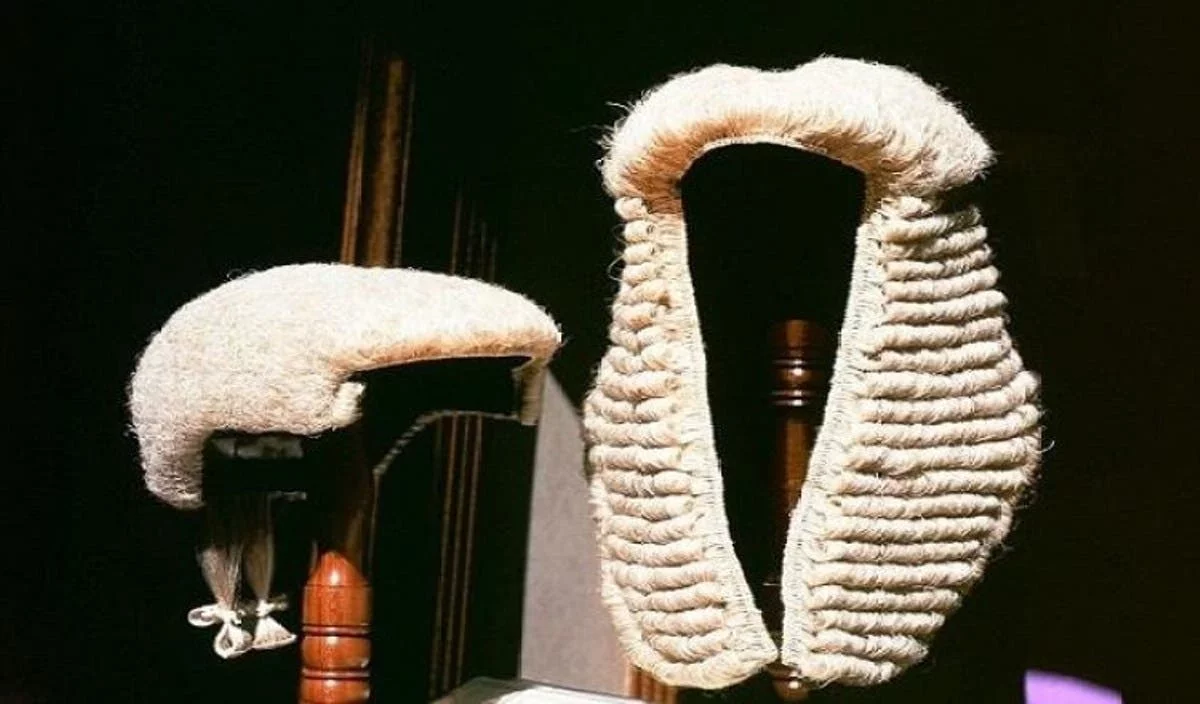
The Association of Legislative and Advocacy Drafting Practitioners (ALDRAP) has formally challenged an Abuja Federal High Court ruling that barred it from awarding the Blue Silks rank to non-litigation lawyers. In a notice of appeal filed on Thursday, the association argued that the presiding judge, Justice Omotosho, overstepped by granting a relief not requested by any party in the case.

Justice Omotosho’s verdict, delivered earlier this month, imposed a permanent injunction stopping ALDRAP and its Executive Secretary, Dr. Tonye Clinton Jaja, from continuing the conferment of the Blue Silks designation, known as Senior Counsel of Nigeria (SCN). The rank was introduced by ALDRAP as an alternative to the traditional Senior Advocate of Nigeria (SAN) title, which is awarded by the Legal Practitioners Privileges Committee (LPPC).

The Nigerian Bar Association (NBA) and the LPPC had opposed the Blue Silks initiative, labeling it unlawful and warning that lawyers who accept it could face disciplinary action for professional misconduct. In response, ALDRAP had approached the court seeking protection for its members’ rights and to prevent interference with its activities.

However, the court sided with the respondents, issuing an order that ALDRAP now contends was not sought in any of the pleadings. Dr. Jaja, in a statement, emphasized that the appeal relies on the established legal principle from the case of Odofin vs. Agu (1993), which holds that a court cannot grant reliefs not demanded by the parties.

ALDRAP further argued that the trial judge disregarded a previous ruling by Justice Mohammed Garba Umar on January 27, 2026, which stated that both the NBA and LPPC lack authority over matters outside the Legal Practitioners Act, 1962. The association also asserted that the judge overlooked correspondence dating back to 2021, in which ALDRAP informed the Chief Justice of Nigeria, the LPPC, and the NBA that the Blue Silks rank is akin to a fellowship for members who meet specific criteria.

Additionally, the group claimed the judgment failed to consider that Section 40 of the Nigerian Constitution and the Companies and Allied Matters Act 2020 provide legal backing for the SCN rank. In line with the Court of Appeal Rules, 2021, ALDRAP has instructed its legal team to file the appeal and a stay of execution motion, seeking to suspend enforcement of the decision pending the outcome of the higher court’s review.

Dr. Jaja affirmed that by filing both documents, ALDRAP has secured sufficient legal cover to continue using and conferring the Blue Silks rank without interruption.

Posted on Leave a comment

Lagos Smart Traffic System Flags Over 737,000 Offenses

Lagos Smart Traffic System Flags Over 737,000 Offenses

The Lagos State Government has announced that its Intelligent Transport System (ITS) has identified more than 737,000 traffic infractions since implementation. This initiative is part of broader efforts to enhance road safety, streamline traffic flow, and advance digital governance across Nigeria’s commercial capital.

Commissioner for Innovation, Science and Technology, Mr. Olatunbosun Alake, revealed the figures during the 2026 Ministerial Press Briefing held at Alausa on Wednesday. The event marked the seventh anniversary of Governor Babajide Sanwo-Olu’s administration.

Alake emphasized the government’s dedication to leveraging innovation, science, and technology to fortify governance, elevate public service delivery, and transform Lagos into Africa’s premier smart city.

He highlighted ongoing progress in digital governance, artificial intelligence, cybersecurity, science education, enterprise architecture, and smart city projects. Under the Safe City initiative, Lagos has bolstered digital surveillance and traffic enforcement systems across key locations throughout the state.

The commissioner noted that these measures have led to improved traffic compliance, safer roads, and more effective security management. “The Intelligent Transport System has recorded over 737,000 traffic violations to date, contributing to safer roads and better traffic behaviour across Lagos,” Alake stated.

Additionally, the Ministry has made substantial strides in digitizing government operations through the Enterprise Architecture initiative. Out of 211 Ministries, Departments, and Agencies (MDAs), 192 have been evaluated, and 232 application workloads have been documented. This standardization aims to minimize IT project expenses and boost operational efficiency.

Alake also highlighted the growing adoption of digital government services via the Lagos State Digital Service Platform, which now attracts over 250,000 monthly visitors.

Posted on Leave a comment

How Local Government Chairmen Can Drive Development in Taraba – Bawa

How Local Government Chairmen Can Drive Development in Taraba - Bawa

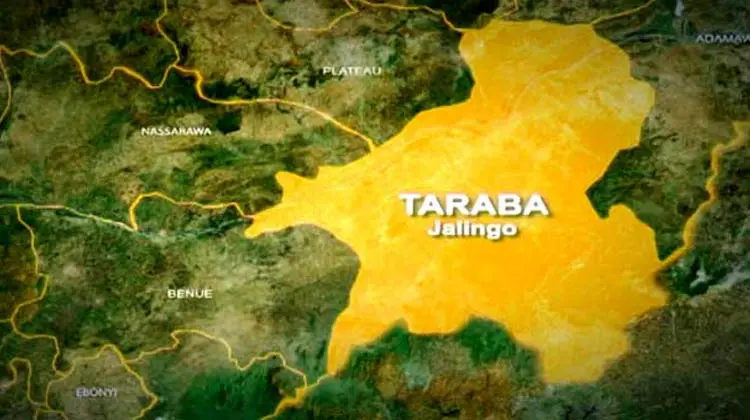
The Chairman of the All Progressives Congress in Taraba State, Abubakar Bawa, has highlighted the pivotal role that local government chairmen play in translating government policies into tangible benefits for citizens at the grassroots level.

Speaking during a strategic gathering with all 16 local government council chairmen in Jalingo on Wednesday, Bawa emphasized the importance of collaboration and party coordination to enhance governance across the state.

According to Bawa, local government chairmen are the closest administrative link to the people, making them essential in executing state government initiatives and driving development within their jurisdictions.

He called on the council leaders to actively promote party activities at the ward level and maintain strong cooperation with party structures throughout their local government areas.

Bawa also underscored the need for unity and dedication among all party stakeholders to ensure effective governance and lasting political stability in Taraba.

Responding on behalf of the council chairmen, Moses Maihankali, Chairman of the Association of Local Governments of Nigeria in Taraba and Chairman of Kurmi Local Government Council, expressed appreciation for the APC leadership’s inclusive approach and commitment to involving local government officials in decision-making processes.

Maihankali assured the party leadership of the council chairmen’s unwavering loyalty, cooperation, and full support for the state government and the APC in advancing developmental programmes across the state.

Posted on Leave a comment

Isaac Fayose Blames Underdevelopment on Alleged FAAC Diversion

Isaac Fayose Blames Underdevelopment on Alleged FAAC Diversion

In a fiery reaction to recent allegations, businessman and activist Isaac Fayose has criticized the All Progressives Congress (APC) over claims that N800 billion was diverted from the Federation Account Allocation Committee (FAAC). According to Fayose, such mismanagement of public funds is the primary reason many states remain underdeveloped.

DAILY POST had earlier reported that the African Democratic Congress (ADC) accused President Bola Tinubu and APC governors of siphoning over N800 billion from FAAC, purportedly to fund Tinubu’s 2027 re-election campaign. The opposition party claims this diversion led to a rift within the Progressive Governors Forum.

Reacting via a video on his Facebook page, Fayose called on Nigerians to be vigilant and vote out the APC in the next election. He said, “They are using your own money to buy your votes with rice and envelopes. 32 APC governors allegedly pooled N800 billion for Tinubu’s re-election. That is why your state is underdeveloped. If APC returns, things will only worsen.”

Fayose warned that allowing the APC to remain in power would further impoverish the nation. He urged citizens to wake up and take action before the 2027 polls, emphasizing that the alleged theft of public funds is a direct assault on development and the well-being of Nigerians.

Posted on Leave a comment

NUVA Brings $19B in Tokenized Assets to Ethereum DeFi

NUVA Brings $19B in Tokenized Assets to Ethereum DeFi

Animoca Brands and Nuva Labs have officially launched NUVA on Ethereum, bridging a massive $19 billion pool of tokenized assets from Figure Technologies with decentralized finance markets. The platform, supported by Animoca Brands, allows both retail and institutional participants to interact with real-world asset products that were previously confined to Provenance Blockchain.

NUVA debuts with two primary offerings: a vault linked to Figure’s SEC-registered YLDS stablecoin and another tied to a portfolio of home equity lines of credit that has processed over $16 billion in funding. Figure Technologies, founded by former SoFi CEO Mike Cagney, is a leading issuer of blockchain-native private credit products. Cagney expressed excitement about NUVA’s launch, highlighting the leverage of Provenance Blockchain’s unique capabilities to expand DeFi.

Users can deposit stablecoins into NUVA vaults, receiving ERC-20 tokens that represent ownership in the underlying assets. These tokens can be traded, lent, or used as collateral across Ethereum-based protocols, effectively turning institutional credit into composable DeFi instruments. Anthony Moro, CEO of Nuva Labs and former BNY executive, noted that the platform fills a gap by providing a unified global distribution layer for blockchain-native assets, offering institutional-grade assets in a simple and composable format.

The launch comes amid rapid growth in tokenized real-world assets, with total onchain RWAs surpassing $12 billion by March 2026, more than doubling from $5 billion at the start of 2025. Ethereum hosts over 60% of that value. Animoca, which is pursuing a Nasdaq listing through a reverse acquisition of Currenc Group, positions NUVA as the commercial distribution layer for this RWA activity. Future plans include expanding to other blockchains and adding asset classes beyond Figure’s current offerings. Moro emphasized that cheaper, faster, and safer solutions will drive all financial assets onchain.

Posted on Leave a comment

CLARITY Act Could Reverse U.S. Crypto Exodus, Says Sirkia

CLARITY Act Could Reverse U.S. Crypto Exodus, Says Sirkia

Alexis Sirkia, chairman of Yellow Network, believes the CLARITY Act represents the structural overhaul that American crypto has been urgently awaiting. For years, digital asset companies have grappled with ambiguous regulatory landscapes, often unsure which agency oversees them or if compliance standards might shift post-launch. This uncertainty, Sirkia notes, has hindered fundraising, banking relationships, and talent acquisition.

The legislation, which recently emerged from the Senate Banking Committee in a 309-page draft, aims to establish clear classification, jurisdiction, and compliance rules. Sirkia argues that most builders aren’t seeking lenient oversight but rather predictability—a framework that allows long-term planning for capital allocation and hiring. He highlights the bill’s provisions on disclosure, anti-money laundering, and oversight as crucial for scaling decentralized infrastructure globally.

The lack of regulatory clarity has driven many founders and engineers to friendlier jurisdictions like Dubai and Singapore. Sirkia warns that if the U.S. fails to act, it risks missing the next major wave of financial infrastructure innovation. The CLARITY Act, passed by the House in 2025 and advanced by the Senate Agriculture Committee early this year, has stalled in the Banking Committee over stablecoin yield rules and ethics language regarding government officials’ crypto holdings. Senator Bernie Moreno has set a firm end-of-May deadline, cautioning that missing this window could shelve the bill for years. Prediction markets estimate a 55% chance of enactment in 2026.

For Sirkia, success means founders can launch U.S.-based products without fear of retroactive enforcement, and banks will view crypto infrastructure as legitimate rather than a compliance risk. He also hopes for improved dialogue between regulators and industry participants. On the global stage, Sirkia sees the Act as a critical signal of America’s intent to lead in digital finance, impacting everything from stablecoins to tokenized assets. Yellow Network, which integrates the XRPL EVM Sidechain for real-world asset trading, is closely watching the May 14 markup. If the bill advances, expanding compliant decentralized clearing and trading infrastructure within the U.S. becomes an immediate priority.

Posted on Leave a comment

Roaring Kitty Account Hack Leads to $2.86M Meme Coin Scam

Roaring Kitty Account Hack Leads to $2.86M Meme Coin Scam

On May 11, 2026, the verified X account of Keith Gill, famously known as Roaring Kitty, was compromised. Hackers exploited the account to promote a Solana-based meme coin called Red Kitten Crew (RKC), leading to a significant financial drain for traders. The attackers quickly orchestrated a pump-and-dump scheme that netted them over $2.8 million, leaving unsuspecting investors with heavy losses.

The incident began when two posts were published from Gill’s account, which had been inactive for 16 months. The first post included a Pump.fun contract address for RKC, while the second featured a cartoon clip with a phrase related to the coin. These posts were deleted within an hour, but not before causing a surge in the coin’s market cap, which briefly reached between $11 million and $12 million.

Blockchain analytics firm Lookonchain revealed that the developer behind the scam used 10 wallets to acquire nearly 40% of the total RKC supply, spending only about $1,950. After the price spiked, the developer sold all tokens for roughly $495,000, plus an additional $118,000 in creator fees from Pump.fun. In total, over 80 wallets were involved in extracting $2.86 million during the brief rally.

This event follows a pattern of high-profile X account hijackings in the crypto space. Earlier in 2025, Pump.fun’s own account was hacked to promote a fake governance token, and Animoca Brands co-founder Yat Siu’s account was similarly compromised in December 2024 to shill a Solana meme coin. The repeated nature of these attacks highlights ongoing security vulnerabilities on social media platforms.

Interestingly, GameStop shares saw a temporary 13% increase during the RKC frenzy but quickly erased all gains. Keith Gill has not commented on the hack, and there is no evidence that he endorses any meme coins. The Roaring Kitty persona rose to fame in 2021 for sparking a massive short squeeze on GameStop stock through Reddit posts, making this incident particularly ironic given his history of retail investor advocacy.

Posted on Leave a comment

Copper-Gold Ratio Echoes 2020 Bitcoin Bull Signal

Copper-Gold Ratio Echoes 2020 Bitcoin Bull Signal

The relationship between copper and gold, often used to gauge global risk appetite, has just flashed a pattern that historically preceded major Bitcoin rallies. The ratio has climbed 25% from recent lows and is now trading above its 200-day moving average for the first time since September 2020.

This metric compares the price of copper, a key industrial metal linked to economic growth, against gold, which is sought during times of uncertainty. When the ratio rises, it signals that investors are favoring riskier assets. The current reading of 0.00142 reflects copper at $6.65 per pound and gold near $4,700 an ounce.

Similar breakouts occurred in 2013, 2017, and 2021, each aligning with the early stages of significant Bitcoin upcycles. In 2020, the ratio’s move above its 200-day moving average set the stage for Bitcoin’s climb from around $10,000 to new all-time highs.

The correlation between Bitcoin and the copper-gold ratio recently plunged nearly to -1.0 but has since rebounded to -0.11 on a 20-day moving average. Historically, this correlation trends toward +1.0 during Bitcoin’s strongest bull phases, suggesting the two assets may start moving in tandem once again.

Some analysts view the ratio as a leading indicator, often preceding Bitcoin price shifts by weeks or months. This means any potential reaction could unfold gradually rather than immediately. The signal arrives alongside a separate bullish indicator from CryptoQuant, which flipped positive on May 12 for the first time since March 2023.

That earlier CryptoQuant signal preceded a sustained rally that took Bitcoin from $20,000 to over $73,000 by April 2024. Bitcoin is currently testing the $79,000–$82,000 range, with resistance noted at $82,000–$83,000 and support at $77,500.

Despite the historical patterns, analysts caution that these signals do not guarantee future gains. Correlation does not imply causation, and macro indicators can produce false breakouts, especially in a market increasingly influenced by institutional ETF flows and regulatory changes.