Posted on Leave a comment

Kautal Pulaaku Fulbe Association Rejects Plateau Governor’s Shoot-on-Sight Order

Kautal Pulaaku Fulbe Association Rejects Plateau Governor's Shoot-on-Sight Order

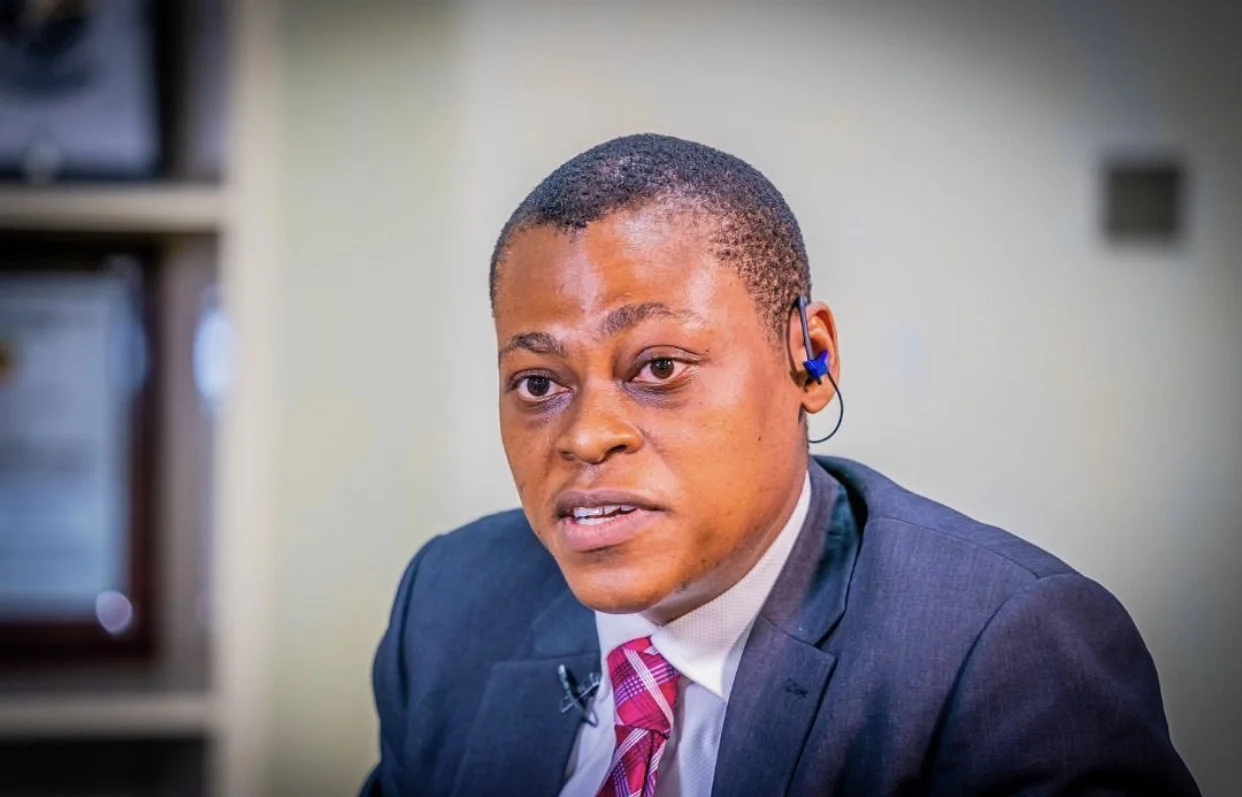
The Kautal Pulaaku Fulbe Association, a Fulani group, has voiced strong opposition to Plateau State Governor Caleb Mutfwang’s recent directive for security forces to use lethal force against individuals caught damaging farmlands. In a statement released Wednesday, the organization urged the governor to withdraw what it describes as an excessive order that could worsen the state’s security situation.

Governor Mutfwang issued the command during a security meeting on Tuesday, instructing law enforcement agents to take harsh action against criminals, particularly those targeting farming communities and destroying agricultural resources. However, the Fulani association argued that this approach is one-sided and discriminatory.

National President Dr. Muh’d Hussaini Buzaye criticized the governor for focusing solely on farmland destruction while failing to address attacks on herders and their livestock. He claimed that the state government has shown indifference toward the safety of Fulani residents, pointing to incidents of cattle rustling, livestock poisoning, and killings of herders that remain unchecked.

The group called for equal application of justice, insisting that any security measure must be enforced impartially across all communities. They emphasized that comparable actions should be taken against those involved in stealing cattle, poisoning animals, blocking roads unlawfully, assaulting innocent people, destroying military posts, and other violent acts threatening peace.

Buzaye highlighted the persistent loss of life and property suffered by Fulani members, noting that many herders are attacked while going about their daily routines. He described the recurring theft and destruction of livestock as a grave humanitarian and security crisis that demands immediate government intervention.

The association also expressed alarm over increasing hate speech, ethnic incitement, and divisive rhetoric within communities, which it says fuels tension and distrust. They demanded that anyone engaging in such behavior be held accountable, regardless of their background.

In conclusion, the Kautal Pulaaku Fulbe Association reaffirmed its dedication to peaceful coexistence and called on all stakeholders in Plateau State to collaborate with the government and security agencies to tackle insecurity, rebuild trust, and foster unity among all communities in the state and across Nigeria.
Posted on Leave a comment

Rufai Oseni Accuses Atiku of Hypocrisy Over Zoning Stance

Rufai Oseni Accuses Atiku of Hypocrisy Over Zoning Stance

Rufai Oseni, a prominent anchor on Arise News, has sharply criticized former Vice President Atiku Abubakar, labeling his behavior as deeply hypocritical. During a segment on Arise Television, Oseni argued that Atiku embraces the principle of zoning only when it works in his favor but quickly dismisses it when the circumstances shift against him.

Oseni pointed to Atiku’s past actions, recalling how the former VP took legal action against then-President Goodluck Jonathan in 2011 to enforce the Peoples Democratic Party’s (PDP) zoning formula. He questioned why Atiku now calls zoning self-defeating when it doesn’t align with his ambitions. Oseni noted that courts, while declining to rule on the matter, acknowledged the existence of zoning agreements within the PDP during those litigations.

The anchor further referenced Atiku’s departure from former President Olusegun Obasanjo in 2007, suggesting that Atiku’s stance on zoning has been inconsistent over the years. Oseni’s commentary comes as Nigeria gears up for the 2027 general elections, with zoning emerging as a contentious issue among political contenders.

Posted on Leave a comment

Account for 2023 Pledges, Dan Ulasi Urges Tinubu, Laments Public Apathy to Government Failure

Account for 2023 Pledges, Dan Ulasi Urges Tinubu, Laments Public Apathy to Government Failure

A prominent member of the opposition Peoples Democratic Party (PDP), Dan Ulasi, has called on President Bola Tinubu to provide a detailed public account of the promises he made during the 2023 presidential campaign. Speaking on Arise Television’s Morning Show on Wednesday, Ulasi urged the President to directly address Nigerians, outlining which commitments have been fulfilled, which are still in progress, and the rationale behind any delays.

Ulasi emphasized that citizens are entitled to transparency regarding the administration’s performance since taking office. He noted that while the reality of governing may differ from public perception, elected officials must still answer to the electorate when promises remain unfulfilled.

The PDP chieftain expressed concern over what he described as a troubling trend of public resignation to poor governance. He argued that many Nigerians have lowered their expectations of the government’s ability to deliver essential services, leading them to prioritize personal survival strategies outside state systems. “Citizens have become genetically accustomed to non-performance,” Ulasi stated, adding that most people now focus on alternative means of income rather than relying on government provision of water, food, or even teacher salaries.

He called for a national broadcast where Tinubu would be held accountable for his campaign pledges, insisting that Nigerians cannot afford to abandon their fate to fate alone. “Our problems are many, but we must not leave them to chance,” he concluded.

Posted on Leave a comment

Atiku’s Ally Claims Ribadu’s Position Weakened Under Tinubu After US Visit

Atiku's Ally Claims Ribadu's Position Weakened Under Tinubu After US Visit

Paul Ibe, a spokesperson for Atiku Abubakar, who is seeking the presidential ticket of the African Democratic Congress (ADC), has suggested that National Security Adviser Nuhu Ribadu has been quietly marginalized by President Bola Tinubu’s administration. This allegation surfaces amid the recent appointment of retired Major General Adeyinka Fadewa as Special Adviser on Homeland Security.

The creation of the Homeland Security role has stirred debate, with many Nigerians interpreting it as a potential replacement for the NSA’s office, hinting at a possible rift between Ribadu and the presidency. Ibe, in a post on X on Wednesday, asserted that Ribadu’s office has been effectively sidelined, linking the development to the NSA’s trip to the United States.

According to Ibe, the final trigger for Tinubu’s decision may have been Ribadu’s meetings with US Vice President JD Vance and Secretary of State Marco Rubio during that visit. He accused Ribadu of publicizing these meetings through newspaper publications, despite knowing that the president himself cannot travel to the US. Ibe’s comments underscore growing speculation about tensions within the administration.

Posted on Leave a comment

NMA Akwa Ibom Calls Indefinite Strike Over Alleged EFCC Assault at UUTH

NMA Akwa Ibom Calls Indefinite Strike Over Alleged EFCC Assault at UUTH

The Nigerian Medical Association (NMA) in Akwa Ibom State has initiated an indefinite work stoppage following the reported attack, arrest, and detention of healthcare workers by operatives of the Economic and Financial Crimes Commission (EFCC) at the University of Uyo Teaching Hospital (UUTH).

This decision emerged from an emergency congress held on Tuesday in Uyo. According to the NMA, the incident unfolded when EFCC agents allegedly invaded the hospital premises during an operation, resulting in the assault and detention of several doctors, including Professor Eyo Ekpe, the Deputy Chairman of the Medical Advisory Committee at UUTH.

In a communiqué signed by Professor Aniekan Peter, the state NMA Chairman, and Dr. Ighorodje Edesiri, the Secretary, the association strongly denounced the occurrence, calling it a breach of the hospital’s sanctity. “We unequivocally condemn the invasion of the hospital and the assault on medical personnel by EFCC operatives,” the statement declared.

The association has announced an immediate and total suspension of medical services across the state until all detained members are released and their conditions are met.

In response, the EFCC has denied any assault on medical staff, asserting that its operatives merely went to the hospital to authenticate a medical report related to an ongoing investigation.

Posted on Leave a comment

Ex-Minister of Power Saleh Mamman Gets 75-Year Sentence for N33.8 Billion Theft

Ex-Minister of Power Saleh Mamman Gets 75-Year Sentence for N33.8 Billion Theft

In a landmark ruling, a Federal High Court in Abuja has convicted former Power Minister Saleh Mamman, sentencing him to 75 years in prison for embezzling approximately N33.8 billion in public funds. The case, prosecuted by the Economic and Financial Crimes Commission (EFCC), involved money laundering and conspiracy charges linked to the Zungeru and Mambilla hydroelectric power projects.

The court’s decision represents a significant turn of events, moving beyond an earlier phase where the judge had only dismissed Mamman’s no-case submission and mandated him to present his defense. This conviction underscores the judiciary’s commitment to tackling high-level corruption in Nigeria’s power sector.

Further details on the sentencing and its implications are expected to emerge as the legal process continues.

Posted on Leave a comment

SKYAI Jumps 44% While ONDO Drops 10% as Market Rotates to AI Tokens

SKYAI Jumps 44% While ONDO Drops 10% as Market Rotates to AI Tokens

The cryptocurrency market saw a sharp divergence on Tuesday as AI-focused tokens surged while real-world asset (RWA) platforms faced steep declines. SKYAI, a token riding the agentic AI narrative, soared 44.45% to $0.5792, making it the top gainer among the top 100 cryptocurrencies by market cap. In contrast, Ondo Finance’s ONDO token tumbled 10.28% to $0.3908, highlighting a clear rotation from RWA and yield infrastructure into AI-adjacent assets.

Other AI-linked tokens also posted strong gains. BUILDon rose 15.32% to $0.6454, and Humanity climbed 13.06% to $0.2646. Injective added 7.06% to $4.66, while JUST increased by 2.95% to $0.08974. This broad-based advance among AI and DeFi tooling tokens suggests capital is flowing from established large-caps into higher-beta mid and small-cap projects, a pattern often seen during early altseason phases. Analysts have noted that such rotations are driven by speculation around emerging narratives like agentic AI, which is projected to grow from $7.29 billion in 2025 to $139.19 billion by 2034.

The losses on Tuesday were concentrated among RWA and yield infrastructure tokens. Aerodrome Finance dropped 10.16% to $0.4725, Ethena fell 7.57% to $0.1204, Sei declined 7.03% to $0.0695, and Virtuals Protocol slid 6.99% to $0.8131. For ONDO, the 10% sell-off came despite a series of positive announcements, including the bridging of 35 tokenized assets to Hyperliquid’s HyperEVM and participation in Ripple’s tokenized Treasury settlement test. Traders appeared to be engaging in a “buy the rumor, sell the news” pattern, rotating profits into higher-momentum plays like SKYAI.

The divergent fortunes of SKYAI and ONDO underscore a broader market trend where investors are differentiating between projects with durable infrastructure narratives and those treated as pure momentum plays. While SKYAI’s surge reflects growing institutional interest in AI-driven crypto solutions, ONDO’s decline may represent healthy consolidation after a strong run, given its fundamental advancements in tokenizing traditional assets.

Posted on Leave a comment

ECB rift: Beau urges euro stablecoins now, Lagarde waits

ECB rift: Beau urges euro stablecoins now, Lagarde waits

The deputy governor of the Banque de France, Denis Beau, has publicly broken ranks with European Central Bank President Christine Lagarde over the pace of developing euro-denominated stablecoins. Speaking on May 12, Beau called for immediate action from both public and private sectors to create tokenized euro-based money, warning that dollar-pegged stablecoins threaten Europe’s monetary sovereignty. He stressed that dollar tokens from issuers like Tether and Circle dominate 98% of the stablecoin market, posing a risk of digital dollarization in European payment systems.

Beau’s position contrasts sharply with Lagarde’s cautious approach, which favors waiting for a state-issued digital euro expected around 2029. While Lagarde has repeatedly warned that private stablecoins could amplify financial vulnerabilities, Beau argues that private-sector solutions are essential for Europe’s economic development now, without delaying for a retail central bank digital currency. He pointed to the risk of digital dollarization at the settlement infrastructure level if euro alternatives lack sufficient liquidity.

Beau’s stance aligns with Qivalis, a consortium of 12 major European banks including BBVA, ING, UniCredit, and BNP Paribas, which plans to launch a euro-pegged stablecoin in the second half of 2026. He also highlighted the Eurosystem’s Pontes project, set to deploy wholesale central bank money in tokenized form by the end of 2026. Beau described this as a foundation rather than a complete solution, noting that a first deliverable will be available by year-end.

The internal divide within the ECB reflects a broader strategic disagreement across European institutions. While Lagarde has emphasized financial stability risks from both dollar and euro stablecoins, Beau and French Finance Minister Roland Lescure have pushed for aggressive private-sector development of euro stablecoins as a near-term countermeasure. The German central bank has also signaled openness to euro-denominated stablecoins to improve cross-border payment efficiency. The gap between the ECB’s retail CBDC timeline and the immediate commercial pressure from dollar stablecoins is giving central bankers across Europe more reason to support private alternatives rather than waiting for a state-led solution.

Posted on Leave a comment

Aave Governance to Vote on Recovering $71M in Frozen ETH

Aave Governance to Vote on Recovering $71M in Frozen ETH

Aave is moving forward with a governance vote to reclaim 30,765 ETH, worth about $71 million, that was frozen after the Kelp DAO exploit. The token transfer aims to restore funds to affected users and repair lending markets disrupted by the attack.

The onchain vote, opening on May 15, would move the ETH from Arbitrum’s Security Council wallet to an Aave LLC address. This step follows a court order that allowed the transfer while preserving legal claims from creditors tied to North Korea.

Judge Margaret Garnett modified a prior freeze on May 9, enabling the transfer through governance. The ruling continues to shield voters from personal liability but keeps the terrorism creditors’ claim active, meaning Aave could still face legal challenges over the funds.

The 30,765 ETH was frozen on April 21 when Arbitrum’s Security Council intercepted it after the Kelp DAO bridge exploit on April 18. Attackers used unbacked rsETH tokens on Aave v3 to borrow around $230 million in wrapped ETH, causing over $190 million in bad debt and disrupting DeFi lending.

The situation took a legal turn when Gerstein Harrow LLP, representing families with $877 million in unpaid terrorism judgments against North Korea, argued the ETH is North Korean property because blockchain analytics tied the exploit to Lazarus Group. No court has confirmed this legal status.

Aave founder Stani Kulechov firmly stated that the funds belong to the affected users, not the attackers. Aave had filed an emergency motion to vacate the restraining notice, arguing that stolen property does not become the thief’s lawful possession just because it moves on-chain.

The DeFi United recovery initiative has already raised over $314 million in ETH commitments from protocols like Mantle, EtherFi, Lido DAO, and others. This $71 million transfer is a key remaining piece to close the backing gap for rsETH.

Voting on the binding proposal opened May 15 and is expected to take about eight days before the ETH can move from Arbitrum to Ethereum via the standard L2-to-L1 delay. The court dispute with terrorism creditors remains unresolved, and if the plaintiffs win, Aave could be forced to surrender the recovered ETH even after the transfer completes.

Posted on Leave a comment

MARA Holdings Pivots from Bitcoin to AI Data Centers

MARA Holdings Pivots from Bitcoin to AI Data Centers

MARA Holdings, once a major bitcoin miner, has dramatically shifted its strategy by selling $1.5 billion worth of bitcoin in the first quarter of 2026. This move, which involved offloading 20,880 BTC at an average price of $70,137, has seen the company slide from the second to the fourth largest public holder of the cryptocurrency. The proceeds were largely used to repurchase convertible notes, bolstering the firm’s financial flexibility.

The company’s latest financial report reveals a significant drop in revenue, which fell by 18% year-over-year to $174.6 million, and a net loss of $1.26 billion, attributed mainly to a 22% decline in bitcoin’s value during the quarter. As of March, MARA held 35,303 BTC, valued at around $2.4 billion.

MARA is now redefining itself as a digital infrastructure company focused on converting energy into high-value computing tasks, with artificial intelligence and high-performance computing becoming central to its operations. Management has indicated that up to 90% of its non-hosted mining capacity could eventually be repurposed for AI and critical IT workloads. Additionally, the company has no immediate plans to buy more bitcoin mining hardware.

In a move to solidify its AI ambitions, MARA has agreed to acquire Long Ridge Energy and Power, a 505-megawatt gas plant in Ohio, for $1.5 billion. The site, spanning 1,600 acres, has the potential to support over one gigawatt of AI and computing capacity. A joint venture with Starwood Capital, announced earlier, is also progressing, with MARA providing energy-rich sites and Starwood handling design and construction.

This pivot mirrors a broader trend among publicly traded miners shifting towards AI. For instance, Core Scientific is converting its Texas site into a massive AI data center, while IREN completed a $3.4 billion deal with Nvidia. Since late 2024, public miners have collectively secured over $70 billion in AI infrastructure contracts.

Fred Thiel, MARA’s CEO, emphasizes that bitcoin mining remains foundational but is now a stepping stone for broader computing services. The company also acquired a controlling stake in Exaion, a French AI and HPC data center operator, for $174.5 million during the quarter.