Posted on Leave a comment

Nigeria Customs Service Seizes N2.35bn Cocaine, Recovers N5.5bn Worth of Contraband

Nigeria Customs Service Seizes N2.35bn Cocaine, Recovers N5.5bn Worth of Contraband

The Nigeria Customs Service (NCS) has intercepted a significant consignment of cocaine valued at N2.35 billion, along with other prohibited items including explosives, petrol, and synthetic cannabis. The total worth of recent seizures now exceeds N5.5 billion, according to an announcement by the agency.

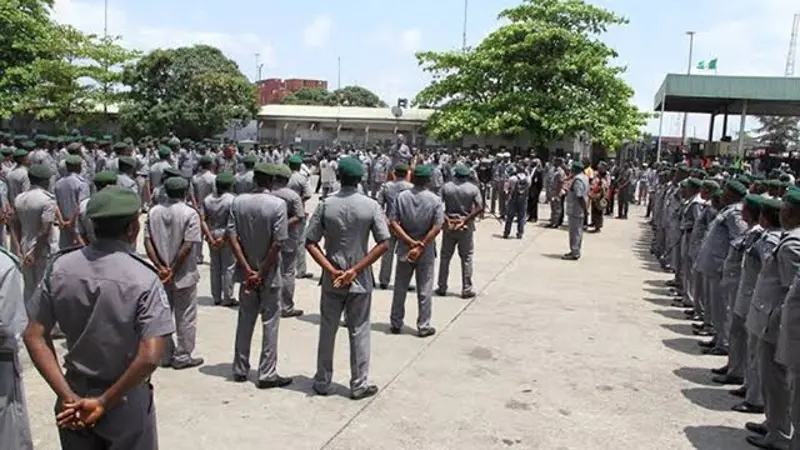
Comptroller Gambo Aliyu of the Federal Operations Unit, Zone A, made this known on Tuesday in Lagos during a handover ceremony of confiscated narcotics and suspects to the National Drug Law Enforcement Agency (NDLEA). He detailed that operatives had thwarted 473 smuggling attempts over an eight-week period, calling it a major breakthrough in anti-smuggling efforts.

The cocaine was seized during a targeted operation along the Lagos-Abidjan corridor, where officers intercepted a Toyota Highlander carrying the illicit substance. A 71-year-old suspect was arrested in connection with the incident. Aliyu noted that the seizures occurred across multiple states—Lagos, Ogun, Oyo, and Ondo—and several individuals have been taken into custody.

In addition to the narcotics, the customs unit also recovered four 80-kilogram cylinders of mercury, a hazardous material under international environmental regulations. The mercury will be handed over to the National Environmental Standards and Regulations Enforcement Agency for further investigation.

Aliyu highlighted that enforcement was intensified under ‘Operation Hawk,’ a targeted initiative to dismantle narcotics trafficking networks. This operation led to the seizure of 3,340 parcels of synthetic cannabis, weighing a total of 1,540 kilogrammes. Furthermore, the unit recovered N97.7 million from underpaid duties between February 3 and April 28, 2026, through heightened enforcement actions.

The cumulative duty-paid value of all seizures stands at over N5.5 billion, demonstrating sustained efforts to combat economic sabotage. Aliyu also revealed the use of advanced technologies such as geospatial intelligence, satellite imagery, drones, and predictive analytics to monitor and intercept smuggling activities.

The seized drugs and three suspects were formally transferred to the NDLEA for further investigation and prosecution. Receiving the items, NDLEA Commander Ibrahim Kabiru commended the customs operatives for their professionalism and collaboration. He confirmed receiving two parcels of suspected cocaine weighing 2.30kg, four parcels of crack cocaine weighing 4.05kg, 3,340 cannabis parcels, and three suspects. Kabiru emphasized that these interceptions send a strong message that Lagos and its environs are not safe havens for drug trafficking and praised the ongoing partnership between the agencies.
Posted on Leave a comment

Fuel Subsidy Will Not Return, Oyedele Affirms

Fuel Subsidy Will Not Return, Oyedele Affirms

Nigeria’s Finance Minister, Taiwo Oyedele, has firmly stated that the government has no plans to bring back fuel subsidies. Speaking during a meeting between President Bola Tinubu and international investors in Paris, France, Oyedele emphasized that subsidies had previously caused significant economic distortions. He argued that leaving petrol prices to market forces is the best path forward, as the administration trusts free-market mechanisms over regulated pricing.

The removal of the subsidy in May 2023 led to a sharp rise in inflation, which hit a 19-year high. Headline inflation soared from 22.41% in May 2023 to 34.19% by June 2024, largely driven by higher fuel, food, and transportation costs. These increases worsened living conditions across the country. Food inflation alone climbed above 39% by October 2024, while transportation expenses jumped nearly 300%, deepening poverty levels.

During the Paris meeting, President Tinubu highlighted that removing the subsidy had helped stabilize foreign exchange markets. “The subsidy was a burden on the entire nation, and after its removal, we achieved FX stability,” he told investors. His adviser, Bayo Onanuga, added that the government’s reform agenda aims to eliminate economic distortions and strengthen macroeconomic stability for long-term inclusive growth.

Oyedele pointed to strong economic indicators, noting that Nigeria recorded 11.2% GDP growth in dollar terms in 2025, supporting the goal of building a $1 trillion economy by 2030. He also stressed that the government’s immediate priority is ensuring reforms translate into real benefits for citizens, with a commitment to publishing quarterly financial reports. The Director-General of the Debt Management Office, Patience Oniha, assured investors of prudent debt management and sustainable borrowing practices.

The investor group included representatives from Citibank, France’s Amundi, BlueCrest, Ninety One, Kirkoswald Capital, Principal Finisterre, PGIM, and Mesarete Capital. President Tinubu, who was on a three-nation trip, reiterated that his administration’s economic reforms are designed to stabilize key indicators and create a foundation for sustained growth. He also pledged to deepen reforms, improve transparency in the oil sector, and implement a comprehensive security strategy, including decentralizing the police and tackling terrorist financing. “Policy stability and diligent execution are crucial to ensuring these strategic shifts benefit all Nigerians,” Tinubu said.

Posted on Leave a comment

Army Promotion Exam 2026: Integrity Key, Commander Warns Board

Army Promotion Exam 2026: Integrity Key, Commander Warns Board

As the Nigerian Army gears up for the 2026 Captain to Major Written Promotion Examination, the commander overseeing the process has issued a firm directive: no compromises will be tolerated. Major General Peter Malla, who leads the Training and Doctrine Command (TRADOC), addressed members of the examination panel on May 3, 2026, at the Nigerian Army School of Supply and Transport in Benin City, stressing the need for absolute professionalism and fairness.

Malla, who also chairs the panel, emphasized that every candidate must be evaluated strictly on leadership qualities, critical thinking, and preparedness to tackle modern security threats. He reminded panelists to adhere rigorously to the Nigerian Army Charter for Promotion Examinations 2022 (Revised), ensuring the exercise remains transparent and credible. The commander expressed optimism that the process would be conducted smoothly and acknowledged the support from the Chief of Army Staff.

Earlier, the school’s commandant, Major General Adebayo Adegbite, confirmed that the institution is fully prepared to host the examination and guarantee an efficient operation. The statement was released by Felicia Daniel, Acting Deputy Director of Army Public Relations for TRADOC, and published on the official Nigerian Army page on May 3, 2026. The army’s call underscores its commitment to upholding merit and integrity in officer promotions, vital for maintaining combat readiness.

Posted on Leave a comment

Plateau Governor Accuses Politicians of Fueling Insecurity

Plateau Governor Accuses Politicians of Fueling Insecurity

Governor Caleb Mutfwang of Plateau State has pointed fingers at certain politicians, alleging they are behind the persistent violence and insecurity plaguing the region. Speaking during a meeting with journalists at the Government House in Jos, he claimed that these attacks are orchestrated by individuals seeking political gain, particularly around election periods.

Mutfwang highlighted several incidents, including the Dogo Nahawa massacre in 2010, which claimed over 1,000 lives, and the recent attack on the Angwan Rukuba community, where more than 30 people were killed. He argued that the timing of these events points to a political motive rather than mere terrorism. “I am confident in stating that the insecurity in Plateau is fueled by desperate politicians aiming to destabilize the state,” Mutfwang asserted.

The governor also noted that recent attacks in predominantly Muslim areas like Kanam, Wase, and Quan Pan further discredit claims of religious extremism, as attackers would not target their own faith. “Our findings indicate that these acts are politically motivated. We are determined to prevent them from succeeding,” he added.

Posted on Leave a comment

Coinbase Lays Off 700 Employees, Blames AI Gains

Coinbase Lays Off 700 Employees, Blames AI Gains

Coinbase has announced the termination of approximately 700 employees, representing about 14% of its workforce. The decision, revealed on May 5 by CEO Brian Armstrong, is directly linked to advancements in artificial intelligence that enable smaller teams to achieve what formerly required larger groups. Armstrong highlighted that AI is reshaping the cost structure of engineering, making productivity soar without proportional staffing. The company expects to incur between $50 million and $60 million in restructuring costs. Shares of Coinbase rose following the announcement, indicating investor optimism over projected margin improvements. This move places Coinbase among a growing list of major technology firms that are leveraging AI efficiency gains to justify staff reductions. Armstrong had previously hinted at this shift, stating in April that Coinbase would eventually have more AI agents than human employees. The layoffs come as Coinbase intensifies its lobbying efforts for the Clarity Act, spending $1.07 million in the first quarter of 2026. The company reversed its earlier stance on the bill after a compromise on stablecoin yields. A leaner workforce strengthens Coinbase’s position amid pending regulatory decisions. Other crypto companies like Gemini and Crypto.com have also cited AI integration as a factor in their own layoffs earlier this year. However, Coinbase’s announcement is distinct due to its size and the explicit linkage of AI productivity—rather than market conditions—to the job cuts.

Posted on Leave a comment

Dubai Fund Launches $100M IPO Vehicle for AI and DeFi Mid-Caps

Dubai Fund Launches $100M IPO Vehicle for AI and DeFi Mid-Caps

Global Millennial Capital, based in Dubai, has successfully raised a $100 million IPO Opportunities Fund, targeting mid-cap technology firms in artificial intelligence and decentralized finance (DeFi) that are often overlooked by larger investors. The fund, backed by family offices from Saudi Arabia, Kuwait, and Qatar, along with international wealth managers, aims to provide institutional and professional investors access to late-stage private placements in companies valued between $5 billion and $20 billion.

This new fund focuses on firms approaching public listings or strategic exits within one to three years, a phase GMCL believes is underpenetrated. Megafunds typically chase mega-caps, while early-stage VCs exit before late-stage rounds, leaving a gap that GMCL intends to fill. The strategy emphasizes scalable business models, predictable revenue, and mature governance, with a tilt toward AI and DeFi infrastructure.

GMCL uses an AI-driven screening process to evaluate global deal flow, actively managing risk while targeting key inflection points before IPOs or sales. The firm previously ran a $20 million early-stage fund backing transformative ventures in the U.S. and MENA, which laid the groundwork for this expansion into late-stage opportunities. By bridging Gulf capital with global tech mid-caps, GMCL positions itself as a conduit for DeFi and AI companies preparing for public markets.

Posted on Leave a comment

Bullish’s $4.2B Equiniti Deal Targets Tokenized Securities

Bullish's $4.2B Equiniti Deal Targets Tokenized Securities

In a strategic move to dominate the institutional bridge between traditional finance and blockchain, crypto exchange Bullish has announced the acquisition of Equiniti, a major transfer agent, for $4.2 billion. This acquisition, revealed on May 5, positions Bullish as a foundational player in the tokenized securities market by integrating a service that manages records for 20 million shareholders and works with 3,000 large corporations.

Transfer agents are essential to capital markets, handling everything from ownership records to dividend distributions. By acquiring Equiniti, Bullish gains direct access to the data infrastructure that tokenized securities require to operate at an institutional level—a competitive edge that is hard to replicate quickly.

The timing aligns with recent regulatory progress: Nasdaq received SEC approval in March 2026 to test tokenized stock trading, and the Federal Reserve has issued guidelines for banks on tokenized securities. These developments validate the market and make Bullish’s bet commercially viable.

Bullish’s vision extends beyond simply owning a piece of infrastructure. The company aims to reorient Equiniti around tokenization, betting that blockchain will underpin the next phase of capital markets. With 20 million shareholder records and existing client relationships, Equiniti provides the legal and operational foundation needed to transition equity issuers onto blockchain rails with regulatory confidence.

The tokenized stock market is already growing, with a $1.2 billion market cap as institutions like Nasdaq, Securitize, and Ondo Finance build competing platforms. However, none of these rivals currently possess a working transfer agent with 3,000 corporate clients. This acquisition gives Bullish a structural advantage that cannot be quickly matched.

Posted on Leave a comment

K Wave Media Abandons Bitcoin for AI Infrastructure

K Wave Media Abandons Bitcoin for AI Infrastructure

In a dramatic shift, K Wave Media has walked away from its ambitious Bitcoin treasury plan. The Nasdaq-listed firm had previously earmarked nearly half a billion dollars to acquire Bitcoin, with about $485 million already committed. But on May 5, the company announced it is redirecting those funds into AI data centers and GPU hardware, effectively shelving its cryptocurrency strategy.

CEO Ted Kim described the decision as a defining moment for the company, emphasizing that it is a strategic pivot rather than a retreat driven by market conditions. Alongside the capital reallocation, K Wave Media plans to rebrand as Talivar Technologies, pending shareholder approval at the annual meeting in early July 2026. The announcement sent shares tumbling 24%, reflecting investor skepticism about whether AI infrastructure can offer the same straightforward exposure to digital assets that a Bitcoin treasury once promised.

This reversal marks a significant departure from the corporate Bitcoin treasury trend that gained momentum over the past three years. As previously reported, Asian firms like Top Win and Quantum Solutions had followed similar plays, raising capital to expand their Bitcoin holdings. K Wave’s about-face publicly repudiates that playbook. Notably, the pivot aligns with a broader industry shift toward AI. Several major crypto companies have cited AI as a catalyst for capital reallocation in early 2026. Bitcoin miner Hut 8, for instance, secured $150 million from Coatue in 2024 to build an AI infrastructure platform, and K Wave is now charting a comparable course through data center investments and acquisitions.

Coinbase also made headlines on the same day, announcing 700 job cuts with CEO Brian Armstrong directly linking the reduction to AI making teams more productive. Coinbase’s experimentation with AI agents internally reflects the same directional shift that K Wave has now executed at the capital allocation level. The 24% drop in K Wave’s share price indicates that investors are watching closely to see whether the Talivar Technologies rebrand can establish a credible new narrative from scratch.

Posted on Leave a comment

Aave Files Motion to Block North Korea ETH Seizure

Aave Files Motion to Block North Korea ETH Seizure

Aave LLC has submitted an urgent legal request to a federal court in New York, aiming to release 30,765 ETH valued at approximately $71 million. This action seeks to overturn a freeze order that prevents the funds from reaching individuals who suffered losses in a previous security breach.

The contested assets are tied to users affected by the April 18 Kelp DAO bridge exploit, according to the filing. Aave asserts that these funds should not be classified as property belonging to North Korea, despite allegations linking the attackers to the Lazarus Group.

The restraining order was issued on May 1 at the request of Gerstein Harrow LLP, representing creditors who hold $877 million in default judgments against North Korea for terrorism-related claims. Their argument posits that the ETH constitutes recoverable assets of the North Korean state.

Aave strongly contests this notion, emphasizing that stolen assets do not become the lawful property of the thief simply because they were moved across blockchain addresses. The DeFi platform argues that recognizing such a claim would undermine fundamental legal principles and unfairly penalize innocent parties.

The outcome of this case carries significant implications for decentralized finance, as it could set a precedent for how courts handle recovery funds attributed to state-sponsored actors. Aave is requesting an immediate lifting of the freeze or, alternatively, that the plaintiffs post a $300 million bond to proceed.

No hearing date has been scheduled, but the DeFi community is closely monitoring the situation, as it may affect future collaborative recovery efforts across multiple protocols. More than $314 million has already been raised by various DAOs to restore the backing of rsETH, with the frozen funds playing a crucial role in that plan.

Posted on Leave a comment

Crypto ETPs Extend Inflow Streak to Five Weeks, Surpassing $4 Billion

Crypto ETPs Extend Inflow Streak to Five Weeks, Surpassing $4 Billion

For the fifth week in a row, crypto asset exchange-traded products attracted fresh capital, with cumulative inflows over that span exceeding $4 billion despite a turbulent week that saw a sharp midweek reversal. CoinShares reported net inflows of $117.8 million for the week ended Friday, pushing total assets under management to nearly $155 billion. However, the weekly figure masks significant volatility: from Monday through Thursday, products experienced $619 million in net outflows, only to be rescued by a massive $737 million surge on Friday that flipped the balance positive. Regionally, U.S. flows slowed to about $47.5 million from the previous week’s $1.1 billion, while Germany and Canada contributed $43.8 million and $16 million, respectively. The report noted that only four assets saw meaningful inflows, down from nine previously, indicating a midweek sentiment drop that reversed late. Bitcoin-linked products led with $192.1 million in inflows, primarily via U.S. spot ETFs, while Ethereum products saw $81.6 million in outflows as traders rotated away. CoinShares analysts described the backdrop as fragile but positive, with institutional investors selectively adding Bitcoin exposure while remaining cautious on other assets.