Posted on Leave a comment

Coinbase Pushes Congress to End Stablecoin Spending Taxes

Coinbase Pushes Congress to End Stablecoin Spending Taxes

Coinbase has called on U.S. lawmakers to eliminate capital gains taxes on stablecoin transactions and ease reporting requirements for small crypto purchases. In testimony delivered on June 9 before the House Ways and Means Committee, Lawrence Zlatkin, vice president of tax at Coinbase, argued that the current tax system forces individuals to track gains and losses for everyday stablecoin payments and blockchain fees, creating compliance headaches without generating significant tax revenue.

Zlatkin appeared during a hearing focused on six proposed bills aimed at updating how digital assets are treated under U.S. tax law. These proposals cover areas such as mining rewards, staking income, charitable donations, broker reporting, and transaction-level taxes. He emphasized that federally regulated stablecoins pegged to the U.S. dollar should be treated at face value, as they are designed to maintain a one-to-one peg to the dollar. Under current rules, users must track cost basis and calculate gains or losses every time they spend stablecoins, even when the value barely changes—a requirement Zlatkin described as generating paperwork without providing practical tax benefits.

Coinbase also endorsed a proposal by Congressman Rudy Yakym to exempt gas fee transactions of up to $10 from tax reporting. Additionally, the company advocated for a broader de minimis exemption for small purchases made with Bitcoin and other cryptocurrencies, so consumers would not need to compute taxable gains on low-value transactions. This follows earlier discussions about crypto tax exemptions; in March, Coinbase CEO Brian Armstrong denied claims that he had lobbied against a Bitcoin tax exemption, stating he personally supported a de minimis rule for Bitcoin payments.

Beyond transaction taxes, Coinbase backed legislation by Congressman Mike Carey that would allow miners and validators to defer taxation on newly created digital assets until they are sold. Zlatkin compared digital asset production to farming, noting that a farmer is not taxed when wheat sprouts but only when the crop is harvested and sold. He stressed that similar logic should apply to mining and staking rewards.

Regarding wash-sale rules, which currently prevent investors from claiming tax losses if they repurchase the same asset within 30 days, Coinbase supports applying these restrictions to crypto markets but warned of implementation challenges. Digital assets trade continuously across centralized exchanges, decentralized pools, and self-custody wallets, and the industry lacks a unified system to detect wash-sale violations in real time. Coinbase requested an 18- to 24-month transition period before any crypto wash-sale rules take effect, cautioning that immediate implementation could lead to reporting errors and increased IRS audits.

The testimony arrives as policymakers continue debating broader crypto regulation. Recent proposals from the New York State Department of Financial Services aim to align state stablecoin oversight with the GENIUS Act. Meanwhile, crypto investment firm Paradigm has urged the FDIC to revise parts of its stablecoin framework that could restrict third-party rewards. Coinbase and Ripple have also pressed Congress to advance the CLARITY Act, a market structure bill that preserves certain stablecoin reward programs.

Posted on Leave a comment

Visa Partners with OpenAI to Advance AI-Powered Stablecoin Commerce

Visa Partners with OpenAI to Advance AI-Powered Stablecoin Commerce

Visa has unveiled a suite of enhancements at its Payments Forum 2026, focusing on artificial intelligence, stablecoins, and tokenization. These innovations aim to streamline and automate commerce for financial institutions and merchants. The payments giant is collaborating with OpenAI to embed secure payment capabilities into agentic AI experiences, marking a significant step in merging AI with financial transactions.

Jack Forestell, Visa’s Chief Product and Strategy Officer, highlighted the transformative impact of AI and stablecoins on both the front and back ends of commerce. He emphasized Visa’s commitment to providing secure, reliable infrastructure at a global scale. The new Visa Intelligent Commerce platform empowers AI agents to perform transactions autonomously, complete with controls and connectivity for trusted dealings. Additionally, Visa and New Generation introduced the Agent Score, a tool that evaluates an AI agent’s ability to navigate and complete tasks on merchant websites. An Agentic Directory was also launched to facilitate trust between verified agents and merchants.

Token upgrades are a key component of Visa’s strategy. The company is enhancing its payment tokens to carry richer data and context, including transaction type, token usage, and payment origin. A new token assurance signal uses provisioning and behavioral history to measure trust, helping issuers make better approval decisions and reduce false declines. Visa believes that AI-driven commerce requires stronger identity and permission signals that work across multiple devices and channels.

Visa’s Crypto Labs demonstrated early concepts where AI agents can pay for digital services via a terminal. Forestell noted that an increasing number of transactions will be initiated by developers using AI tools, and Visa aims to ensure that cards function seamlessly in command-line environments.

On the stablecoin front, Visa announced expanded settlement capabilities. The company reported a $7 billion annualized stablecoin settlement run rate as of March 2026, with issuing banks settling onchain seven days a week. Visa is working to extend this capability to acquirers. It is also developing a technology layer for tokenized deposits, enabling banks to create programmable digital money from traditional deposits while keeping funds on their balance sheets. This approach offers stablecoin-like speed without moving funds off the balance sheet. Furthermore, Visa has over 160 stablecoin-linked card programs live or in development globally.

Visa also introduced modular, cloud-native services like Pismo, Unified Checkout, and Visa Intelligent Authorization to help clients modernize their systems. Forestell concluded that while many innovations emerge, only those with trust, security, and global reach achieve lasting scale.

Posted on Leave a comment

Curve’s Llamalend v2 Overhauls DeFi Lending with Isolated Markets and LP Token Collateral

Curve's Llamalend v2 Overhauls DeFi Lending with Isolated Markets and LP Token Collateral

Curve Finance has introduced Llamalend v2 on Optimism, marking a significant shift in its decentralized lending approach. This upgrade breaks away from the previous model by allowing isolated lending markets and non-crvUSD borrowing pairs, expanding the protocol’s flexibility. The initial phase features three isolated markets: ETH against wstETH, wstETH against USDC, and WBTC against USDC, all starting with zero borrow caps until governance approves debt limits.

A key innovation is the support for LP tokens as collateral. Liquidity providers can now deposit Curve LP tokens, continue earning trading fees, and borrow against those positions simultaneously. This integration ties lending more closely to Curve’s exchange infrastructure. The update also hints at future support for other productive collateral types, such as yield-bearing vault assets and principal tokens from fixed-yield strategies.

The liquidation model remains unchanged from v1, using a graduated liquidation range that converts collateral into borrowed assets as prices move through predefined levels. This design aims to reduce concentrated liquidation pressure during market stress and give borrowers more time to manage positions. Each market retains its own risk controls, including collateral asset, borrowed asset, oracle configuration, borrowing limits, and risk parameters.

For the rollout, LlamaRisk will review proposed collateral assets and oversee market assessments before governance approval. Isolated markets help contain risks to specific pairs. The launch includes a 250,000 OP token grant from the Optimism Foundation, with an initial incentives campaign distributing 100,000 OP tokens via Merkl across the first markets. Curve chose Optimism to observe contract behavior in a lower-risk environment, with an Ethereum mainnet launch expected later this year. This follows Curve’s recent bad-debt recovery framework, which converts distressed lending positions into tradable claims.

Posted on Leave a comment

Brad Garlinghouse Agrees Wall Street Is Now Following XRP’s Path

Brad Garlinghouse Agrees Wall Street Is Now Following XRP's Path

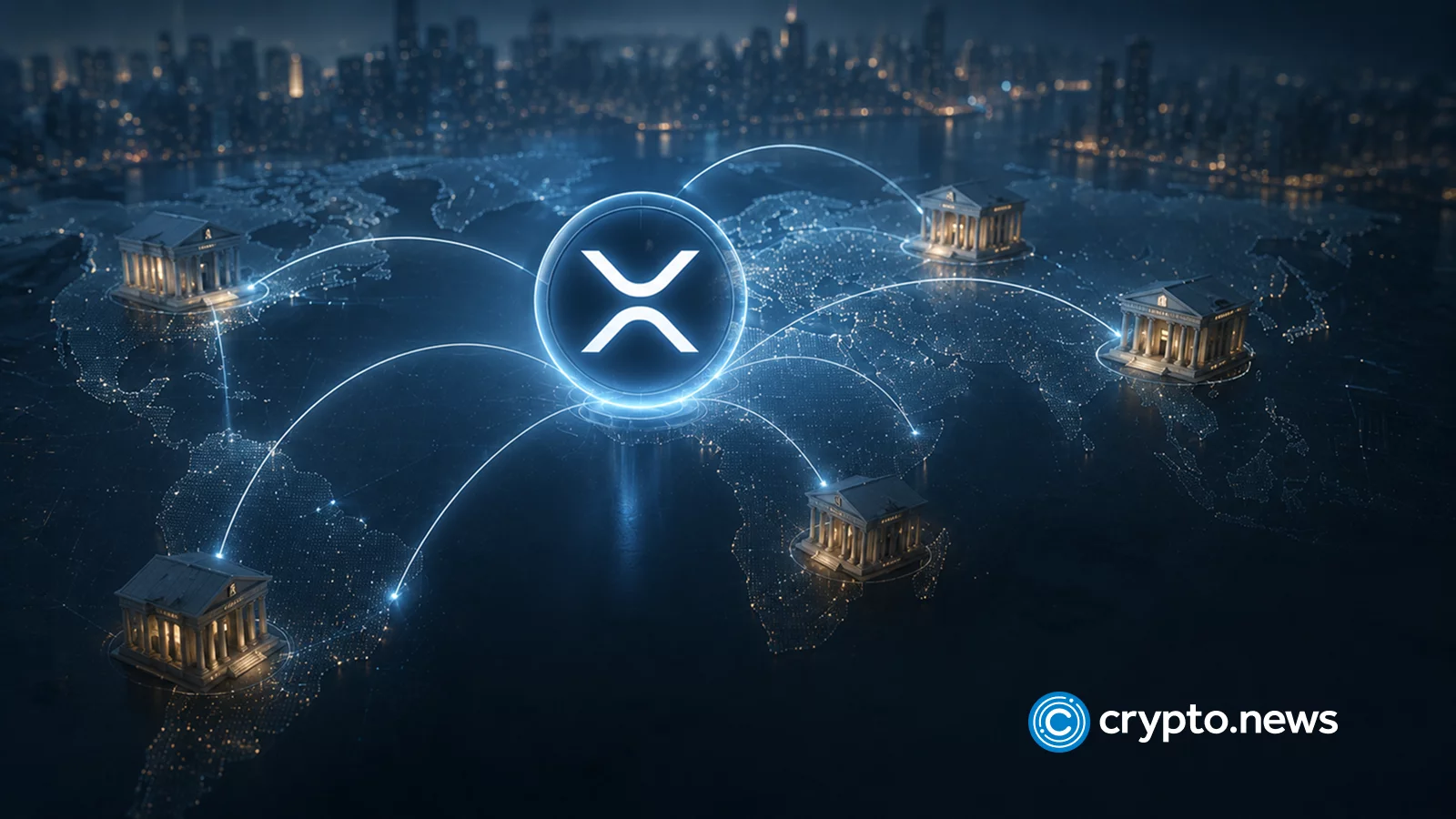
The cryptocurrency landscape is witnessing a notable shift in perception, as Ripple CEO Brad Garlinghouse has publicly supported the view that traditional financial institutions are adopting strategies reminiscent of XRP’s original vision. In a concise response on social media, Garlinghouse affirmed a statement made by Hugo Philion, co-founder of Flare, who argued that the broader crypto industry is now embracing the bank-centric approach that XRP and Ripple pioneered years ago.

This exchange began when an observer highlighted Philion’s interview remarks, where he pointed out that XRP had faced mockery for its institutional focus. Philion noted that many crypto projects are now actively seeking partnerships with banks and financial entities, effectively replicating Ripple’s long-standing model. Garlinghouse’s simple agreement signals a vindication of Ripple’s strategy, which once drew criticism for its close ties to traditional finance.

Philion elaborated that Ripple’s payments vision has remained steadfast despite regulatory hurdles and industry skepticism. He emphasized that the company’s original goal of enhancing payment infrastructure has been consistently pursued, and the current market dynamics confirm its relevance. Recent collaborations, such as Ripple’s involvement in Mastercard’ s new AI-powered payments network, further underscore this direction. The initiative, named Agent Pay for Machines, aims to enable automated transactions between devices, with Ripple contributing its fast settlement capabilities.

Concurrently, development on the XRP Ledger progresses with an upcoming upgrade. Version 3.2.0, scheduled for release on June 15, includes a significant change: the renaming of the core server software from rippled to xrpld. This rebranding reflects the growing open-source ecosystem around the ledger. The update follows the earlier version 3.1.3, which introduced enhancements to NFTs, Multi-Purpose Tokens, Vaults, the Lending Protocol, and Permissioned Domains. These developments collectively highlight XRP’s continued evolution and its increasing alignment with mainstream financial infrastructure.

Posted on Leave a comment

Nigeria Senate Paves Way for Crypto Regulation Bill

Nigeria Senate Paves Way for Crypto Regulation Bill

The Nigerian Senate has taken a significant step toward establishing a regulatory framework for digital assets. A bill aimed at overseeing virtual asset service providers has passed its second reading, signaling a shift toward formal oversight in one of the world’s largest crypto markets.

The proposed legislation, known as the Virtual Asset Service Providers Regulation Bill, 2026, advanced after a session where lawmakers deliberated on the need for clearer rules. The bill’s sponsor, Deputy Senate President Barau Jibrin, and Senate Chief Whip Mohammed Monguno, who presented it, emphasized the importance of licensing, compliance, and consumer protection. The next phase involves review by the Senate Committee on Capital Market, which will consider amendments and public input before further readings.

This initiative aims to create a legal structure for virtual assets, requiring exchanges and other operators to obtain licenses. It also proposes transparency measures and anti-money laundering protocols aligned with global standards from organizations like the Financial Action Task Force. Lawmakers believe such rules will curb fraud and enhance market order, while also supporting counter-terrorism financing efforts.

Nigeria is a leading hub for crypto adoption, with users leveraging digital assets for remittances, cross-border payments, and inflation hedging. The country’s regulatory approach has evolved, moving from restrictions on banks servicing crypto firms to a more structured oversight. This bill seeks to consolidate scattered rules into a cohesive framework, supporting President Bola Tinubu’s goal of a $1 trillion economy by integrating the digital economy officially.

While the bill’s passage would impose compliance duties on exchanges, supporters argue it could attract investment and boost confidence. The committee review will shape the final version, with details on licensing and implementation yet to be determined. For now, the crypto industry awaits the next steps in this legislative journey.

Posted on Leave a comment

Amazon Borrows $17.5B from Citibank to Fuel AI Expansion

Amazon Borrows $17.5B from Citibank to Fuel AI Expansion

Amazon has arranged a $17.5 billion delayed draw term loan with Citibank and several other financial institutions. The retail giant disclosed this senior unsecured agreement in a filing with the Securities and Exchange Commission dated June 10. This financing significantly boosts Amazon’s borrowing capacity for various corporate needs, capital spending, and debt reduction.

The loan commitments under this facility remain available until September 30, after which they expire. Amazon has until that date to access the funds unless it borrows the entire amount earlier. Once drawn, the loan matures three years from the borrowing date. Citibank N.A. acts as the administrative agent for this agreement.

In its SEC filing, Amazon described the borrowing purpose broadly as supporting general corporate purposes. The company stated that funds might be used for investments, capital expenditures, and repaying existing debts. While the filing did not allocate proceeds to any specific project, the flexible structure allows Amazon to access capital as business opportunities develop.

According to a report from Bloomberg, this loan is closely tied to Amazon’s expanding artificial intelligence investments. The tech behemoth has outlined plans to spend roughly $200 billion on AI infrastructure and other capital projects this year. That figure includes substantial investments in AI companies such as Anthropic and OpenAI. Amazon has already committed $10 billion to Anthropic, with a possible additional $15 billion on the horizon. The company also continues to pour money into cloud computing, data centers, and computing capacity.

The recent loan comes on the heels of Amazon selling 14 billion Canadian dollars in high-grade bonds on June 8, worth about $10 billion. Since March, the company has also issued bonds in euros, U.S. dollars, and Swiss francs. The new loan does not appear to replace any specific bond sale, and Amazon has not yet drawn against the facility.

The DDTL Credit Agreement includes standard representations, warranties, covenants, and default events but notably lacks financial covenants. If a default occurs, Amazon would have grace periods to rectify the issue. Unresolved defaults could accelerate the repayment of unpaid amounts and allow lenders to terminate commitments. The financial institutions involved offer a range of services, including commercial banking, investment banking, trading, and advisory services.

Posted on Leave a comment

BBNaija Reunion: Victory Defends Liking Three Women at Once

BBNaija Reunion: Victory Defends Liking Three Women at Once

During the latest episode of the BBNaija reunion, former housemate Victory stood his ground on his romantic choices last season. He argued that it is perfectly normal to have feelings for multiple people simultaneously, specifically mentioning his attraction to Sultana, Joanna, and Gigi Jasmine.

Reflecting on his time in the house, Victory stated that he saw nothing wrong with wanting to date all three women. According to him, this is not a big issue. He also insisted that he had informed Gigi about his interest in the other two ladies, but Gigi quickly denied this claim, saying he never mentioned it.

Joanna, one of the women involved, confirmed that Victory indeed expressed romantic interest in her, but she made it clear that she was not interested in taking their relationship beyond friendship.

The reunion episode, which aired on Tuesday, has sparked conversations among fans about relationships and boundaries. Victory’s comments have divided opinions, with some supporting his honesty and others criticizing his approach.

Posted on Leave a comment

BBNaija Reunion: Sultana Claims Victory Proposed Marriage

BBNaija Reunion: Sultana Claims Victory Proposed Marriage

During the latest BBNaija reunion episode, plus-sized model Sultana Ibrahim Auduson shared details about a marriage proposal from fellow housemate Victory while they were still in the house. She stated that Victory expressed intentions to wed her after the show concluded.

However, Sultana turned down the offer, explaining that she wasn’t romantically inclined toward him. Victory quickly dismissed the seriousness of his own words, labeling them as a joke and questioning how he could actually marry her.

Despite his dismissal, Victory admitted to having feelings not only for Sultana but also for two other female housemates, Joanna and Gigi Jasmine. He revealed that he wished to date all three simultaneously, which sparked further conversation during the reunion.

Posted on Leave a comment

Kumuyi Rejects Hereditary Succession, Says Churches Belong to Christ

Kumuyi Rejects Hereditary Succession, Says Churches Belong to Christ

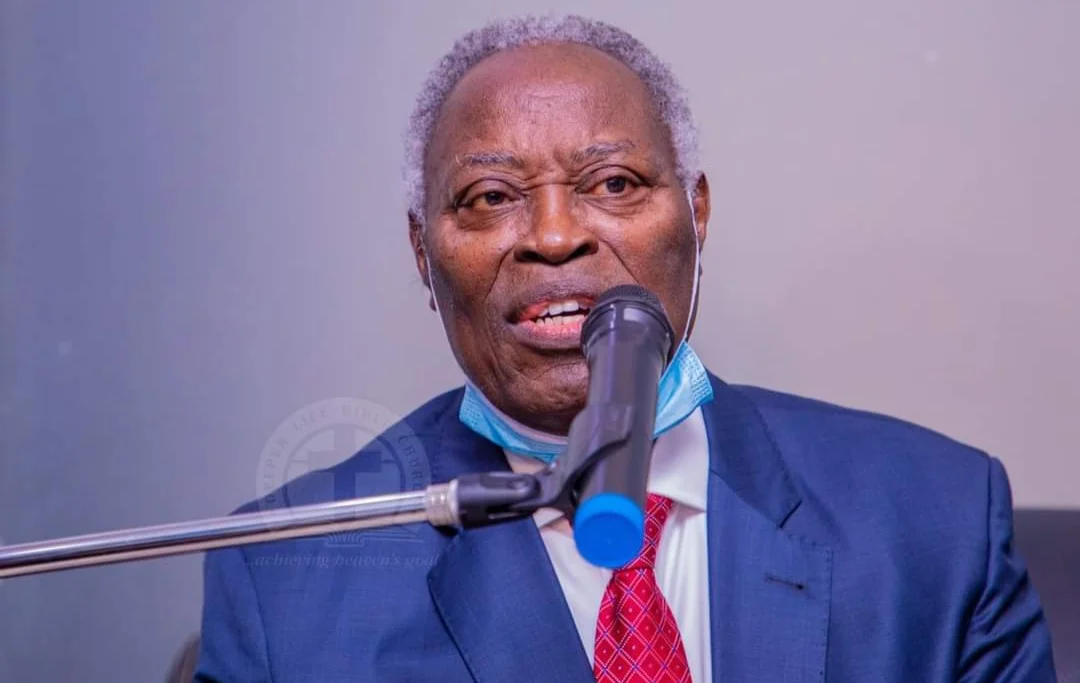
The founder of the Deeper Christian Life Ministry, Pastor Williams Kumuyi, has openly opposed the practice of handing over church leadership to one’s son. In a widely circulated video, he made it clear that no General Overseer possesses the authority to transfer ownership of a church to a family member, emphasizing that the church belongs solely to Jesus Christ.

Speaking amidst growing speculation about his successor, Kumuyi addressed the rumors that he might pass the church to one of his sons. He firmly stated, “It is the church of the Lord Jesus Christ, and nobody has the right to hand it over to his son.” He referenced biblical figures like Peter, Paul, and John, noting that none of them appointed their children as successors. “Peter did not hand over the church to his son, Paul had no son or wife, and John did not either,” he added.

Kumuyi further explained that God’s kingdom is not about physical inheritance but about righteousness and joy through the Holy Spirit. He declared, “I am not about to hand over to any son. May the Lord’s will be done.” The comments come at a time when hereditary succession is a common model among some Nigerian church founders, sparking debate within religious circles.

Watch the full video of his remarks for more context.

Posted on Leave a comment

BBNaija Reunion: Kola Says He Never Wanted a Relationship with Dede

BBNaija Reunion: Kola Says He Never Wanted a Relationship with Dede

During the second installment of the Big Brother Naija Season 10 reunion aired on Tuesday night, Kola made a surprising admission about his connection with fellow housemate Dede. He clarified that his persistent pursuit of her was never about seeking a romantic relationship. “My intentions were not to date Dede,” he asserted, contradicting the perception viewers might have formed.

Kola’s close friend, Bright Morgan, disclosed that he had previously counseled Kola to abandon the chase. “I advised Kola to step back from Dede because a woman who genuinely likes you won’t put you through stress,” Morgan explained, highlighting the advice he gave.

On the other hand, Dede shared her side of the story, revealing that their friendship soured after Kola referred to her as “the other person” in a media interview. She claimed, “Kola reached out post-show, saying we were good, but on camera he acts distant. At Tacha’s birthday party, he approached me in the bathroom, later invited me to his place, and brought up the kiss we shared in the Big Brother house.”

However, when host Ebuka Obi-Uchendu pressed Kola for a response, he flatly denied extending an invitation. “I never asked Dede to come to my home,” he stated firmly, ensuring the reunion drama continued.