Posted on Leave a comment

Mastering Azure Administration: Your Guide to AZ-104 Certification with CertLibrary

Mastering Azure Administration: Your Guide to AZ-104 Certification with CertLibrary

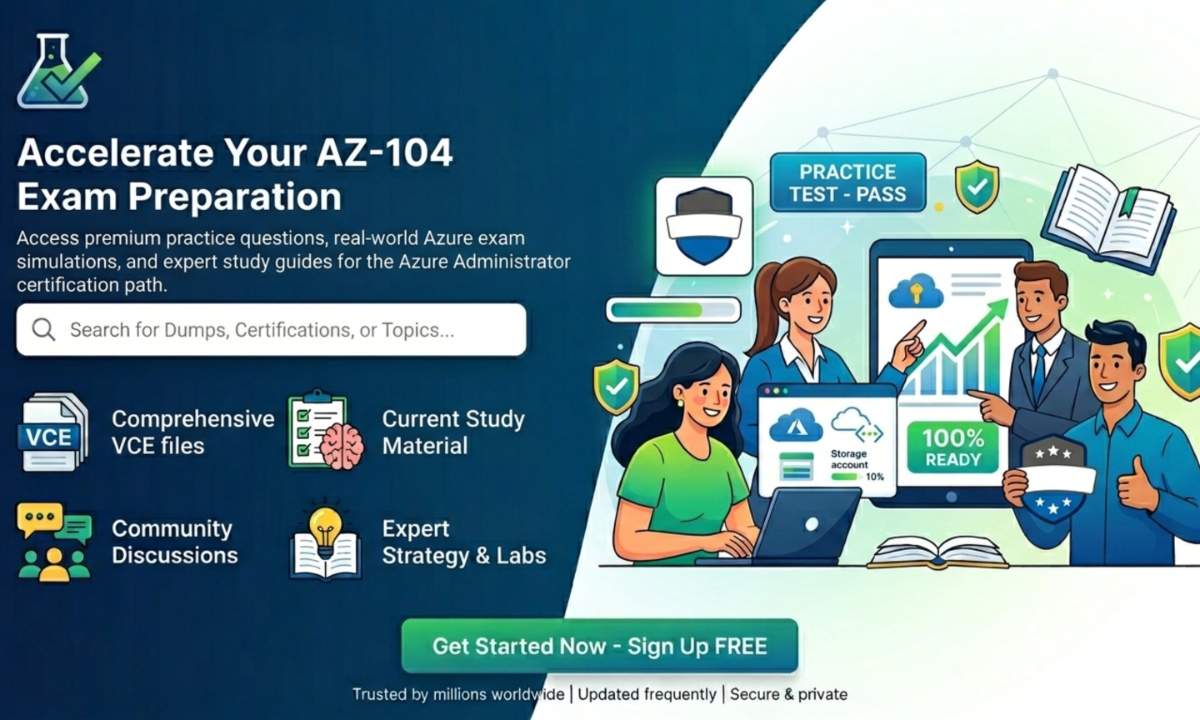
Cloud computing has transformed how businesses operate, offering scalability and efficiency. Among cloud platforms, Microsoft Azure is a key player, and the AZ-104 certification validates essential administrative skills. CertLibrary provides valuable resources to help candidates excel in this exam and their careers.

Azure Administrators handle critical tasks like managing identities, setting up virtual networks, and monitoring system health. This role requires practical knowledge of resource deployment, cost optimization, and security enforcement. The AZ-104 exam covers these areas, ensuring certified professionals can maintain robust cloud environments.

Core Responsibilities

An Azure Administrator ensures smooth cloud operations. This includes provisioning resources, configuring storage, and managing user access through role-based access control (RBAC). They also implement governance policies to maintain compliance and consistency across subscriptions.

Monitoring and troubleshooting are vital. Using Azure Monitor, administrators track performance metrics, set alerts, and analyze logs to preempt issues. Security measures like multi-factor authentication and encryption protect data and infrastructure.

Essential Skills

Success in AZ-104 demands both theoretical understanding and hands-on experience. Candidates must be proficient with the Azure portal, PowerShell, and Azure CLI. Networking concepts—virtual networks, subnets, and VPNs—are crucial for designing secure connectivity.

Storage management involves choosing the right redundancy (LRS, GRS) and configuring backup strategies. Compute resources, including virtual machines and containers, require careful sizing and automation for efficiency. CertLibrary offers practice tests and study guides to build these competencies.

Identity and Governance

Identity management begins with creating users and groups, then assigning roles with least privilege. Azure Active Directory integrates with on-premises directories for hybrid scenarios. Governance tools like Azure Policy help enforce rules and tag resources for better tracking.

Storage Solutions

Azure provides blob, file, and disk storage, each suited for different workloads. Administrators must configure access tiers, replication, and lifecycle management. Backup and disaster recovery plans ensure data resilience, using Azure Backup and Site Recovery.

Compute Resources

Deploying virtual machines involves picking sizes, images, and availability options. Automation via ARM templates or Terraform streamlines provisioning. Containerization with Azure Kubernetes Service (AKS) adds flexibility for modern applications.

Virtual Networking

Networking is the backbone of Azure. Administrators create VNets, subnets, and network security groups to control traffic. VPN gateways and ExpressRoute connect on-premises networks to Azure, enabling hybrid architectures. Private endpoints secure access to PaaS services.

Monitoring and Maintenance

Continuous monitoring is key to performance. Azure Advisor offers recommendations for cost and reliability. Log Analytics helps analyze logs, while alerts notify teams of anomalies. Regular patching and resource optimization maintain health.

Security Best Practices

Security starts with strong authentication. Enable Azure AD Identity Protection and conditional access policies. Encrypt data at rest and in transit, and use Azure Security Center for threat detection. Regularly review permissions and apply updates.

Career Path

Achieving AZ-104 opens doors to roles like Cloud Administrator or Infrastructure Engineer. With experience, professionals can advance to Cloud Architect. The certification signals expertise and dedication, making candidates attractive to employers.

FAQ

What is AZ-104? It’s a Microsoft certification for Azure Administrators, covering management of compute, storage, networking, and security.

Who should take it? Those aspiring to manage Azure environments or already in administrative roles seeking formal validation.

How hard is it? Moderately challenging; requires hands-on practice. Resources like CertLibrary help.

Preparation time? Depends on experience. Beginners may need months, while experienced can prepare in weeks.

Conclusion

The AZ-104 certification is a stepping stone to a rewarding cloud career. By mastering administration fundamentals and leveraging tools like CertLibrary, candidates can pass the exam and excel in real-world scenarios. With growing cloud adoption, now is the perfect time to invest in this credential.

Posted on Leave a comment

Master CompTIA Certification for IT Career Growth

Master CompTIA Certification for IT Career Growth

CompTIA certifications, known for global recognition, authenticate both fundamental and expert-level skills in information technology. As a vendor-neutral body, CompTIA offers credentials that prepare professionals to operate across diverse systems and platforms. These certifications are ideal for those entering the tech field or aiming to upgrade their current skill set.

CompTIA exam paths span networking, security, cloud computing, and support, aligning with industry standards and actual job functions. Professionals often turn to resources such as exam-labs to explore certification options and practice effectively.

Popular CompTIA Certification Paths

CompTIA structures certifications from entry-level to specialist. The IT Fundamentals credential introduces beginners to core concepts. A+ certification, a staple for newcomers, covers troubleshooting, hardware, operating systems, and customer service. Explore more details at the official exam-labs vendor page.

Why Vendor-Neutral Matters

CompTIA’s vendor-neutral approach means skills apply across multiple technologies, not just one brand. This flexibility lets professionals work with varied tools and benefits companies using mixed tech stacks. Beginners gain a broad IT foundation before specializing.

Skills You Gain

CompTIA develops technical expertise like troubleshooting (A+), network configuration (Network+), and threat mitigation (Security+), plus soft skills such as communication and time management. These enable effective teamwork and real-world problem-solving.

Career Paths

A+ opens roles like IT support specialist or help desk technician. Network+ leads to network administrator or engineer positions. Security+ qualifies you for security analyst or risk management roles. Experience and further certifications pave the way to senior positions with higher pay.

Hands-On Practice Is Key

Exams include scenario-based questions requiring applied knowledge. Lab work, simulations, and real projects build confidence and competency, complementing theoretical study.

Study Strategies

Review official objectives and craft a study plan. Mix textbooks, online courses, videos, and practice tests. Practice exams reveal gaps and improve time management. Consistency and hands-on work boost retention.

Common Challenges

Broad exam topics can overwhelm; a clear plan helps. Applying theory to practical scenarios is tough but essential. Balance study with work and life through disciplined scheduling. Join online communities for support.

Frequently Asked Questions

What are CompTIA certifications? They’re globally recognized credentials validating IT skills across networking, security, and support.
Which should I start with? Beginners often start with IT Fundamentals or A+ for a solid foundation.
Are they worth it? Yes, employers value them for career advancement and better job prospects.
How long to prepare? Varies from weeks to months, depending on experience and certification.
Need hands-on experience? Not mandatory but highly recommended for exam and career success.
Do they help with career growth? They open doors to better roles, higher salaries, and advancement.

Conclusion

CompTIA certifications offer a clear path to IT success, teaching essential skills through vendor-neutral knowledge. Blending theory with practice and continuous learning helps candidates achieve certification and excel. These credentials validate expertise and unlock diverse opportunities in the expanding tech industry.

Posted on Leave a comment

OAU Clinches National STEM Crown, Edges Out FUTA

OAU Clinches National STEM Crown, Edges Out FUTA

Obafemi Awolowo University (OAU) has been declared the champion of a nationwide Science, Technology, Engineering, and Mathematics (STEM) competition, outperforming the Federal University of Technology, Akure (FUTA) in the decisive final round.

The university shared the news through a statement released by its Public Relations Officer, Abiodun Olarewaju, on Tuesday, highlighting that the event attracted leading institutions from across Nigeria.

According to the statement, the contest employed a stringent evaluation process that assessed participants’ knowledge, creativity, and problem-solving skills in STEM areas. OAU advanced to the finals with FUTA after excelling in the preliminary stages against other contenders.

The final showdown was marked by intense rivalry, with both universities demonstrating remarkable originality, collaboration, and technical prowess. Ultimately, OAU claimed the top spot, surpassing FUTA in aggregate performance to win the national title.

In response to the victory, Vice-Chancellor Prof. Adebayo Simeon Bamire emphasized that the accomplishment reflects the university’s unwavering dedication to academic distinction. He remarked, ‘This major win reaffirms our strong tradition in science and technology education, research, and innovation.’

Bamire further noted that the students’ excellence showcases their self-discipline, inventiveness, and the hard work of the faculty. He called it a proud milestone in the university’s history, proving OAU’s leadership in STEM education, research, and innovation.

Leye Falode, Global President of the Great Ife Alumni Association, also expressed admiration for the students’ perseverance and team spirit. He stated, ‘This success stems from thorough preparation and the supportive academic atmosphere fostered by the university. Our students have once again proven their ability to perform at the highest echelons.’

The university administration praised the team for bringing glory to the institution and thanked stakeholders whose contributions made the win possible, reaffirming its pledge to foster talent and maintain academic excellence.

Posted on Leave a comment

2026 UTME: JAMB Explains Why Some Results Remain Unavailable

2026 UTME: JAMB Explains Why Some Results Remain Unavailable

The Joint Admissions and Matriculation Board (JAMB) has shed light on why certain candidates who participated in the 2026 Unified Tertiary Matriculation Examination (UTME) encounter a ‘No Result Yet’ message when attempting to access their scores. In a statement released on Tuesday, JAMB’s spokesperson, Fabian Benjamin, clarified that this situation specifically impacts underage test-takers whose outcomes have not been published.

According to the board, individuals who do not meet the age requirement—being at least 16 years old by September 30, 2026—fall into this category. When such candidates try to view their results, the system automatically displays the notice that no results are available. JAMB previously announced that only those who meet the age cutoff are eligible to sit for the exam, though exceptional academic performers may receive consideration regardless of their age.

This measure aims to enforce the board’s age policy while allowing for flexibility in rare cases of outstanding scholarly achievement. The clarification comes amid widespread curiosity and concern among students and parents about the delayed release of results for some participants.

Posted on Leave a comment

Sokoto State Universities Face Possible Shutdown as ASUU Issues Ultimatum

Sokoto State Universities Face Possible Shutdown as ASUU Issues Ultimatum

The Academic Staff Union of Universities (ASUU) has raised the alarm over deteriorating conditions at tertiary institutions under the control of Sokoto State, threatening to down tools if urgent action is not taken by authorities to address long-standing grievances.

In a joint statement released on Wednesday, the leadership of ASUU chapters at Sokoto State University and Shehu Shagari University of Education expressed deep concern over what they described as persistent neglect of staff welfare. The statement, which was co-signed by Dr. Bello Musa of the SSU branch and Dr. Shamsu Kabiru of the SSUE branch, warned that the current state of affairs could soon force the union to embark on industrial action, severely disrupting academic programmes.

The union highlighted that multiple appeals to the state government have yielded little to no progress, and that the continued inaction is eroding the foundation of industrial harmony at the two institutions. “These challenges have dragged on for far too long, and despite our constant reminders, there has been no meaningful response. We believe that resolving them is important for sustaining a productive atmosphere and enhancing overall output,” the statement read.

Among the key demands put forward by ASUU is the immediate implementation of the 2025 agreement between the union and the Federal Government, particularly regarding the payment of special allowances meant for teaching and research staff. The union noted that while federal universities have begun to see progress on this front, lecturers at state-owned institutions in Sokoto are still being marginalized.

ASUU is also calling for the settlement of Earned Academic Allowances (EAA) that have remained unpaid for the 2022/2023 and 2023/2024 academic sessions. The union argued that since salary structures are negotiated centrally within the national framework, it is unacceptable for state institutions to exclude their lecturers from the benefits enjoyed by their federal counterparts.

The union warned that unless the government acts swiftly, the growing frustration among lecturers could lead to a complete shutdown of academic activities. This development reflects a broader trend of increasing tension within Sokoto’s higher education sector, as unions across the country push for better funding, fair remuneration, and full adherence to existing agreements.