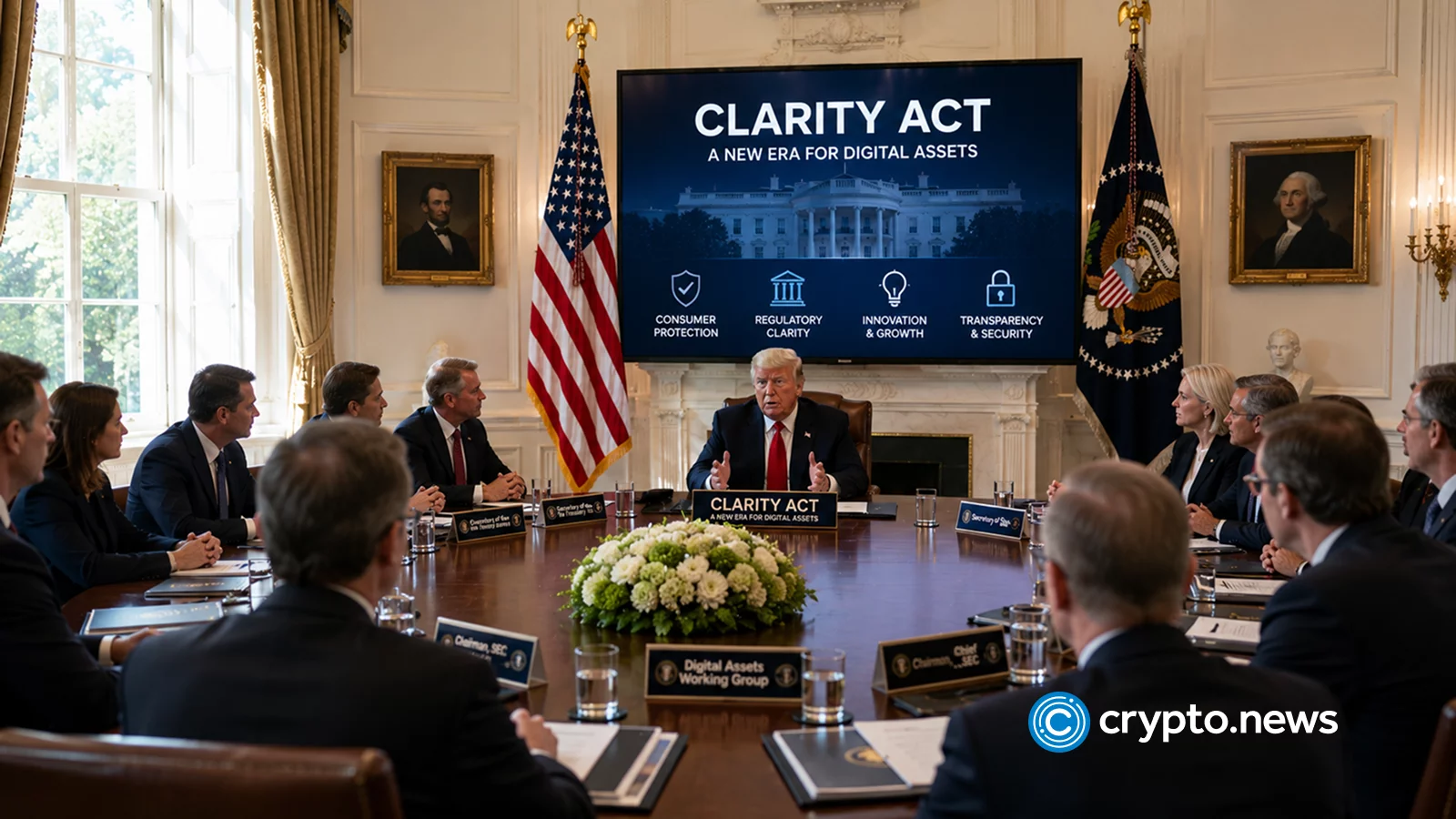
The CLARITY Act, once seen as nearly inevitable, now faces a double crisis. After clearing the Senate Banking Committee with a 15-9 vote on May 14, the bill appeared poised for passage, with prediction markets estimating a 74% chance of becoming law in 2026. However, by June, that probability dropped to around 48%, as two distinct and seemingly irreconcilable disputes emerged.
The first dispute centers on ethics. Democratic senators, including Ruben Gallego and Angela Alsobrooks, have made their support conditional on strong conflict-of-interest rules for government officials. This demand stems from President Trump’s family involvement in crypto ventures, reportedly generating $2.3 billion. The White House opposes any provision that appears to target the President personally, leading to a stalemate over enforcement mechanisms.
The second clash involves Section 604, which protects software developers from being classified as money transmitters. Law enforcement groups argue this creates a loophole for criminals, citing $158 billion in illicit crypto volume in 2025. Senators Mark Warner and Catherine Cortez Masto have tied their votes to resolving this issue, creating a separate veto bloc.
These two fights are deeply problematic because they cannot be resolved through simple compromises. Satisfying the ethics demands does nothing to appease law enforcement, and vice versa. The bill needs approximately seven Democratic votes beyond the two committee crossovers to filibuster-proof sixty votes, but four of the most likely supporters are currently locked in opposing camps.
Section 604 itself is a flashpoint. It was already weakened to secure the committee vote, angering DeFi advocates. Now, law enforcement wants it further reduced, while developers demand its restoration. Any adjustment risks alienating one side. This internal tension makes the bill vulnerable to time running out; with only 31 Senate session days before the August recess, unresolved disputes could delay the legislation for years.
The calendar is perhaps the biggest threat. If the bill does not pass in this window, it may not be revived until after the next congressional election, leaving crypto regulation fragmented. The failure would not be due to widespread opposition but to the inability to align two unrelated fights, a frustrating outcome for supporters who see the bill as essential for clarifying market structure.
As negotiations continue, key indicators include whether Democratic holdouts like Gallego and Alsobrooks signal flexibility, and whether law enforcement groups are satisfied by White House efforts. The prediction markets will likely react quickly to any resolution, but for now, the CLARITY Act remains trapped in its own machinery.