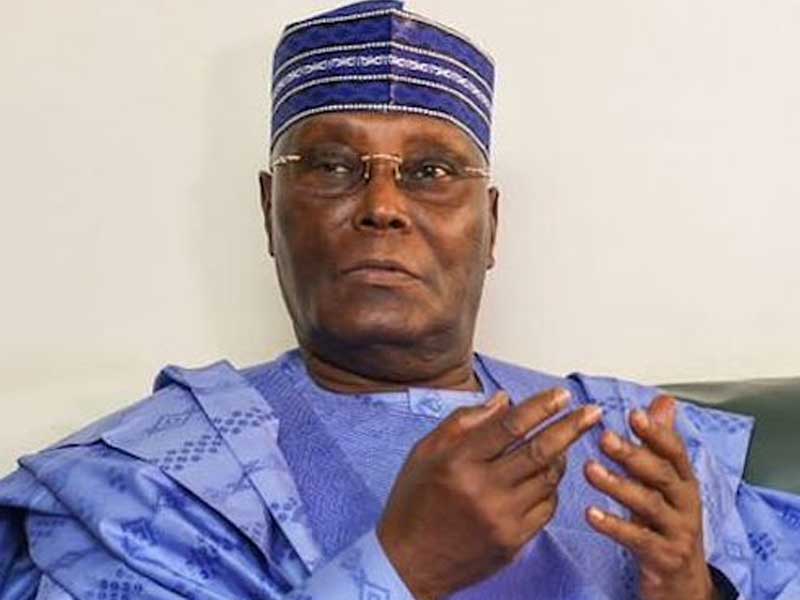
Lauretta Onochie, who previously worked as a media aide to the late President Muhammadu Buhari, has publicly endorsed former Vice President Atiku Abubakar after his appearance before the African Democratic Congress (ADC) screening committee.
In a statement she released and titled ‘Atiku Abubakar Done and Dusted,’ Onochie praised the ex-VP as a leader who is easy to approach and suitable for governing a country as varied as Nigeria.
She remarked that Atiku’s political journey is intricately linked to Nigeria’s story, serving as a link across different regions, cultures, beliefs, and hopes. Over time, he has forged connections with various ethnic groups in the nation.
Onochie highlighted Atiku’s tenure as Nigeria’s Vice President from 1999 to 2007 alongside Olusegun Obasanjo, calling it one of the most inclusive political partnerships, with northern and southern leaders collaborating during a democratic transition.
Before entering politics, Atiku advanced through the ranks of the Nigeria Customs Service, working with individuals from diverse ethnic backgrounds. This experience, Onochie noted, helped build his image as a unifier with broad national insight.
She also pointed to his founding of the American University of Nigeria in Yola, which draws students and instructors from all over Nigeria and other African nations, demonstrating his conviction that education can bring people together.
According to Onochie, Atiku is known for advocating market-driven economic changes, but he consistently stresses that economic growth must also benefit farmers in the North, traders in the East, entrepreneurs in the West, and oil-producing communities in the South-South.
Although he hails from Adamawa State, Atiku has cultivated a pan-Nigerian identity, speaking multiple northern languages and maintaining connections across Yoruba, Igbo, Hausa, Itsekiri, Ijaw, Tiv, Nupe, Anioma, Kanuri, Urhobo, and many other groups.
His multiple presidential bids have made resilience a hallmark of his political persona. Supporters from various ethnic and religious backgrounds view this persistence as a sign of dedication to democratic processes rather than a sense of entitlement.
Onochie noted that his business ventures in logistics, farming, and energy have linked him with producers, transporters, industrialists, and laborers throughout Nigeria’s varied economic sectors.
Atiku frequently argues that the government should enable enterprise rather than dominate it—a philosophy that resonates with the trading mindset of the Southeast, the commercial energy of the Southwest, and the agricultural foundation of the North.
Supporters often mention his investments in education and youth as evidence that he regards Nigeria’s greatest asset as its people, not oil or politics, across all ethnicities and areas.
Both critics and admirers acknowledge Atiku’s extensive political and business network. For supporters, this signals experience and a talent for coalition-building.
Atiku has consistently promoted national unity through inclusivity, frequently emphasizing that Nigeria functions best when no group feels left out of power or opportunities.
His political alliances over the years with leaders from the Southwest, Southeast, Niger Delta, Middle Belt, and North have bolstered his reputation as a politician who excels at forming coalitions in a highly diverse nation.
Onochie concluded by saying that those who know him, including herself, recognize his communication skills, humility, and generosity as qualities that make him an accessible leader—traits essential for overseeing a diverse country like Nigeria. She wished him well, adding, ‘Arise and shine, Nigeria.’