Posted on Leave a comment

ADC Says Tinubu’s 30% Approval Rating Shows Widespread Displeasure Among Nigerians

ADC Says Tinubu's 30% Approval Rating Shows Widespread Displeasure Among Nigerians

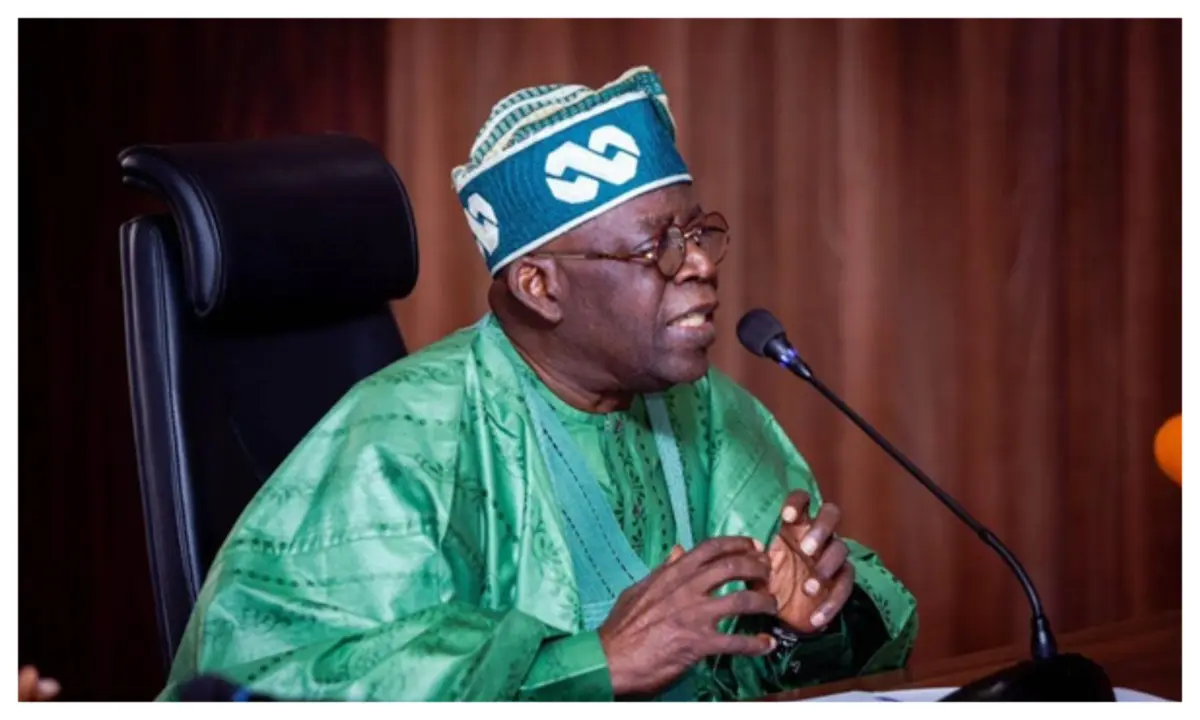
The African Democratic Congress (ADC) has described President Bola Tinubu’s reported 30 percent approval rating as a clear indicator that a majority of Nigerians are unhappy with his governance, especially with the 2027 elections approaching.

In a statement issued by its National Publicity Secretary, Bolaji Abdullahi, the party highlighted that escalating food prices, high unemployment, and persistent insecurity have worsened the living conditions of citizens nationwide.

The ADC referred to a recent survey conducted by Eagle Badger Data Analytics (EBDA), which found that only 30.2 percent of Nigerians approve of Tinubu’s performance, while 47.5 percent expressed disapproval.

According to the party, “A 30 percent approval rating is not a sign of achievement; it is a mark of outright failure.”

The group noted that nearly seven out of every ten Nigerians are either dissatisfied or uncertain about the country’s trajectory under the current administration.

The statement emphasized that many citizens are grappling with a high cost of living, as families can no longer afford basic necessities like food, transportation, rent, and school fees.

It also alleged that food prices have surged by more than 90 percent since May 2023, while overall prices have increased by approximately 80 percent.

“The government keeps touting macroeconomic indicators, but Nigerians do not eat statistics. They eat food,” the statement declared.

The ADC further accused the government of inadequately addressing insecurity, noting that farmers still cannot safely access their farms, and attacks by bandits, kidnappers, and other criminal elements persist across various regions.

The opposition party argued that after three years in power, the Tinubu administration can no longer blame previous governments for the nation’s challenges.

“Leadership is judged by results, not excuses,” the statement concluded.

The ADC maintained that the survey should act as a warning for the 2027 elections, insisting that Nigerians are demanding better leadership that prioritizes economic revitalization, job creation, and security.
Posted on Leave a comment

Atiku’s ADC Presidential Victory: Dino Melaye Draws Parallel with Arsenal’s Triumph

Atiku's ADC Presidential Victory: Dino Melaye Draws Parallel with Arsenal's Triumph

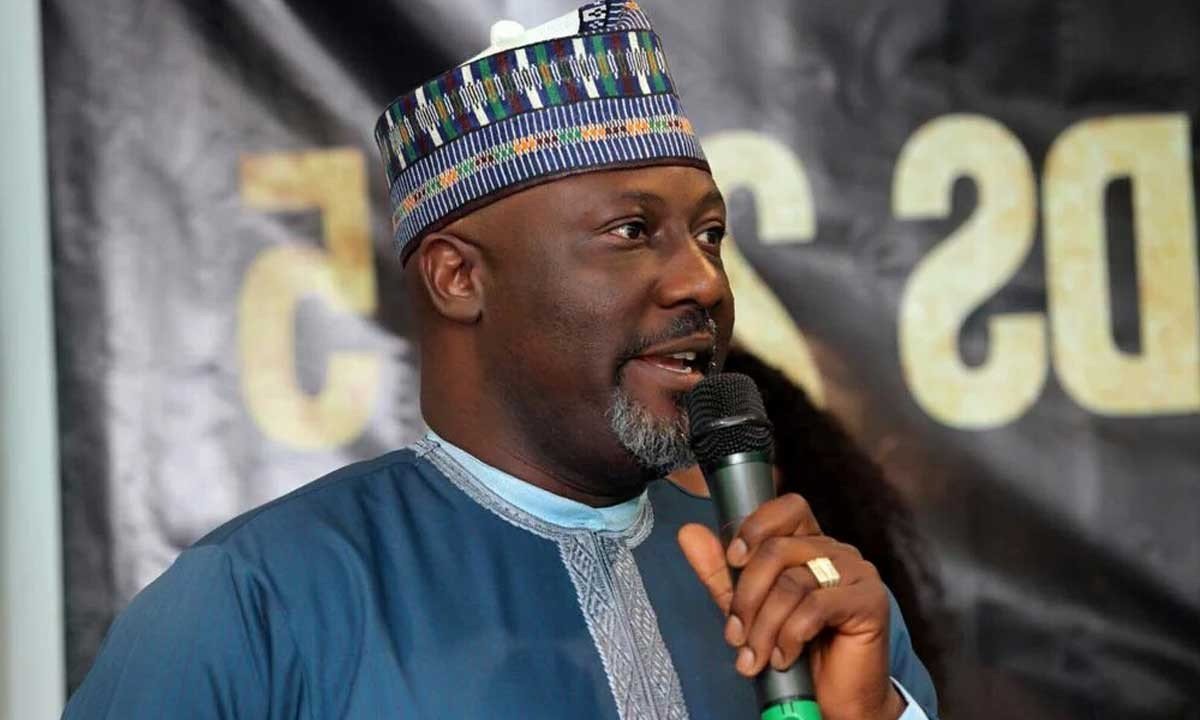
In a surprising comparison that blends politics and sports, former Senator Dino Melaye has congratulated Atiku Abubakar on securing the presidential ticket of the African Democratic Congress (ADC) for the 2027 elections. Drawing a parallel to a recent football victory, Melaye remarked that Atiku’s win was reminiscent of Arsenal’s Premier League success.

The ex-lawmaker took to social media platform X to express his admiration, stating, “Boss, you did it just like Arsenal.” This analogy highlights the underdog spirit and long-anticipated victory that both entities share.

Atiku’s emergence as the ADC flagbearer was announced by Tunde Ogbeha, the chairman of the party’s presidential primary committee. According to Ogbeha, Atiku garnered a staggering 1,846,370 votes, defeating competitors Mohammed Hayatu-Deen and Rotimi Amaechi, who secured 177,120 and 504,117 votes, respectively.

This marks Atiku’s sixth attempt at the presidency, having previously contested in 2007, 2019, and 2023. The former vice president remains a prominent figure in Nigerian politics, undeterred by past setbacks.

On May 19, Arsenal clinched their first English Premier League title in 22 years after Manchester City’s draw with Bournemouth. The Gunners’ long-awaited triumph resonated with fans worldwide, including Melaye, who saw a reflection of that perseverance in Atiku’s primary victory.

Posted on Leave a comment

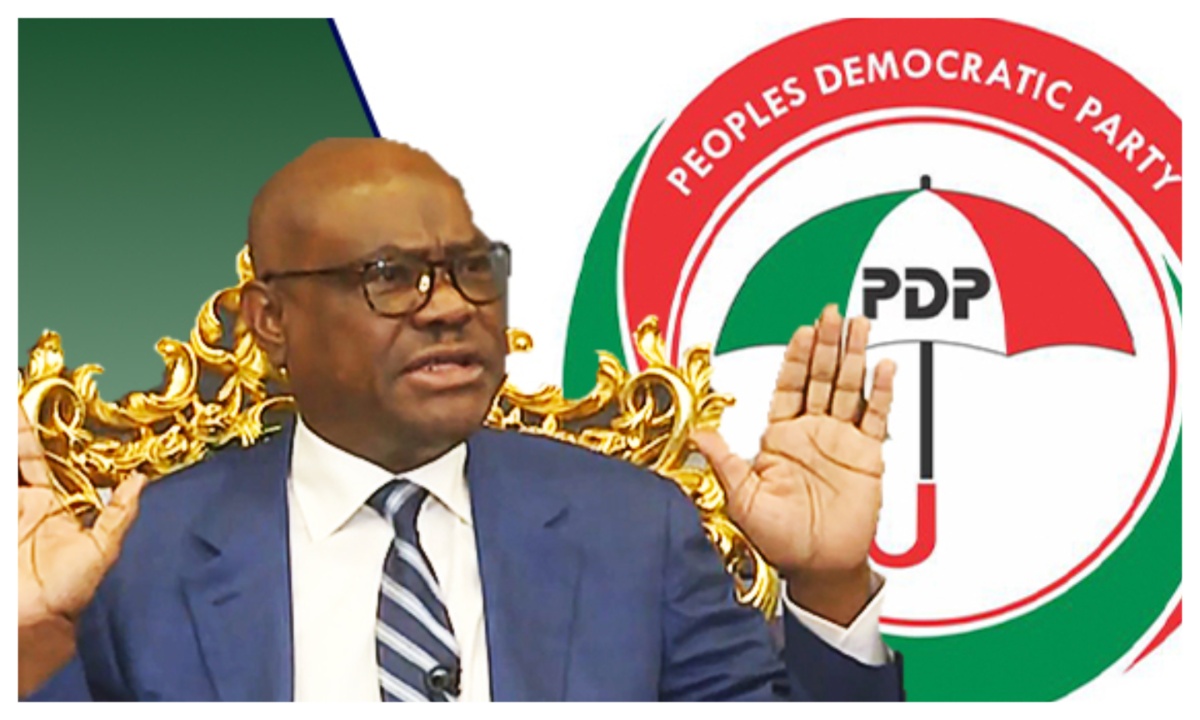
PDP Claims Wike Attempted to Block Venue for Jonathan’s Ratification Event

PDP Claims Wike Attempted to Block Venue for Jonathan's Ratification Event

The Peoples Democratic Party (PDP) has leveled serious allegations against Nyesom Wike, the Minister of the Federal Capital Territory, accusing him of trying to prevent a crucial party event from taking place. According to the PDP, the planned gathering at A Class Event Centre in Abuja, where former President Goodluck Jonathan is set to be officially endorsed as the party’s presidential candidate, faced interference.

In a statement released on Friday, the party revealed that the event center’s management informed them of external pressure aimed at canceling the event. The PDP insists that it has already made full payment for the venue and met all necessary requirements for the program.

The party further stated that security agencies have been duly informed about the convention, which is scheduled for Saturday, May 30, 2026, in the Wuse 2 area of Abuja. Emphasizing its commitment to the event, the PDP disclosed that its legal team has been instructed to remind the event center about the binding agreement signed with the party.

Despite what it describes as intimidation tactics, the PDP has declared that the convention will go ahead as planned. The party’s statement read: “We are confident that Nigeria operates under the rule of law. Any attempt to employ force to suppress political dissent and opposition is unacceptable and must be opposed by all conscientious citizens.”

The PDP also criticized Wike, arguing that the FCT minister has no constitutional power to dictate which political meetings can be held in Abuja or their locations. The party labeled any move to obstruct the event as undemocratic and called on its leaders and members across the country to attend as scheduled.

Earlier, DAILY POST reported that the Federal Capital Territory Administration (FCTA) had instructed owners of hotels, event centers, and public facilities in Abuja to only engage with political party leadership recognized by the Independent National Electoral Commission (INEC). The administration also warned that properties used by what they termed illegal organizations could face the loss of their land titles.

The directive, issued in a statement by Lere Olayinka, Wike’s Senior Special Assistant on Public Communications and Social Media, stated that the policy aims to enhance security in Abuja and prevent public facilities from being utilized for activities that could disrupt public peace.

Posted on Leave a comment

North-Central APC Retracts Ultimatum, Apologizes to National Chair

North-Central APC Retracts Ultimatum, Apologizes to National Chair

The North-Central forum of the All Progressives Congress has clarified that it has no desire to create turmoil within the party as the 2027 general elections approach. This declaration came as the group formally withdrew a previous ultimatum directed at the party’s National Chairman, Prof. Nentawe Yilwatda.

Earlier, the forum had demanded that Yilwatda step down within two weeks or face legal proceedings, citing alleged irregularities during the APC primaries. However, in a statement issued late Thursday by its National Chairman, Alhaji Saleh Zazzaga, the forum rescinded that demand and offered a full apology to Yilwatda.

According to the statement, the ultimatum was based on incorrect information and a misinterpretation of the actual circumstances within the party. The forum expressed that it had been misled and now recognizes the need for unity and stability.

“The North-Central APC Forum is a body of well-intentioned stakeholders committed to the growth of our great party. Our earlier call for the resignation of the National Chairman was fueled by misinformation and a lack of full understanding. Now that we are aware of the true facts, we withdraw the ultimatum and offer our sincere apologies to the national chairman and all APC leaders,” the statement read.

The group emphasized that it is not an agent of destabilization and has no intention of instigating a crisis. It suggested that external forces may have manipulated its earlier stance on the primaries.

The forum urged all party members to rally behind the Yilwatda-led National Working Committee to ensure victory for President Bola Tinubu and the APC in the 2027 elections. It also reiterated its promise to deliver six million votes from the North-Central zone to Tinubu.

Posted on Leave a comment

Ibrahim Kashim Secures NDC Governorship Ticket for Bauchi 2027

Ibrahim Kashim Secures NDC Governorship Ticket for Bauchi 2027

The National Democratic Congress (NDC) has chosen Ibrahim Kashim, a former Secretary to the Bauchi State Government, as its governorship candidate for the 2027 elections. The selection was made through a consensus process, as announced by Paul Daniel, the chairman of the party’s electoral committee for the primary election, during a press briefing in Bauchi on Friday.

Daniel explained that the decision came after extensive consultations with party stakeholders and other aspirants, emphasizing that the consensus approach underscores unity within the NDC. He declared Kashim as the official candidate for the upcoming poll.

Abdullahi Maigari, the NDC chairman in Bauchi, praised the party’s rising popularity across the state, highlighting that it is one of the few political groups free from internal conflicts. He expressed strong confidence in Kashim’s experience and ability to tackle the socio-economic issues affecting the state.

In his acceptance speech, Kashim expressed gratitude to party leaders, delegates, and supporters for their trust. He vowed to prioritize education, healthcare, agriculture, youth empowerment, infrastructure, and transparent governance if elected. He also urged residents and party members to rally behind the party’s vision as the 2027 elections approach.

Posted on Leave a comment

Tinubu Celebrates End of Salary Payment Woes for Nigerian States

Tinubu Celebrates End of Salary Payment Woes for Nigerian States

President Bola Tinubu has voiced his delight that Nigerian states are no longer facing difficulties in meeting their salary obligations, marking a significant shift from the situation prior to his assumption of office on May 29, 2024.

Speaking on Friday in Lagos while receiving the Nigeria Governors’ Forum, led by Vice President Kashim Shettima, for a Sallah visit at his residence, Tinubu reflected on the improved financial conditions. He remarked that while watching clips of the Sokoto-Badagry corridor, he envisioned the potential for constructing numerous dams for irrigation, farming, and electricity generation along that route. He acknowledged the governors for fostering resilience among citizens and encouraging trust in his administration.

Tinubu expressed profound gratitude, stating, “You have built that trust around one person: my leadership. I thank you very much. I am truly grateful. I cannot express enough how thankful I am to Almighty God that we are here together to share our thoughts and developmental programs.” He highlighted that out of 27 governors seeking federal loans and interventions, the era of struggling to pay salaries has ended. “I am glad that out of the 27 governors borrowing from the federal government and asking for interventions, we are no longer struggling to pay salaries. No more,” he said.

Posted on Leave a comment

AI Agent Payments Evolve: Control Layers Over Wallets

AI Agent Payments Evolve: Control Layers Over Wallets

The landscape of AI agent payments is shifting beyond simple wallet solutions. According to Payouts.com co-founders Leor Ceder and Barak Hirchson, the real future lies in combining stablecoin payment rails with a programmable control infrastructure designed for enterprise reliability. While wallets are essential building blocks, the lasting business value resides in what governs them.

This viewpoint challenges the prevailing narrative that wallets alone dominate agent payment conversations. Juniper Research predicts that cross-border B2B stablecoin transactions will skyrocket to $5 trillion by 2035, a dramatic increase from $13.4 billion projected for 2026, with B2B transactions accounting for 85% of all stablecoin activity.

Hirchson emphasizes that choosing the right payment rail depends on the recipient’s location, preferred method, urgency, amount, and cost. Stablecoins excel in two key areas: international transfers, where SWIFT fees and FX spreads can consume 4–5% of the transaction value, and machine-to-API micropayments using the x402 standard for pay-per-call invoices. Already, AI agents have settled $73 million through 176 million crypto transactions, with USDC dominating at 98.6%.

Local payment systems like Brazil’s PIX and India’s UPI offer free or near-zero cost processing, handling massive volumes daily. Hirchson argues that successful agents will be those capable of selecting the optimal rail per transaction rather than being restricted to a single rail based on limited wallet capabilities.

To enable safe autonomous agent transactions, Hirchson identifies five critical controls: scoped credentials, protocol-level hard spend caps, cryptographically signed mandates, payment-layer idempotency, and a fail-closed security posture. He explains that programmable spending means defining the rules once, after which the infrastructure enforces them, allowing the agent to operate freely within boundaries. However, industry adoption of these controls is uneven, with some wallets incorporating hard caps and signed mandates, while others merely provide an API key and a balance—a configuration that poses risks if the key is compromised.

Looking ahead to 2027, Ceder predicts the focus will shift from stablecoin selection to programmability. Enterprises will care about how precisely they can define agent permissions, how reliably those policies are enforced, and how easily compliance can be verified afterward. He compares the current wallet competition to the browser wars—necessary but not where enduring value accumulates. The compliance layer must be embedded in the infrastructure rather than the agent, ensuring every payment undergoes checks on principal, account, and jurisdiction before execution.

Notably, Coinbase and Cloudflare have integrated the x402 protocol into a growing settlement network for agents, now supported by the Linux Foundation. AWS recently incorporated x402 into Amazon Bedrock AgentCore Payments, while Solana and Google introduced Pay.sh as an alternative. For Payouts.com, the strategic bet is that the control layer above these rails will capture the enterprise spend, keeping agents autonomous while the governing envelope remains fixed.

Posted on Leave a comment

CFTC Warns 24/7 Trading May Not Be Safe for All Derivatives

CFTC Warns 24/7 Trading May Not Be Safe for All Derivatives

The Commodity Futures Trading Commission has issued a warning to regulated derivatives platforms, stating that around-the-clock trading, while suitable for crypto-native markets, may not be safely applicable to all traditional asset classes. In a recent advisory, the CFTC urged exchanges and clearinghouses to thoroughly evaluate their products before adopting a 24/7 trading model. The agency acknowledged that newer systems leveraging blockchain, decentralized infrastructure, crypto collateral, stablecoins, and mobile platforms can support continuous access, but cautioned that not all markets share the same capabilities.

This warning coincides with the CFTC’s approval for regulated crypto platforms to offer perpetual futures and global options. Coinbase announced that this authorization enables one of its regulated affiliates to integrate the largest and most liquid global crypto trading categories into its existing 24-hour platform. However, the CFTC emphasized that agricultural derivatives, due to their customer demographics, regional structures, and specialized hedging practices, may face distinct limitations under perpetual trading hours.

The advisory highlighted risks associated with thinner liquidity during off-peak times, which could lead to increased price volatility, wider bid-ask spreads, and heightened manipulation risks. The CFTC reminded firms that they remain the primary line of defense against market abuse and must enhance compliance controls when expanding trading hours to address these specific risks.

In its letter, the CFTC encouraged exchanges and clearing organizations to consult with the agency before implementing significant schedule changes, framing these discussions as part of its oversight amid evolving crypto market structures. Under Chairman Mike Selig, the CFTC has prioritized crypto, prediction markets, and new trading technologies, aligning with the Trump administration’s push for clearer digital asset regulations. Coinbase, which already supports 24/7 trading across equities, futures, and prediction markets, stated that the new approval adds crypto perpetuals and global options to its CFTC-regulated affiliate’s offerings.

Additionally, the CFTC and Gemini jointly requested a Manhattan court to vacate a $5 million settlement order from January 2025 related to Gemini’s proposed Bitcoin futures contract. This move reflects the agency’s current leadership reviewing past crypto enforcement actions while creating more space for regulated digital asset products. The CFTC is willing to allow 24-hour crypto markets but insists that traditional derivatives platforms demonstrate that constant trading will not compromise market oversight.

Posted on Leave a comment

CLARITY Act Advances Amid Funding and Staffing Concerns

CLARITY Act Advances Amid Funding and Staffing Concerns

The CLARITY Act, a bill aimed at providing regulatory clarity for digital assets, has moved forward in Congress. However, experts are raising red flags about whether the Commodity Futures Trading Commission (CFTC) is prepared to handle its expanded responsibilities. Tonantzin Carmona, a fellow at the Brookings Institution, has expressed worries that the legislation assigns the CFTC a massive new oversight role without ensuring the agency has adequate resources. The bill, formally known as the Digital Asset Market Clarity Act, would designate the CFTC as the primary regulator for spot trading of digital commodities, a shift that could place significant strain on the agency.

According to budget documents, the CFTC’s enacted budget for fiscal year 2026 was roughly $365 million, though it requested $410 million and 650 full-time staff for fiscal year 2027. Carmona argues this funding level is insufficient for the new duties the CLARITY Act would impose. She compared the scale of these responsibilities to major post-financial-crisis regulations, emphasizing that the CFTC has never had to oversee a retail-heavy market like crypto. The SEC, which currently handles much of crypto oversight, operates with a substantially larger budget, making the transition challenging.

The CLARITY Act would give the CFTC exclusive authority over spot transactions in digital commodities, requiring crypto exchanges, brokers, dealers, and custodians to register with the agency. The bill mandates rulemaking within 360 days and registration requirements within 270 days. The Senate Banking Committee, which advanced the bill in May 2026, framed it as a step toward a cohesive national market structure for digital assets. Supporters argue it would end the jurisdictional tug-of-war between the SEC and CFTC, providing much-needed clarity for the industry.

Critics, however, focus on the differences between the CFTC’s traditional oversight of derivatives markets and the realities of spot crypto trading. The CFTC has extensive experience with futures and swaps, which are predominantly used by institutional investors. In contrast, spot crypto markets serve many retail participants, raising consumer protection concerns like fraud and manipulation. Carmona warned that simply reclassifying crypto assets as digital commodities does not automatically transfer the SEC’s investor protection capabilities to the CFTC. Assets like Bitcoin, Ether, Solana, and XRP could fall under the new classification, prompting firms to seek clearer registration pathways.

Posted on Leave a comment

US Dollar Index Drops to 98.8 as Treasury Bonds Surge

US Dollar Index Drops to 98.8 as Treasury Bonds Surge

In a striking shift in global risk appetite, U.S. government bonds have rallied while the dollar weakened, with the greenback’s benchmark index slipping to an intraday low of 98.8. This move, reported by Gate market data, signals a classic haven rotation where investors buy Treasuries even as the dollar loses ground against major currencies like the euro, yen, and pound.

The DXY, which measures the dollar’s value relative to six peers, now sits about 1.2% below its base level of 100. This decline extends a recent trend that had the index hovering between 99 and 101 as traders weighed changing expectations for Federal Reserve policy. The falling dollar has historically been linked to stronger performance in alternative assets, including cryptocurrencies.

Treasury bond prices rising means yields are falling—a reversal from earlier in May when the 10-year yield approached 4.75%, its highest this quarter. Back then, higher yields attracted foreign capital and supported the dollar, but now the script has flipped. As yields ease and demand for bonds returns, the dollar loses that rate advantage, prompting a rotation into other currencies.

The macro backdrop is shaped by ongoing debate over whether the Fed will maintain rates at 5.25% to 5.50% or start cutting later in 2026. Some banks have pushed their expected first rate cut to September 2026, while inflation forecasts hover near 2.9%. This keeps policy tight but leaves room for yields to drift lower if economic growth slows.

For digital asset markets, the dollar’s decline is noteworthy because bitcoin and other cryptocurrencies often see gains when the DXY falls. With bond markets pointing to lower yields and a softer dollar, traders are watching for potential support for ethereum and broader crypto markets, especially after recent volatility tied to Fed repricing. If this trend persists, it could signal a more favorable macro environment for risk assets.