Posted on Leave a comment

12 Brigade Troops Disrupt Terrorist Supply, Free Kidnap Victims in Kogi

12 Brigade Troops Disrupt Terrorist Supply, Free Kidnap Victims in Kogi

In a decisive operation, troops from the 12 Brigade of the Nigerian Army successfully intercepted a terrorist logistics network and secured the release of kidnapped individuals in Kogi State. The efforts, detailed in a statement by Lieutenant Hassan Abdullahi, Acting Assistant Director of Army Public Relations for the 12 Brigade, highlight the military’s ongoing commitment to combating insecurity in the region.

During the operation, personnel rescued nine individuals from the Daarul-Kitab Islamic Orphanage, comprising five boys, two girls, and two adult females believed to be the orphanage proprietor’s wives. All survivors were swiftly transported to the 12 Brigade Medical Centre, where they received necessary medical care and first aid.

In a separate but related incident on the same day, troops acting on actionable intelligence about an arms syndicate apprehended a suspected ammunition courier along the Obajana–Lokoja road in Lokoja Local Government Area. The suspect, identified as Yahaya Umar, was caught with 500 rounds of 7.62mm NATO belted ammunition cleverly hidden inside a bag of maize to avoid detection.

Preliminary investigations reveal that Umar served as a key logistics courier for terrorists, facilitating the movement of arms and ammunition across states in the North Central region. Interrogations suggest the ammunition was handed to him at the Obajana Forest, intended for transport to Dikko Junction in Suleja, Niger State, for a yet-to-be-identified terrorist recipient.

The suspect remains in custody, undergoing further questioning as part of efforts to dismantle the broader criminal network and apprehend additional syndicate members.

Posted on Leave a comment

UNILAG Students Urged to Shun Drug Abuse and Cultism by Ogun CP

UNILAG Students Urged to Shun Drug Abuse and Cultism by Ogun CP

The Ogun State Commissioner of Police, Bode Ojajuni, has advised students to stay away from cultism, drug abuse, examination malpractice, and other unlawful activities, emphasizing that such behaviors can ruin their future and disrupt societal peace. He delivered this warning during a meeting with students and lecturers from the University of Lagos (UNILAG) at the police headquarters in Eleweran, Abeokuta, on Wednesday.

The delegation, comprising faculty and students from the Department of Geology and Geophysics, visited as part of a fieldwork excursion in Ogun State. Leading the group was Professor Akinmosin Adewale, who coordinated the academic trip. According to a statement released by the command’s spokesperson, DSP Oluseyi Babaseyi, the visit served as an opportunity for academic interaction and to boost collaboration between the police and academia regarding youth development and public safety education.

In his address, the Commissioner urged the students to remain disciplined, focused, and forward-looking, reiterating that a solid education is essential for personal achievement and the nation’s progress. He stressed that values such as integrity, hard work, and discipline are the pillars of enduring success.

Professor Adewale, in his remarks, praised the Commissioner for his effective internal security measures and for advancing community policing initiatives across Ogun State. He thanked the police for the warm reception, noting that exposure to security institutions fosters civic responsibility among young scholars.

Senior police officers, including Deputy Commissioner of Police (Administration) DCP Ibrahim Abdul, Deputy Commissioner of Police (State Criminal Investigation Department) DCP Gbenga Adeoye, and Assistant Commissioner of Police (Administration) ACP Akinmoladun Olu Moore, also addressed the students. They underscored the significance of lawful behavior, patriotism, and responsible citizenship. They encouraged the students to become advocates for peace and partners in ensuring community safety within their academic settings.

A student representative, Mr. Adeniyi Oluwatobi, spoke on behalf of the delegation, expressing deep gratitude to the Commissioner and his team for the warm reception, mentorship, and the meaningful engagement.

Posted on Leave a comment

Nigerian Senate Summons DSTV Over Unfair Billing Practices

Nigerian Senate Summons DSTV Over Unfair Billing Practices

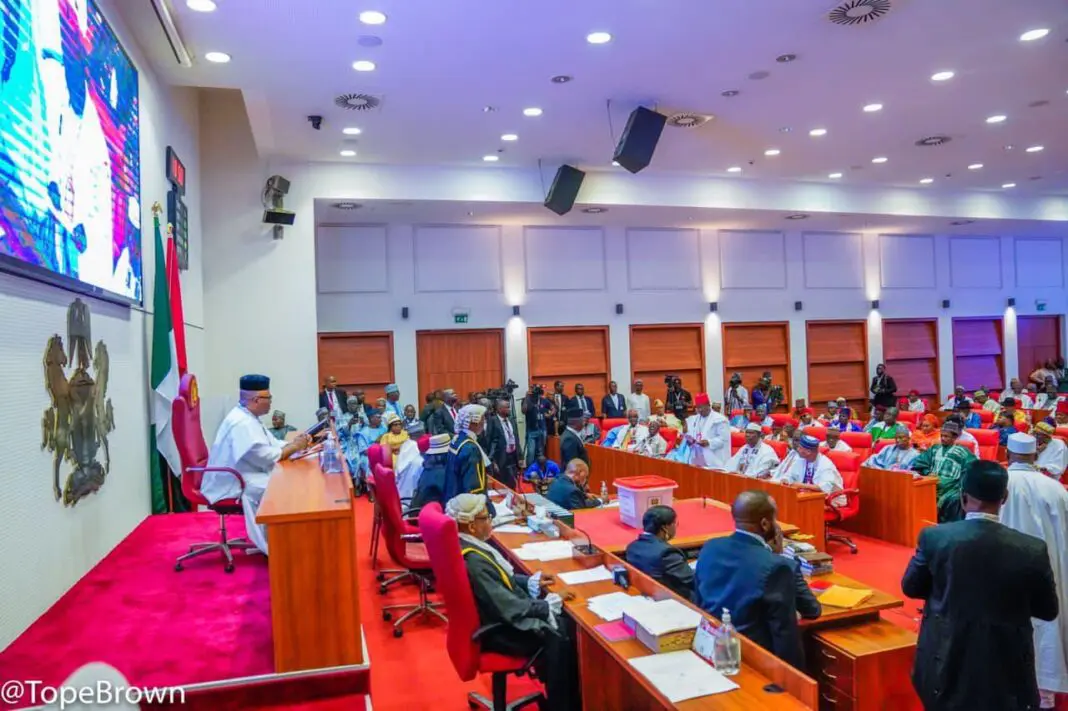
The Nigerian Senate has taken a decisive step to address growing concerns over DSTV’s billing system in the country. During a plenary session on Wednesday, Senate President Godswill Akpabio highlighted a significant disparity in how the service operates in Nigeria versus South Africa. He pointed out that subscribers in Nigeria lose their subscription days even when they are not using the service, which he described as unfair.

Akpabio noted that in South Africa, if a customer travels for an extended period, their subscription remains intact until they return and reactivate it. However, in Nigeria, the same benefit does not apply. Subscribers find their paid days consumed regardless of whether they are using the service or not. This practice, he argued, places an undue burden on Nigerian families who often travel for holidays and return to find their subscriptions exhausted.

Drawing a parallel to electricity billing, Akpabio expressed frustration that consumers are charged for power they do not utilize. He mentioned communities where transformers have been non-functional for months, yet residents continue to receive monthly bills. This comparison underscores a broader issue of consumers being made to pay for services they are not receiving.

In response to these concerns, Akpabio directed the Chairman of the Senate Committee on Communications to summon DSTV for an explanation. He made it clear that Nigerians should not be compelled to pay for services that are not being rendered. The move aims to ensure that DSTV aligns its billing practices with those in its home country, where customers are treated more fairly.

Posted on Leave a comment

Senator Scott Targets May for Crypto Clarity Bill Advancement

Senator Scott Targets May for Crypto Clarity Bill Advancement

Senate Banking Committee Chairman Tim Scott has indicated that his panel is approaching a consensus and is aiming to hold a markup session for the CLARITY Act next month. This marks the most definitive timeline provided by the committee leader regarding the legislation, which has already missed two scheduled markup opportunities earlier in 2026.

The announcement sparked immediate reactions from the cryptocurrency industry. Brian Armstrong, CEO of Coinbase, responded on social media with a brief call to action, while Circle urged the committee to proceed without any further postponements. Over 120 crypto-related organizations have already united in a joint letter, pressing for immediate progress on the bill.

The CLARITY Act successfully passed the House with a 294-134 vote in July 2025 and was subsequently approved by the Senate Agriculture Committee in January 2026. However, it must still undergo a Banking Committee markup, secure a 60-vote threshold in the Senate, be reconciled with both the Agriculture Committee version and the House version, and ultimately be signed by the president to become law.

The congressional schedule adds urgency, as lawmakers are set to recess for Memorial Day on May 21, leaving less than four working weeks. Senators Cynthia Lummis and Bernie Moreno have cautioned that missing this window could postpone the next viable opportunity until 2030. The Banking Committee is reportedly targeting the week of May 11 for the markup, though Chairman Scott is still working to address concerns raised by Senator John Kennedy before proceeding.

Posted on Leave a comment

Benchmark Lowers Strategy Price Target Amid Bitcoin Reset

Benchmark Lowers Strategy Price Target Amid Bitcoin Reset

Benchmark, a well-known investment bank, has revised its 12-month price target for Strategy (NASDAQ: MSTR) downward to $570 from $705, as reported in recent market updates. Despite this reduction, the firm maintains a Buy rating on the stock, acknowledging a shift in their Bitcoin price assumptions following significant volatility in both the cryptocurrency and Strategy’s shares.

The revised target reflects a more cautious near-term outlook, as Strategy’s stock plummeted alongside Bitcoin from early-2025 highs. Benchmark had previously been among the most bullish analysts on Strategy, with analyst Mark Palmer repeatedly affirming a $705 target based on an optimistic Bitcoin trajectory. Their model, which assumed Bitcoin could reach $225,000 by the end of 2026, employed a sum-of-the-parts valuation, factoring in the projected value of Strategy’s Bitcoin holdings, a 10x multiple on its 2026 Bitcoin dollar gain, and residual software business value.

Even as MSTR fell over 60% from mid-2025 peaks—dropping from approximately $457 to near $150 over six months—Benchmark stood by its $705 target. The bank argued that Strategy is fundamentally a Bitcoin treasury company, not a traditional software firm, and that its substantial Bitcoin holdings create embedded optionality if the next Bitcoin rally materializes.

As of early Q2 2026, Strategy holds over 818,000 BTC, according to BitcoinTreasuries, making it the largest publicly traded Bitcoin treasury globally. This direct exposure to Bitcoin means any recalibration of BTC price targets directly impacts the equity valuation, prompting Benchmark to trim its upside estimate to $570 as the crypto market reassesses its cycle extremes.

In an April research note, Benchmark defended Strategy’s perpetual-preferred funding model, labeling it sustainable and rejecting comparisons to a Ponzi scheme. The bank described Strategy as a pioneer in corporate Bitcoin adoption, a thesis that remains intact even as the price target moves lower.

The new $570 target still implies significant upside from current trading levels, but it signals that even staunch bulls like Benchmark are adjusting their models to a less exuberant Bitcoin outlook. This interplay with on-chain dynamics and ETF flows remains a key theme for market observers.

Posted on Leave a comment

Gillibrand Predicts CLARITY Act Passage in 2026

Gillibrand Predicts CLARITY Act Passage in 2026

During the second day of Consensus Miami 2026, Senator Kirsten Gillibrand shared her confidence that the CLARITY Act will successfully move through Congress. She appeared on stage alongside Kevin O’Leary and Coinbase’s Paul Grewal, emphasizing that the bill could see progress before the Memorial Day recess later this month. The Senate Banking Committee is reportedly aiming for a markup session, which may be the last viable opportunity in this legislative cycle.

Gillibrand highlighted the need for bipartisan cooperation, noting that Democratic support is crucial for the bill’s advancement. She also touched on artificial intelligence regulation and the Democratic Party’s prospects in the upcoming 2026 midterm elections. Her remarks provide a counterbalance to Republican viewpoints at the conference, especially as the CLARITY Act’s fate hinges on cross-party agreement.

According to reports, Senate Banking Committee Chair Tim Scott has gathered most Republican votes, but Senator John Kennedy remains undecided. Additionally, Senator Thom Tillis raised concerns that law enforcement groups are opposing a provision related to DeFi developer liability. Senators Cynthia Lummis and Bernie Moreno have stated that missing the May 21 deadline could delay the bill until 2030. Despite these hurdles, Gillibrand’s optimism signals that some Democrats are willing to provide the necessary backing to push the legislation forward.

Posted on Leave a comment

US and Iran Near Pact That Could Reshape Crypto Markets

US and Iran Near Pact That Could Reshape Crypto Markets

The United States and Iran are reportedly on the verge of finalizing a one-page memorandum of understanding aimed at ending their ongoing conflict and laying the groundwork for nuclear negotiations. According to sources cited by Axios, the White House anticipates a response from Tehran within 48 hours on several key points, marking the closest the two nations have been to a deal since hostilities began.

The proposed 14-point draft would have Iran halt uranium enrichment, while the US would ease sanctions and release billions in frozen Iranian funds. Additionally, both sides would lift restrictions on transit through the Strait of Hormuz, a critical chokepoint for global oil trade that has been partially blocked during the conflict.

This de-escalation is being closely monitored by cryptocurrency markets, which have shown sensitivity to geopolitical shifts. Earlier this year, Bitcoin dropped from around $66,000 to $63,000 when the war escalated, wiping out over $120 billion in crypto market cap. Conversely, peace signals have triggered significant rallies: when President Trump hinted at a ceasefire, Bitcoin surged nearly 5% to above $72,700, and subsequent truce extensions pushed it toward $78,000—its highest in ten weeks.

Analysts describe this pattern as a classic de-risking followed by re-risking. In the initial shock, traders flee to cash, gold, and oil. But when a durable peace appears likely, capital rotates back into higher-beta assets like Bitcoin, which often outperforms during relief phases. If the current memo is signed, crude prices and gold may cool, rate-cut expectations could firm, and Bitcoin might benefit from a weaker dollar and renewed risk appetite.

While crypto’s response won’t be linear—influenced by ETF flows and other factors—the market has shown that peace headlines tend to coincide with Bitcoin reclaiming the high $70,000 to $79,000 range. Over the medium term, a stable US-Iran agreement that normalizes the Strait of Hormuz could remove a major geopolitical tail-risk, shifting narratives away from war hedges toward structural stories like Bitcoin ETF adoption and on-chain capital rotation.

Posted on Leave a comment

Eric Trump Slams JPMorgan’s Bitcoin Shift at Consensus Miami

Eric Trump Slams JPMorgan's Bitcoin Shift at Consensus Miami

At the Consensus Miami 2026 conference, Eric Trump delivered a pointed critique of JPMorgan’s evolving stance on bitcoin, highlighting the banking giant’s dramatic reversal over the past year and a half. Trump, who serves as chief strategy officer for American Bitcoin, accused JPMorgan of previously dismissing bitcoin as a worthless asset only to now embrace it by offering mortgage loans secured by bitcoin holdings.

Trump emphasized the irony of JPMorgan’s about-face, noting that the same institution that once labeled bitcoin a joke is now integrating it into their financial products. He argued that this shift signifies a broader defeat for traditional banks, which have realized they can no longer resist the momentum of cryptocurrency adoption. Instead of opposing the trend, they are now aligning with it.

JPMorgan’s CEO, Jamie Dimon, has historically been one of bitcoin’s most vocal critics, describing it as fraudulent. However, the bank has since developed its Kinexys blockchain platform, which has facilitated over $1 trillion in transactions, and became a sponsor of Consensus Miami 2026. This transformation, according to Trump, underscores the inevitability of bitcoin’s mainstream acceptance.

Trump also shared personal experiences with being debanked, which fueled his advocacy for bitcoin’s decentralized and censorship-resistant features. American Bitcoin, his company, maintains all mined coins rather than selling them. For Trump, JPMorgan’s swift pivot from adversary to provider of mortgage services against bitcoin collateral is a clear signal that institutional opposition to the cryptocurrency has collapsed.

Posted on Leave a comment

Robinhood Defends the Gradual Wall Street Crypto Shift

Robinhood Defends the Gradual Wall Street Crypto Shift

At Consensus Miami 2026, Robinhood highlighted that despite earlier expectations, Wall Street’s embrace of cryptocurrency is progressing slowly and unevenly. The company noted that traditional finance institutions are now actively exploring blockchain technology, moving past theoretical discussions to practical implementation.

Nicola White, Robinhood’s Vice President of Crypto Institutions, remarked that the conversation with banks has evolved dramatically. Instead of explaining what blockchain is, the focus now is on assisting them with building on-chain infrastructure. This shift indicates a growing acceptance of digital assets within regulated finance.

The panel, which included executives from Bitstamp, Ondo Finance, and Babylon Labs, described the current state of institutional adoption as settled in direction but uncertain in pace. Ian De Bode from Ondo Finance cited partnerships with Broadridge and DTCC as tangible evidence that tokenization projects are moving from planning stages to real-world applications.

White also expressed caution regarding retail products, noting that half of Robinhood’s new users in Q1 were first-time investors. She warned that high-risk products like 100x perpetual leverage might expose such users to dangers they don’t fully understand. The panel concluded that adoption will likely follow two separate tracks: one within the regulated US financial system and another in offshore permissionless crypto markets, with Robinhood’s $25 billion in crypto volumes marking just the beginning of Wall Street’s integration.

Posted on Leave a comment

NYSE Warns Unregulated Crypto Tokens Mislead Retail Investors

NYSE Warns Unregulated Crypto Tokens Mislead Retail Investors

At the Consensus Miami 2026 conference, executives from the NYSE parent company Intercontinental Exchange (ICE) and tokenization platform Securitize issued a stark warning about offshore synthetic tokenized stocks. They argue that these products are misleading retail investors and pose significant risks to financial markets.

Michael Blaugrund from ICE and Securitize CEO Carlos Domingo highlighted that many offshore tokenized stocks do not represent actual equity in the underlying companies. Domingo noted that for some stocks, there are up to five different tokenized versions circulating, none of which confer ownership rights, dividends, or voting power. These tokens merely offer synthetic price exposure, yet they often use company names without authorization.

The executives contrasted this unregulated environment with the NYSE’s own approach to tokenized equities. The exchange plans to launch a regulated platform starting with pre-funded tokens that trade against stablecoins. While Blaugrund admitted this model is “not the sexiest way” to build a market, it provides a clear structure for issuers, investors, and regulators to evaluate before introducing more complex features like leverage or self-custody.

The tokenized equity market is growing rapidly, with legitimate players like Coinbase pushing for broader access and real-time settlement. However, the proliferation of synthetic tokens undermines trust in the category. The NYSE’s message at Consensus was clear: regulated tokenized equities and unregulated synthetic tokens are fundamentally different products, and investors should be wary of the latter.