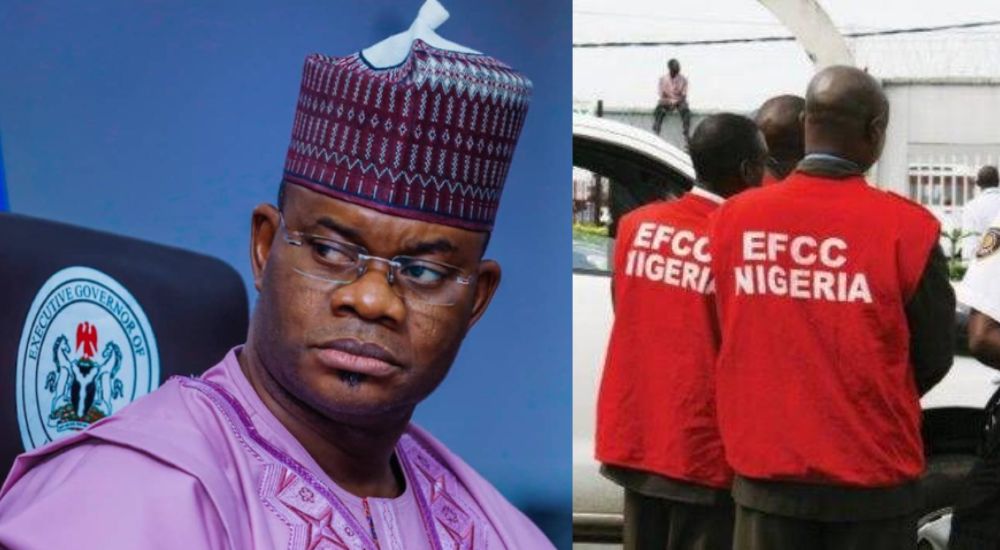
In a significant development in the ongoing money laundering trial involving Yahaya Bello, the former governor of Kogi State, the 17th witness for the Economic and Financial Crimes Commission (EFCC) clarified on Wednesday that Bello had no part in the property acquisitions under scrutiny.
During cross-examination by defense counsel Paul Daudu, SAN, the witness, Shehu Bello Bala, stated that the second defendant, Umar Shuaib Oricha, similarly was not involved in any of the transactions. Bala, a commodity trader from Katsina State, testified that the actual agent during the purchase dealings was one Dr. Farouk Bello.
He acknowledged that the title documents—Deed of Assignment and Power of Attorney—were returned to Efab Estate by Farouk Bello. The witness added that he had no familial ties to Ali Bello or Farouk Bello, nor any connection to Kogi State, further distancing himself from the former governor.
Bala recounted meeting Ali Bello about 14 years ago through their mutual business in commodity trading, specifically buying and selling grains and ginger from the North. He noted that Ali Bello was also involved in real estate. When asked about the third defendant, Bala said he did not know him and had not participated in the properties’ transactions.
On the matter of the returned title documents, Bala explained that Farouk Bello, a friend of his father, had passed away. When questioned whether Farouk’s children sought to reclaim money from the property, Bala responded that someone approached him with documents intending to sell, but he could not confirm if that person was Farouk’s son. He subsequently returned the documents to Efab’s chairman, at which point they discovered the property was under investigation.
The witness confirmed that one of the properties not marked by the EFCC was purchased by Farouk Bello. Defense counsel suggested that Ali Bello might have inherited that property from his mother, but the prosecution objected, stating inheritance was not part of the testimony. The defense maintained its right to lay a foundation for its case.