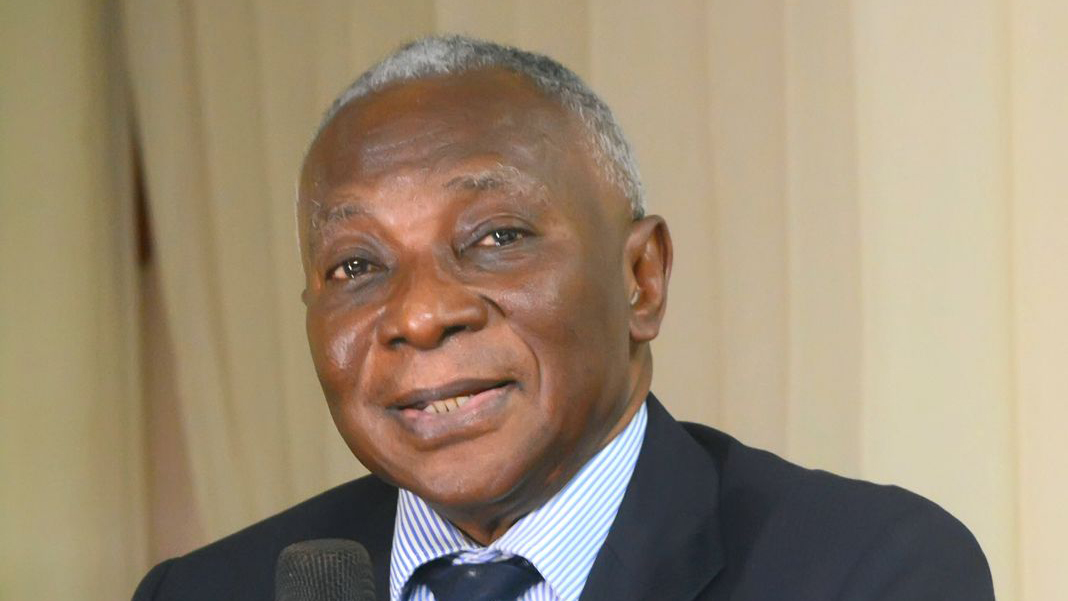
Retired Police Commissioner Ikechukwu Ayo Aduba has publicly taken issue with Chief Philip Asiodu, accusing him of misrepresenting historical facts. Asiodu recently released a statement denying that Asaba has Igbo roots and dismissing the ethnic nature of the 1967 Asaba Massacre, asserting that ‘Asaba is not Igbo.’
In a pointed rebuttal titled ‘Building On Truth: Asaba, Igbo Identity And The 1967 Massacre,’ Aduba argued that Asaba is unequivocally an Igbo community based on its language, culture, and ancestry. He emphasized that Asiodu’s claims ignore robust linguistic, cultural, and scholarly evidence, including documentation from Asaba’s own traditional institutions.
‘Chief Philip Asiodu is entitled to his political opinions, but history is not a matter of personal belief,’ Aduba stated. ‘It is preserved in language, artifacts, and lineage.’
To substantiate his position, Aduba pointed out that Asaba, though located in Delta State, is part of the Anioma/Igboid cluster. He noted that the Igbo language is officially recognized as Asaba’s national language, and linguists classify Anioma communities, including Asaba, as native speakers of Igboid languages within the Niger-Congo family. Specifically, the Enuani dialect, spoken in Asaba and surrounding towns, is listed as an Igbo dialect.
Aduba further highlighted cultural continuity, noting that Asaba’s traditions align with core Igbo customs, or Omenala. ‘The Asagba of Asaba himself commits to preserving Asaba’s heritage, including Igba Mkpisi, an Igbo initiation rite tied to titles and ancestry. The traditional greeting to the Asagba is “Nna Agu! Asagba Ahaba Agu,” which uses Igbo titles and cosmology. Masquerade traditions such as Agaba and Mgbedike originate from Igbo-speaking communities,’ he explained.
He also pointed out that the five quarters of Asaba—Ezenei, Ugbomanta, Umuagu, Umuaji, and Umuonaje—all carry the Igbo prefix ‘Umu,’ meaning ‘children.’ The town’s original name, Ani Ahaba, translates to ‘We have settled in this land,’ an Igbo phrase.
Regarding the Asaba Massacre of October 5-7, 1967, Aduba insisted that the killings were ethnically motivated, contradicting Asiodu’s claim that ethnicity was not a factor. He cited federal records, survivor testimonies, and academic research to support his view. Additionally, he reminded that former Head of State General Yakubu Gowon publicly apologized to the people of Asaba in 2001 for the high death toll, which estimates place between 373 and 800, with survivors and recent memorials citing over 1,000 fatalities.
‘The sons and daughters of Asaba who perished in October 1967 deserve the truth, as do future generations. A accurate history is the bedrock of a great society. Let us build on truth,’ Aduba concluded.