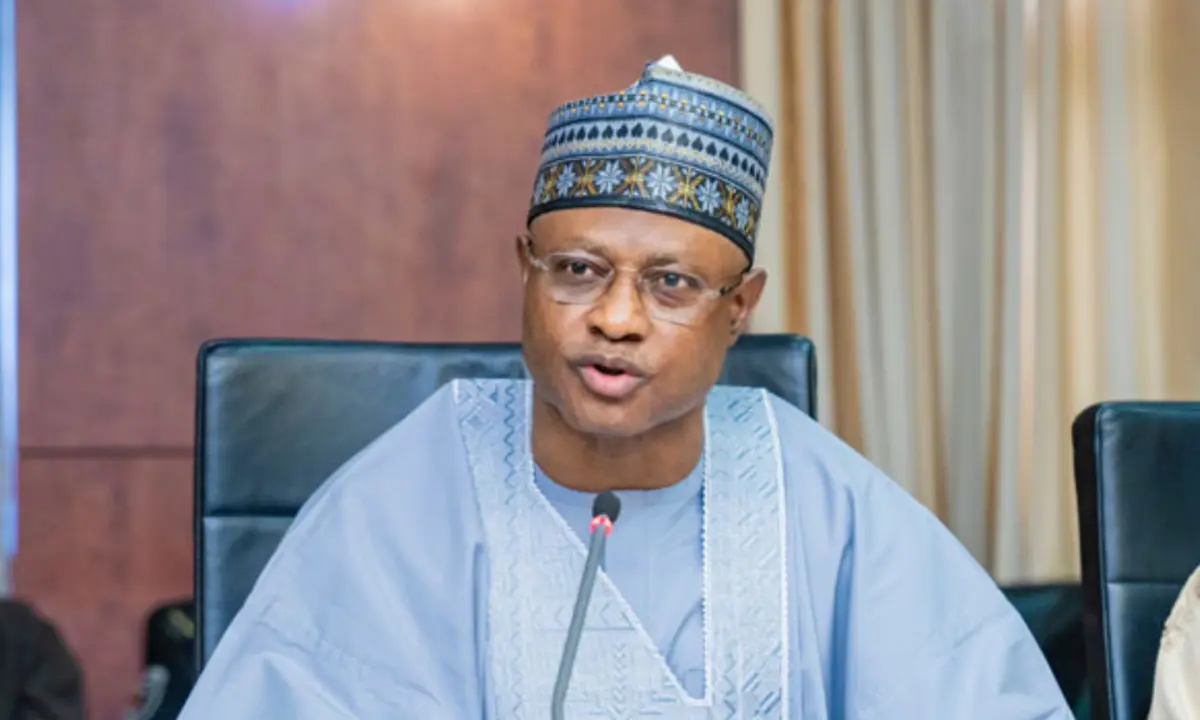
The Kaduna State Government has officially launched a committee focused on disarmament, demobilization, and reintegration (DDR) as part of broader efforts to strengthen peace and security. Governor Uba Sani assured that his administration will provide the necessary political support to ensure the committee’s success.
This initiative, the first of its kind at the state level in Nigeria, was developed with assistance from the Office of the National Security Adviser and the National Counter Terrorism Centre. During the launch, Governor Sani reflected on the severe security challenges that previously plagued the state, including banditry, kidnappings, and violence that made highways unsafe and crippled economic activities, particularly along the Kaduna-Abuja corridor and the Birnin Gwari area.
The Governor emphasized that his administration adopted a multi-pronged strategy from the start, combining military force with dialogue and development. He described this approach as the “Kaduna Peace Model,” which addresses not only immediate security threats but also underlying issues such as poverty, exclusion, and lack of opportunity. Through closer collaboration with national security bodies and the armed forces, operational capacity has been enhanced, resulting in restored confidence among travelers and a revival of economic activity.
He stressed that lasting peace cannot be achieved through force alone. Therefore, dialogue has been embraced as a strategic tool for stability, involving community leaders, traditional institutions, and individuals willing to abandon violence. This has helped rebuild trust where it had eroded.
Ambassador Abimbola Wonosikou, Director of Preventing and Countering Violent Extremism at the National Counter Terrorism Centre, hailed the committee’s formation as a major milestone for sustainable peace in Kaduna and Nigeria. She noted that regional consultations across the country had identified the need for state-level DDR committees to serve as delivery units. She argued that removing weapons, dismantling violent networks, and reintegrating ex-combatants are essential for long-term stability.
Dr. Paul Nyulaku, Technical Adviser for the National DDR Framework Development, praised Governor Sani’s reconciliatory efforts, which have gained national recognition. He confirmed that Kaduna is the first state to establish such a committee, following recommendations from a North West regional consultation. The national DDR framework, which includes 17 pillars such as political dialogue and negotiation, is awaiting approval. His team has also developed standard operating procedures and tools for the committee’s use.