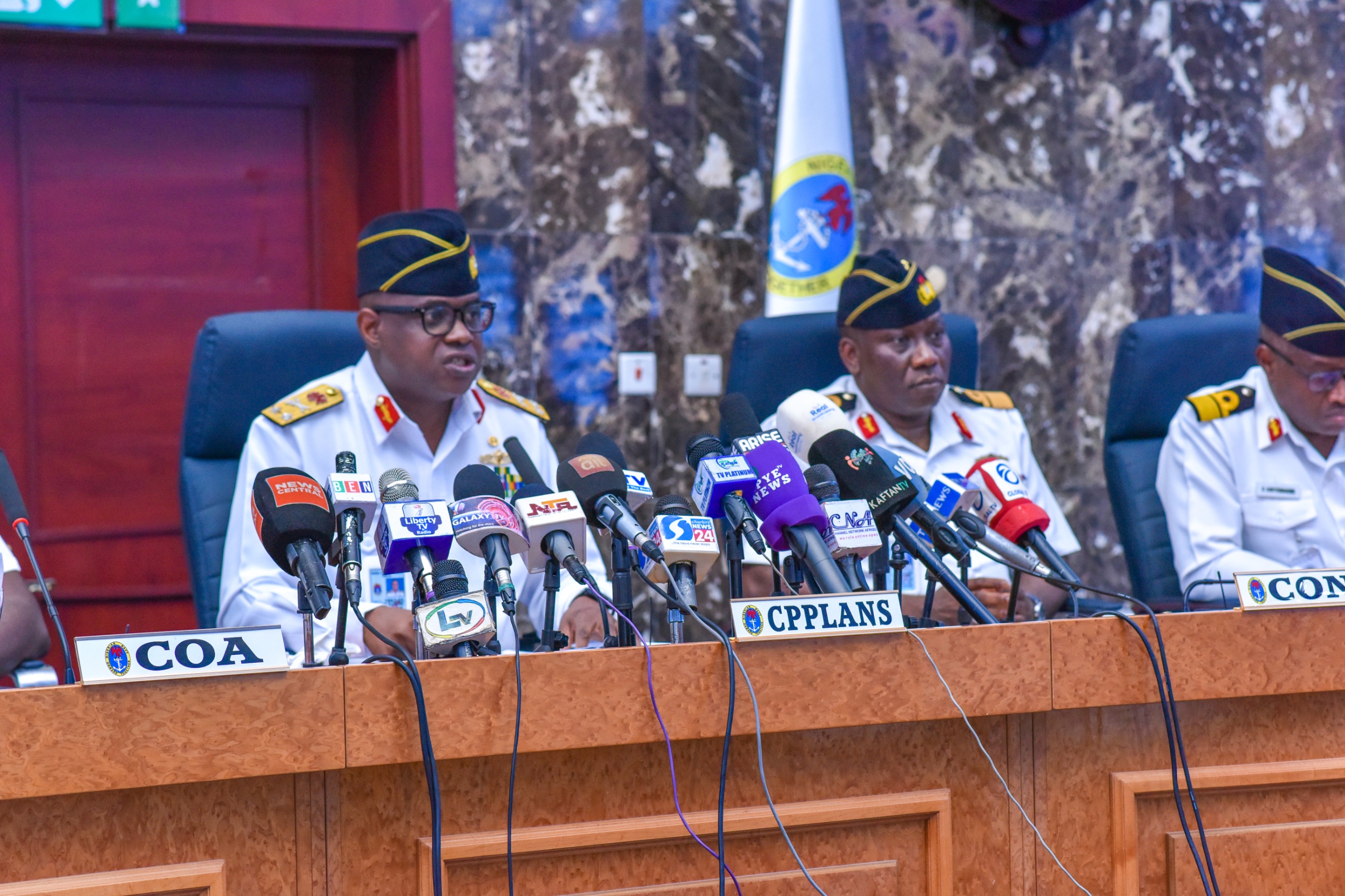
During a press conference in Abuja marking the Nigerian Navy’s 70th anniversary, Rear Admiral Akinola Olatunde, the Chief of Policy and Plans at Naval Headquarters, outlined several pressing issues the force has encountered over its decades of service. Primarily, advancements in technology and research have emerged as critical areas needing improvement.
Olatunde explained that the Navy has evolved significantly from its early focus on simple policing to embracing broader diplomatic and military roles. He highlighted how the institution has grown from a small coastal patrol unit into a powerful symbol of national strength, regional stability, and global maritime capability, all through adaptability and strategic planning.
The Nigerian Navy was officially formed on June 1, 1956, initially called the Naval Defence Force. It started with 250 personnel and 11 ships transferred from the Royal Navy’s Colonial Marine Department. By 1958, it became the Royal Nigerian Navy, losing the ‘Royal’ prefix when Nigeria became a republic in 1963. The modern structure was legally established by Parliament in 1964, with Commodore JEA Wey becoming the first Nigerian to lead the force.
Olatunde pointed out specific areas where the Navy lags, such as cyber capabilities and adapting to new types of crime, like drug trafficking from neighboring countries. He also mentioned the challenge of autonomous systems, including drones. Regarding submarines, he noted that current threat assessments for Africa, up to 2030, do not prioritize underwater threats, but this is under constant review.
The officer emphasized the desire to be more independent in military production, recalling lessons from the Civil War. He stated that the Navy aims to improve self-sufficiency in shipbuilding, record systems, and other technology-driven fields to avoid reliance on foreign procurement during crises.