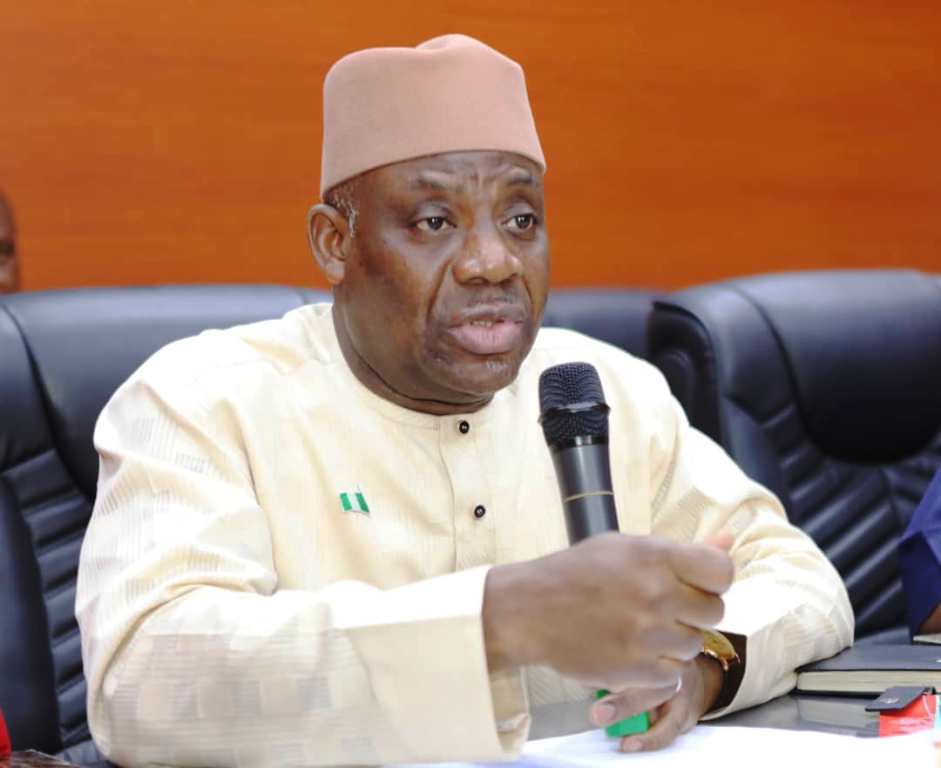
Nigeria’s Education Minister, Tunji Alausa, has challenged widely circulated figures from the United Nations Children’s Fund (UNICEF) regarding the number of out-of-school children in the country. During a Tuesday appearance on Channels Television’s Politics Today, Alausa asserted that the actual count is significantly lower than the 15–18 million often quoted by UNICEF.
The minister revealed that the federal government is undertaking a comprehensive nationwide mapping exercise to determine the precise number of children not attending school. This initiative, according to Alausa, has already facilitated the reintegration of over one million children into the educational system within the last two and a half years through various intervention programs.
Alausa emphasized that the government’s approach involves ground-level tracking and identification of children at the community level to verify enrollment data across all states. He cited Kaduna State as a case in point, noting that while UNICEF’s data suggested 1.8 million out-of-school children there, the government’s own mapping found only approximately 700,000. Similarly, in Akwa Ibom State, officials struggled to identify significant numbers of out-of-school children.
Despite the lower aggregate figure—projected to be below 8 million when all states are accounted for—Alausa acknowledged that the situation remains a critical concern requiring sustained action. He detailed new strategies being implemented, including partnerships with private schools that will be compensated on a per-child basis to enroll out-of-school children. This program is set to commence later this year.
“We are not disputing that there is a problem, but we must have accurate data to target our interventions effectively,” Alausa stated. He added that the government’s verified data now provides a realistic baseline for policy formulation and resource allocation.