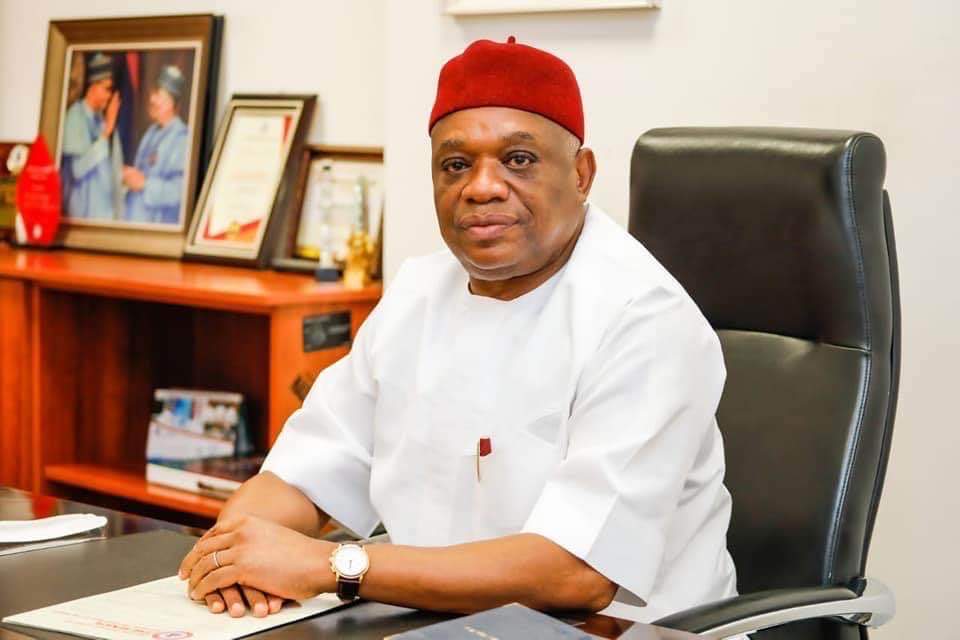
Senator Orji Kalu, chairing the Senate Committee on the South East Development Commission (SEDC), has raised serious concerns over the commission’s financial management during a recent hearing. The committee interrogated the managing director, Mark Okoye, and his team regarding the expenditure of over N4 billion from the 2025 budget without proper accountability.
Okoye, accompanied by Sylvester Okonkwo, a former chief of staff to Senate President Godswill Akpabio, appeared before the committee to explain the commission’s financial activities. According to budget documents, the SEDC received N16.6 billion for its operations in 2025.
During the session, Kalu pressed Okoye on the remaining balance in the commission’s account. Okoye responded that approximately N11.5 billion to N12 billion was still available, implying that over N4 billion had been allocated to operational costs. However, Kalu dismissed this explanation, stating that the figures did not match records available to the committee or data obtained from the Central Bank of Nigeria.
“We will not accept excuses, regardless of your background,” Kalu asserted. “My question is simple: you received N16.6 billion. How much is left?” The senator further revealed that the committee had tools to trace fund utilization and had already dispatched the Auditor General to review the commission’s activities.
Failing to provide a comprehensive breakdown, Okoye was ordered to return the following Tuesday with full documentation detailing how the funds were spent. Kalu expressed dissatisfaction with the commission’s performance, emphasizing that the committee expected transparency and accountability.
In a startling revelation, Kalu claimed that the commission spends N153 million annually on a small office in Abuja, despite having its main headquarters in Enugu. “You maintain a tiny office here in Abuja and are paying N153 million for a single room. We know about it,” he said, warning against further discrepancies.
The SEDC, one of several regional development commissions established by the Bola Tinubu administration, aims to address infrastructure deficits and promote economic growth in the South-east. Signed into law in 2024 and inaugurated in February 2025, the commission is tasked with reconstructing post-war infrastructure, tackling ecological issues, fostering industrial growth, and creating jobs. However, the lack of clear expenditure records threatens to undermine public trust and parliamentary support.