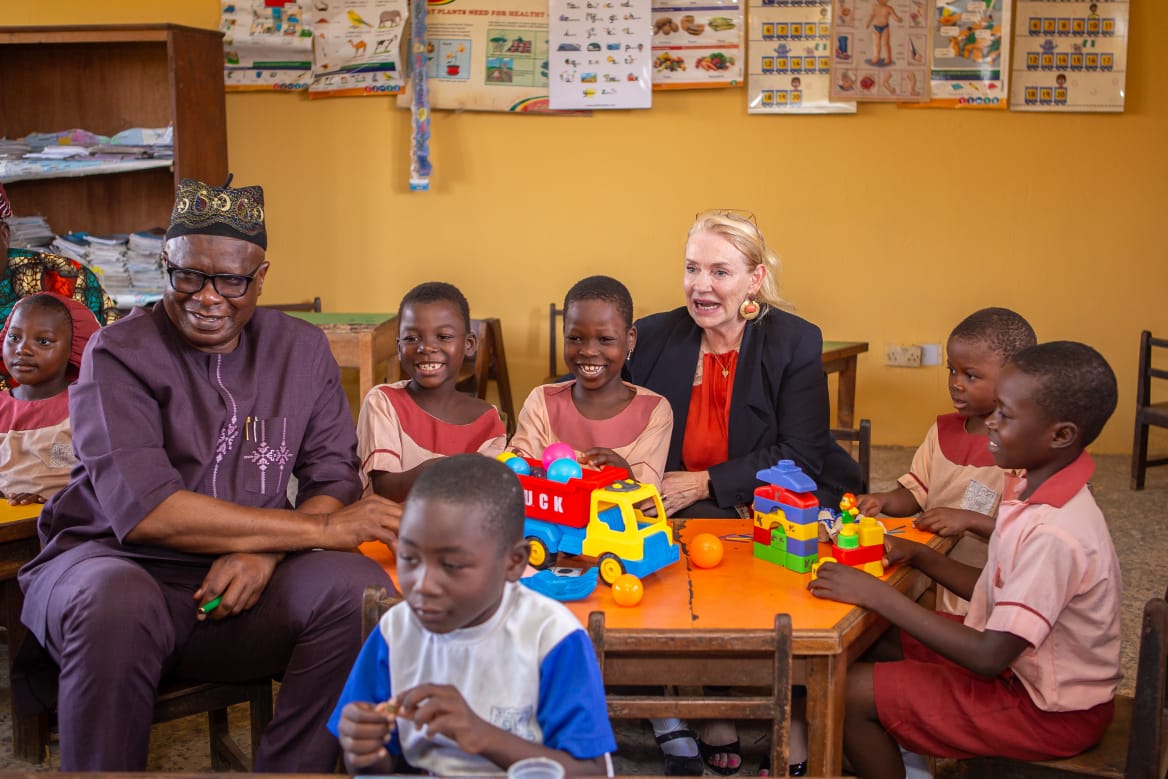
The United Nations Children’s Fund (UNICEF) has raised alarms over the deteriorating state of cognitive development among schoolchildren in Nigeria, attributing the crisis to rising insecurity and the absence of play-based learning in educational environments. The organization warns that these factors are severely hindering children’s ability to learn and grow.
Speaking at the 2026 International Day of Play celebration and Early Childhood Education (ECE) Media Dialogue and Play Day event in Lagos, Celine Lafoucriere, Chief of Field Office for UNICEF Lagos, highlighted the troubling trend. She noted that many children have been abducted from their schools in states like Borno, Niger, Kebbi, and Oyo, with some still missing. This climate of fear undermines the safety of schools, which should be sanctuaries for learning.
Lafoucriere emphasized that play is essential for brain development, stating, “When children play, their brains grow. Exploration, building, and laughter with peers are powerful learning tools that no worksheet can replace.” She argued that play is not a reward but the core of learning itself, and no child should be deprived of it due to overcrowded classrooms or threats of violence.
She also pointed out that many schools lack space, time, and materials for play, while parents are too afraid to send their children to school. “A child who is not safe cannot learn. A child who cannot play will not reach their full potential. These issues are interconnected and require immediate action,” she added.
Dr. Hakeem Babatunde Shittu, Executive Chairman of the Lagos State Universal Basic Education Board (LASUBEB), reinforced the importance of play in education. He stated that children learn more effectively when they are happy and engaged through interactive activities. Shittu called for collective responsibility among government agencies, parents, and stakeholders to prioritize children’s welfare. He reaffirmed LASUBEB’s commitment to inclusive education, ensuring that children with disabilities also benefit from play-based learning.
Yetunde Oluwatosi, UNICEF Education Specialist, revealed that the organization is collaborating with authorities to promote play-based learning and strengthen parental involvement. She stressed that learning should extend beyond classrooms and that stronger school-home links are vital for children’s educational progress.
The event, themed “Protect Play, Protect Childhood,” served as a platform to advocate for safer schools and the integration of play into early childhood education. UNICEF urged media, government, and communities to act swiftly to reverse the negative trends affecting Nigerian children.